BEIJING, Beijing, August 17 th The National Development and Reform Commission held a press conference on the 16 th, responding to many hot issues: the overall progress of de-capacity needs to be further accelerated, and places with slow progress and poor work will be seriously held accountable; All provinces, autonomous regions and municipalities in China and Xinjiang Production and Construction Corps have issued specific opinions on the reform of the household registration system, and the "gold content" of residence permits has been continuously improved; There is some positive momentum in the northeast economy, and the "Three-year Rolling Implementation Plan for Promoting the Revitalization of Old Industrial Bases in Northeast China" will be issued in the near future; The reform of medical prices in public hospitals around the country is progressing smoothly, and most public hospitals have cancelled the drug addition.

The overall progress of de-capacity needs to be accelerated
— — Where progress is slow, accountability will be held.
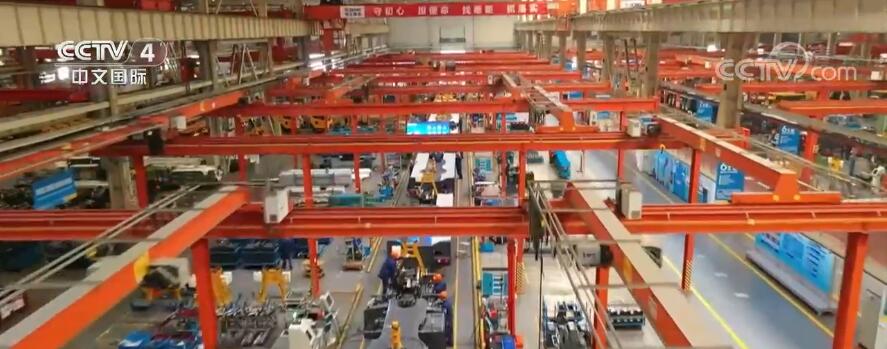
Zhao Chenxin, spokesman of the National Development and Reform Commission, revealed that by the end of July, the country had withdrawn more than 95 million tons of coal production capacity, completing 38% of the annual tasks, and withdrawing more than 21 million tons of steel production capacity, completing 47% of the annual tasks. Although the progress has been accelerated since July, there is still a certain distance compared with the requirements of more than half of the time and more than half of the tasks.
For the reasons, Zhao Chenxin analyzed, first, the ideological understanding is not in place. Some regions and enterprises did not regard the responsibility letter as a "military order"; Second, the fear of difficulties still exists; Third, price changes bring interference. Recently, the price of steel and coal has rebounded to varying degrees, which has affected the determination of some enterprises and places to de-capacity steel and coal.
In order to ensure the completion of this year’s objectives and tasks, Zhao Chenxi said that a series of work measures will be taken in the next step, including special supervision on work progress and fund use, and listing supervision and serious accountability for places where progress is slow and work is not effective. Implement the monthly report notification system. Report on the progress of the monthly report on capacity reduction in various places, encourage the advanced and spur the backward, and so on.
The reporter from Zhongxin. com noted that the the State Council executive meeting held on the 16th decided to carry out a special inspection of the steel and coal industry to solve the excess capacity, so as to ensure the smooth completion of the annual objectives and tasks in strict accordance with the schedule requirements and time nodes. For poor implementation, slow progress and illegal new production capacity, it is necessary to inform, interview and seriously accountability to ensure the completion of the hard task of resolving excess capacity throughout the year.

Opinions on the reform of household registration system in all provinces have been released.
— — The "gold content" of residence permit has been continuously improved.
"The progress of urbanization of agricultural transfer population is generally smooth." Zhao Chenxin pointed out that all provinces, autonomous regions and municipalities and Xinjiang Production and Construction Corps have issued specific opinions on the reform of the household registration system, and 11 provinces have formulated specific implementation measures, and the "gold content" of residence permits has been continuously improved.
Zhongxin. com (WeChat WeChat official account: cns2012) The reporter noted that Beijing announced the "Measures for the Implementation of the Provisional Regulations on Residence Permits in Beijing" on the 11th. It can be seen from combing the areas where the detailed rules of residence permit have been issued that compared with the provisions of the national version, the scope of public services and conveniences provided by some areas has expanded.
Among them, holders of residence permits in Hebei Province can enjoy 8 basic public services and 8 conveniences; Holders of residence permits in Jilin Province can enjoy 6 basic public services and 9 conveniences; Holders of residence permits in Jiangxi Province can enjoy 7 basic public services and 8 conveniences. All these areas have increased the convenience for children to take the entrance examination for senior high school entrance examination in the local area, provided that relevant conditions are met.

There is some positive momentum in the northeast economy.
— — A three-year rolling implementation plan will be issued.
"According to the investigation, in the first half of this year, in the face of the downward pressure on the economy, the three northeastern provinces actively responded and there were some positive trends and positive changes." Zhao Chenxin said that in the first half of the year, the GDP growth rates of Heilongjiang, Jilin and Liaoning provinces were 5.7%, 6.7% and -1% respectively, which were all higher than those in the first quarter, and the differentiation between industries in different regions was indeed obvious.
Zhao Chenxin pointed out that from the perspective of the three provinces, the economy in areas with relatively diversified industries, active private economy and rapid industrial upgrading showed a trend of stabilization and improvement. However, the downward pressure on the economy of resource-exhausted cities with concentrated traditional industries is still relatively large. From the industry point of view, emerging industries that adapt to changes in market demand are developing well, while the traditional "original prefix" and "initial brand name" industries are generally weak, and the added value of coal, metallurgy, petrochemical and some equipment manufacturing industries has experienced negative growth year-on-year.
Regarding the next step to revitalize the Northeast economy, Zhao Chenxin revealed that the "Three-year Rolling Implementation Plan for Promoting the Revitalization of Old Industrial Bases in Northeast China" will be issued soon. The major tasks to be launched from 2016 to 2018 and major engineering projects to be started were clarified. The major policies focused on improving the system and mechanism, promoting structural adjustment, encouraging innovation and entrepreneurship, and ensuring and improving people’s livelihood, and identified 137 key tasks in different years.

The reform of medical price in public hospitals has achieved initial results.
— — Most public hospitals cancel drug addition.
Regarding the progress of medical price reform in public hospitals, Zhao Chenxin pointed out that at present, the medical price reform in county-level public hospitals has achieved full coverage, and the medical price reform in urban public hospitals has been fully promoted in eight provinces and cities including Jiangsu, Zhejiang, Anhui, Fujian, Shandong, Qinghai, Shanghai and Tianjin, and other provinces, autonomous regions and municipalities have also selected some cities and hospitals to carry out pilot projects.
"At present, the reform of medical prices in public hospitals around the country is progressing smoothly and running smoothly, and the results have initially appeared." Zhao Chenxi said that the emerging compensation mechanism of public hospitals is taking shape. Most public hospitals have cancelled the drug addition, and the compensation of public hospitals has changed from the original three channels of "service charge", "drug addition income" and "financial subsidy" to "service charge" and "financial subsidy".
Zhao Chenxi also pointed out that the patient’s cost burden is generally stable. By reducing the cost of medical consumables, reasonably adjusting the price of medical services and bringing them into the scope of medical insurance reimbursement, the proportion of patients’ personal medical expenses has remained basically stable. The drug market price is generally stable. The drug price reform has further stimulated the market vitality, promoted the innovation of drug research and development and improved the quality, and at the same time ensured the supply of drugs. The production and supply of some commonly used drugs and low-priced drugs have gradually recovered, ensuring the demand for drugs by the masses. (End)