Zhe Shi | What the hell is Chinese food in American TV series?
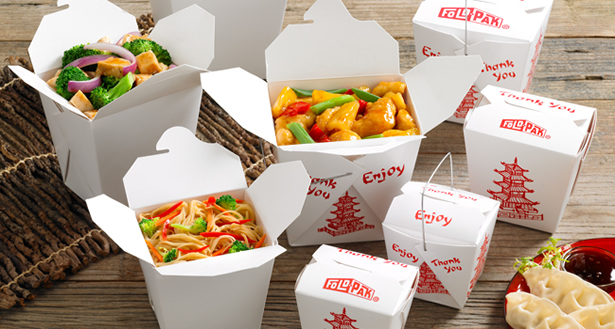
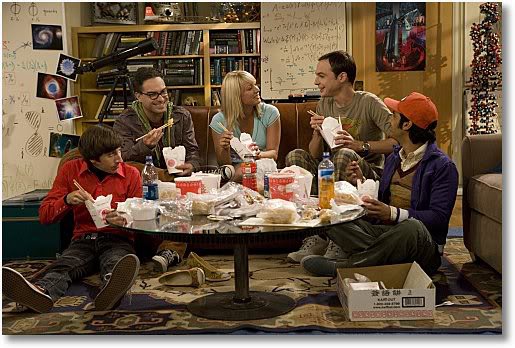
In American film and television dramas, whenever a character in the play says to order a Chinese takeaway, the next shot is often a white carton shot.
This kind of American Chinese take-out carton is called "Oyster pail" in American English. Textual research on the invention process of this paper "oyster barrel" is as lacking in historical data as when hamburgers were invented. There are three theories about the invention time of "oyster barrel": 1890, 1894 and 1908. The general idea is that from the end of 19th century to the beginning of 20th century, most of the workers who collected oysters on the west coast of the United States came from Asia. They made "oyster barrels" by traditional origami in East Asia to store oysters. The size of paper "oyster barrel" is especially suitable for retail oysters, and this packaging method soon spread all over the streets of the United States, and honey merchants also used "oyster barrel" to retail bulk honey.
Which American Chinese restaurant does the "oyster bucket" in American TV series belong to?
However, the "oyster barrel" became the standard of American Chinese takeout, but it was not until the popularity of microwave ovens in the United States after World War II and the rise of frozen and semi-processed foods. The efforts of the Chinese catering industry, coupled with the modified (hard to say improved) American Chinese food, are increasingly loved by other ethnic groups in the United States, and American Chinese food packed in "oyster barrels" has been served on the tables of thousands of households in the United States.
The "oyster barrel" that often appears in American TV shows is mostly written with "Thank you Delicious Company" on a white carton. In fact, this Chinese restaurant feels like a Chinese restaurant with a big stake in Hollywood, and it is called "Panda Express" (panda express). The group is a chain crocodile of American Chinese food in North America. It was founded by Cheng Qichang, a native of Yangzhou, who was born in Taiwan Province and immigrated to the United States alone. He bought a Chinese restaurant in 1973. At that time, President Nixon’s visit to China and the normalization of Sino-US relations, the China administration presented the first pair of national treasure pandas to the United States, so there was the earliest "panda restaurant". The success of this restaurant lies in that everything from the preparation process of each dish to the selection of ingredients is as standardized as fast food, so that non-Chinese can also go to work. This company has developed many dishes suitable for American tastes.
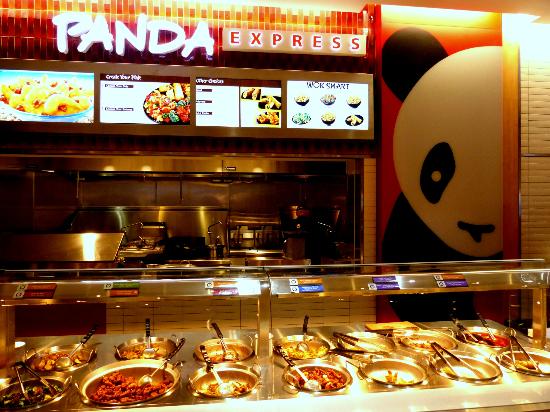
Before getting into the theme, let’s talk about the city where panda express is headquartered. There is an official translation of the name of this city, which is called Rosemead. On the other hand, some American Chinese dishes I introduced are not only available in "panda express". Similar American Chinese food chains include Manchukuo Wok and Great Wall Restaurant.
American Chinese food that is similar to Chinese food.
Let’s start with some dishes that Chinese can understand immediately. For example, "Kung Pao Chicken", "Spring Roll" and "Orange Chicken", which Xie Er has also eaten, are either strangely translated into English word by word or spelled with letters, but as long as you see the Chinese names on the menu, you can roughly know what they are, and after tasting them, you won’t feel the taste.
"Sweet and Sour Pork" is sweet and sour goo-goo meat. Although this Cantonese dish has been transformed into American BBQ sauce, it is still OK. Because Americans eat more chicken, this dish has a sister version of "Sweet and Sour Chicken".
Zuo Zongtang Chicken: What is sold in American restaurants is basically sweet.
The name of the next dish, you have to ponder, what is this?
"General Tso’s Chicken" (or Governor Tso’s Chicken) is a very famous dish in the United States and often appears in American TV series.
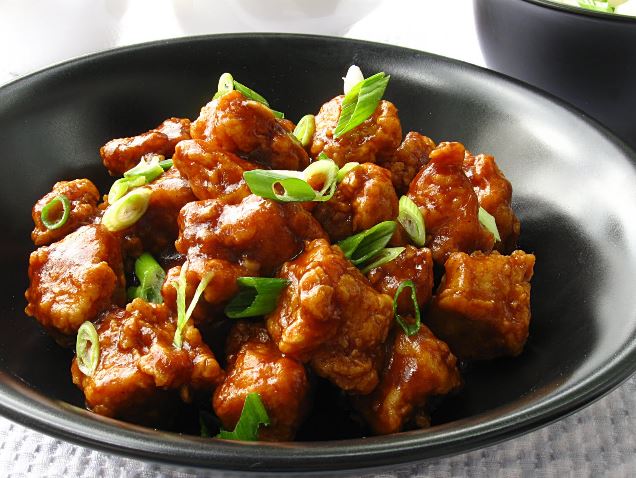
General Tso’s chicken
It is said that it originated from Pengyuan Restaurant in Taiwan Province, China. In the early 1970s, Jiang Jingguo, then the "Executive Dean" of Taiwan Province authorities, went to the restaurant for dinner. As the restaurant was closing, Peng Changgui, the owner of the restaurant, boned and diced the chicken leg, seeded and cut the pepper, fried the chicken pieces and drained them, then mixed them with pepper, chicken pieces, soy sauce, vinegar, minced garlic, Jiang Mo and chopped green onion, and finally thickened them with sesame oil, thus forming a new dish.
When Jiang Jingguo asked about the name of the dish after eating, Peng Changgui pretended to be Zuo Zongtang, so he got the signature dish "Zuo Zongtang Chicken".
Peng Changgui later opened Pengyuan Restaurant to Manhattan, USA. I.M. Pei invited Kissinger to eat this "Zuo Zongtang Chicken" in Pengyuan Restaurant, and the latter fell in love with this dish. Because Kissinger was the US Secretary of State at that time, for safety reasons, every time he went to Pengyuan Restaurant to eat Zuo Zongtang Chicken, he needed to clear the field. This attracted the attention of American media. After the report of ABC, Zuo Zongtang chicken became a household name in the United States, and as a result, Zuo Zongtang chicken appeared on the menus of many Chinese restaurants in the United States.
Jennifer Lee, an American journalist from The New York Times, specifically mentioned in a book published in 2008 that she interviewed many places in Hunan, and the locals said that they had never heard of a dish called "Zuo Zongtang Chicken" in Hunan cuisine. Peng Changgui learned from Li Jingkou that Zuo Zongtang chicken sold in American restaurants is basically sweet, and he felt incredible because he thought that Hunan food should not be sweet.
Li Hongzhang chop suey: It existed before Li Hongzhang visited the United States.
Chop Suey is also an American-style Chinese food that uses celebrities. However, unlike Zuo Zongtang’s chicken, there is no Li Hung-chang’s name in its common English name.
The menu of the earliest existing chop suey restaurant in the United States is a menu of Hongfa Building in Boston in 1879, and it is now in the American Chinese Museum in new york, which shows that "fried chop suey" existed before Li Hongzhang’s visit to the United States. The name of "chop suey" originated from Li Hongzhang’s visit to the United States in 1896. It is said that Li Hongzhang received a grand welcome in the local area and became the object of attention in the United States for a while. The restaurant merchants who entered the United States in advance successfully carried out a bundled advertising marketing in the name of Li Hongzhang, thus giving birth to the famous "Li Hongzhang chop suey".
The American version of "Li Hongzhang chop suey" is made of shredded pork, shredded chicken, shredded beef, shredded celery, shredded bamboo shoots, shredded green peppers, shredded onions, shredded Chinese cabbage or shredded snow peas. When Liang Qichao visited the United States in 1903, he tasted this dish, but his impression was not good: "However, the so-called chop suey is extremely poor in cooking, and there is no eater in Chinese. (Liang Qichao’s Collection of Drinking Rooms, Volume 7, Travels of the New World)
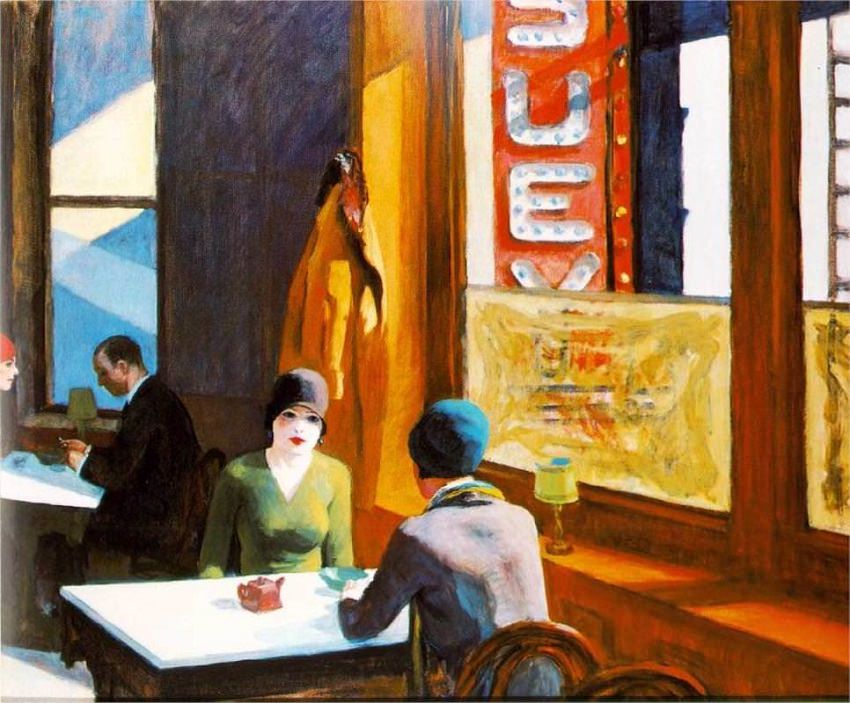
Edward hopper, an American painter, painted chop suey in 1929.
Chop Suey, spelled in Cantonese, entered the mainstream American culture as early as the early 20th century. For example, Nobel Prize in Literature winner sinclair lewis’s 1914 novel Our Mr. Ryan and 1922 novel Babbitt both mentioned the chop suey of American Chinese restaurants. Edward hopper, an American painter, painted chop suey in 1929. Apple computer users may be more familiar with another painting by Hope. Nighthawks created in 1942 is one of Apple’s own wallpaper.
Hibiscus egg: Is it white or yellow?
"Egg Foo Young". This dish, first of all, should it be white or yellow?
According to legend, the hibiscus egg was a local dish eaten by Zhu Shanxiang, an academician of the Qing Dynasty, when he was the examiner in Yunnan. It was named "hibiscus egg" because it was delicious, sweet, soft and smooth, and resembled a blooming Bai Furong. After he returned to his hometown of Tongxiang, Zhejiang, he readjusted his taste according to local eating habits. According to this statement, hibiscus eggs use egg white instead of yolk, so they should be white.
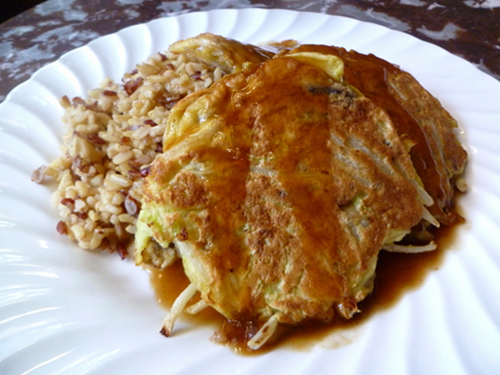
Hibiscus eggs
However, the hibiscus eggs brought to the United States by master Guangdong may be yellow from the beginning, and their shape is more similar to preserved vegetables and fried eggs.
Anyway, there are dishes fried with meat and vegetables in egg paste all over the world. But some Americans may not know whether "foo young" is a person’s name or a place name. In addition, there is a joke that this dish is called "hibiscus egg" in American Chinese restaurants, and the Hong Kong-style restaurant next door becomes "Omelette".
Fortune cookie: It probably originated from Japanese divination culture.
Fortune cookie is the most common American Chinese food in American TV series. But it is obvious that Chinese has not had this kind of catering custom since ancient times.
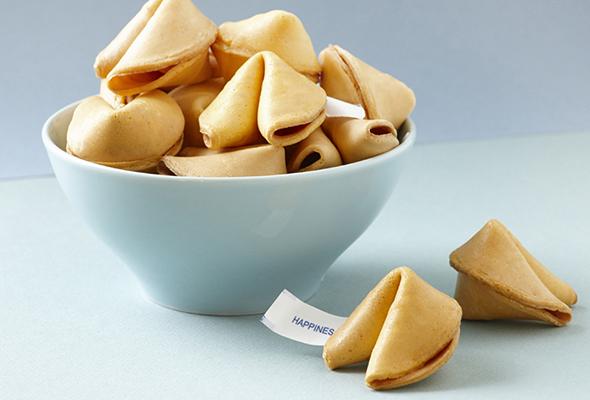
Fortune cookie
There is a saying that "fortune cookie" originated from "Dizhan Pancake" in Japanese divination culture and was brought to the United States by Japanese immigrants at the end of 19th century. During World War II, the fortune cookie business, which was originally dominated by Japanese-Americans, was gradually transferred to Chinese.
Fortune cookie has become a symbolic symbol in American culture, and many products have been produced from it. Such as fortune cookie-type jewelry, fortune cookie-type mysterious prophecy ball, fortune cookie on silver plate, etc.
In American Chinese food, vegetables are basically decorations.
Might as well make a summary.
American Chinese food, which is common in American TV dramas, highlights the sour, sweet and spicy taste that Americans prefer. In terms of cooking methods, American Chinese food is mostly fried food or stir-fried dishes.
Vegetables in Chinese food can be said to be mixed with all kinds of flavors, and they can also be served separately. But in American Chinese food, vegetables basically become side dishes and accompanying dishes, and most of them use tomatoes or carrots. Even green leafy vegetables such as kale and Chinese cabbage, which are common in Guangdong cuisine, are mostly replaced by vegetables common in western food such as broccoli.
Generally, Chinese restaurants in the United States will prepare several sets of menus, with Chinese and English or English menus for non-Chinese customers.
Many Chinese restaurants in the United States also have a Chinese menu to promote liver, chicken feet or other meat products, which may not be suitable for American tastes. Perhaps it is precisely because of the existence of this "dark cuisine" menu. Chinese restaurants in American TV dramas often seem strange and unpredictable. For example, there is a casino underground, and rats are soaked in bottles, and the boss rolls up strange herbs and smokes them.
How can I put it? The first Chinese restaurant to be opened on a large scale in the United States was the Guangdong master. In China, not everyone can get used to Cantonese "all-inclusive" recipes, not to mention not many "worldly" Americans. (It is by no means a regional post _)