On September 29, Shenzhen added 15 confirmed cases and 12 asymptomatic infected people, and the trajectory was announced.

  According to the WeChat WeChat official account of Shenzhen Health and Health Commission, there were 27 new positive cases in Shenzhen from 0: 00 to 24: 00 on September 29th, 15 cases were diagnosed as confirmed cases in COVID-19, and 12 cases were diagnosed as asymptomatic infected people in Covid-19.

  Among them, 18 cases were found in centralized isolated observers, 4 cases were found in home isolated medical observers, 4 cases were found in non-closed-loop management key personnel screening, and 1 case was found in community screening.

  The new cases are as follows:

  Case 1

  Female, 38 years old, living in Reservoir New Village, Cuizhu Street, Luohu District, was found among centralized isolated observers.

  Case 2

  Male, 36 years old, living in Reservoir New Village, Cuizhu Street, Luohu District, was found among centralized isolated observers.

  Case 3

  Female, 49 years old, living in Reservoir New Village, Cuizhu Street, Luohu District, was found among centralized isolated observers.

  Case 4

  Female, 63 years old, living in Reservoir New Village, Cuizhu Street, Luohu District, was found in the screening of key personnel in non-closed-loop management.

  Case 5

  Female, 29 years old, lives in the dormitory building at No.2019, Buxin Road, Cuizhu Street, Luohu District, and was found among home isolation medical observers.

  Case 6

  Male, 3 years old, living in the dormitory building at No.2019 Buxin Road, Cuizhu Street, Luohu District, was found among home isolation medical observers.

  Case 7

  Male, 41 years old, living in the courtyard of No.29 Dongmen North Road, Cuizhu Street, Luohu District, was found in the screening of key personnel in non-closed-loop management.

  Case 8

  Female, 43 years old, living in Sunshine World, Cuizhu Street, Luohu District, was found in community screening.

  Case 9

  Male, 49 years old, living in Dong ‘an Garden, donghu street, Luohu District, was found among centralized isolated observers.

  Case 10

  Female, 48 years old, living in Dong ‘an Garden, donghu street, Luohu District, was found among centralized isolated observers.

  Case 11

  Female, 50 years old, living in Dongle Garden, donghu street, Luohu District, was found among centralized isolated observers.

  Case 12

  Male, 35 years old, living in the second district of Buxin Garden, donghu street, Luohu District, was found among centralized isolated observers.

  Case 13

  Female, 43 years old, living in Jingxuan Garden, Huangbei Street, Luohu District, was found in the screening of key personnel in non-closed-loop management.

  Case 14

  Male, 63 years old, living in Yuling Garden, Nanwan Street, Longgang District, was found among concentrated isolated observers.

  Case 15

  Male, 52 years old, living in Yuling Garden, Nanwan Street, Longgang District, was found among concentrated isolated observers.

  Case 16

  Female, 46 years old, living in Yuling Garden, Nanwan Street, Longgang District, was found among home isolation medical observers.

  Case 17

  Male, 44 years old, living at No.21 Nanyuan Road, Nanwan Street, Longgang District, was found in the screening of key personnel in non-closed-loop management.

  Case 18

  Female, 48 years old, living in Rui Long Xuan, Longxiang Garden, Jihua Street, Longgang District, was found among centralized isolated observers.

  Case 19

  Male, 28 years old, living in Rui Long Xuan, Longxiang Garden, Jihua Street, Longgang District, was found among home isolation medical observers.

  Case 20

  Male, 44 years old, living in Lane 7, Laowei, Village 1, Buji Street, Longgang District, was found among centralized isolated observers.

  Case 21

  Male, 29 years old, living in Minzhi Street and Mansion in Longhua District, was found among centralized isolated observers.

  Case 22

  Male, 39 years old, living in Minzhi Street, Longhua District, Minle District 1, was found among centralized isolated observers.

  Case 23

  Male, 31 years old, living in the old village of clear lake, Longhua Street, Longhua District, was found among the centralized isolated observers.

  Case 24

  Male, 34 years old, living in the first phase of Xintian, Vientiane, xixiang street, Bao ‘an District, was found among centralized isolated observers.

  Case 25

  Male, 46 years old, living in Xiangbin Square, Xin ‘an Street, Bao ‘an District, was found among centralized isolated observers.

  Case 26

  Male, 38 years old, living in Xinzhou North Village, Shatou Street, Futian District, was found among centralized isolated observers.

  Case 27

  Male, 48 years old, living in Shanhaiyuan, Dapeng Street, Dapeng New District, was found among centralized isolated observers.

  The above cases have been transferred to the emergency hospital of the Third People’s Hospital of the city for isolation treatment, and the situation is stable.

  The trajectory of new cases involves Luohu and Longgang.

  After preliminary investigation, the main activity tracks of new cases in recent days are as follows:

  luohu district

  Cuizhu Street:Riyue Yonghe Restaurant (Dong Xiao Store), Dong Xiao Meat Market, Lottery Station (Dong Xiao Comprehensive Building), Dong Xiao Vegetable Market Weimin Barber Shop.

  Guiyuan neighborhood: West Lake Spring (Baihui Store), Bingfen Vientiane Skating rink, Xingmeile (Vientiane City Store)

  Huangbei Street:Huazai Barber Shop, Table Tennis Club of Xinxiu South Industrial Zone

  Donghu street:Starbucks (Xihuicheng Branch)

  Dongxiao Street:Cao pu Nong pi market

  Longgang District

  Henggang Street:Riyue Yonghe Restaurant (Henggang Branch)

  Nanwan Street:Zhongfujia Fresh Supermarket, Yuling Market and Yuesheng Roast Meat Shop.

  At present, the disposal work such as flow tracing, isolation control, nucleic acid detection and medical treatment is being carried out in an orderly manner. Members of the public are requested to continue to fulfill their personal responsibility for prevention and control, take protective measures such as wearing masks, washing hands frequently, ventilation frequently, disinfection frequently, keeping social distance, and vaccination, and actively cooperate with the implementation of various epidemic prevention and control measures.

How much impact will China’s industrial chain suffer when the United States announces the cancellation of Hong Kong’s "special treatment"?

  This article was originally written by "Suning Financial Research Institute" in WeChat official account. The author is Tao Jin, Assistant Director of Macroeconomic Research Center of Suning Financial Research Institute. The first picture is from Yitu. com.

  Recently, official website, the US Department of Commerce, issued a statement saying that the special relevant treatment for Hong Kong has been cancelled, including the suspension of export license exemption, and the differential treatment is being evaluated, while the export policy of related technologies to Hong Kong is being adjusted. These changes mean that the United States began to restrict its exports to Hong Kong.

  Under the background of the COVID-19 epidemic, the actions of the US Department of Commerce are quite damaging to the global industrial chain system. The epidemic is wrapped in trade protectionism and continues to impact the global industrial chain system, and the risk of industrial chain interruption is accumulating.

  Compared with the global economic recession is affected by short-term external events, the impact of the industrial chain is more worrying, because the destruction of the global industrial chain system is more like a long-term and more difficult to recover.

  The industrial chain system has been destroyed, and the epidemic situation is only a fuse, but this fuse may evolve into a major blow to the globalization process. Today, globalization has a history of 600 years. Will it end because of this epidemic?

  A brief history of globalization

  Globalization originated from the great geographical discovery. During the 600 years from the 15th century to the present, globalization has been affected and hindered in various ways, but the overall trend is deepening.

  1. Great geographical discovery

  From the 15th century to the 17th century, European fleets appeared in the oceans all over the world, looking for new trade routes and trading partners to develop Europe’s nascent capitalism.

  Sailors led by Columbus and da Gama have opened up many new sea routes, and also created the "era of great navigation", which is also called "geographical discovery" in history.

  After the era of great navigation, colonialism and free trade began to appear, and globalization experienced intermittent development, reaching its peak in the 1910s, but then came World War I, when the process of globalization was paused, and then fascism appeared, which led to World War II.

  2. Globalization after World War II

  After World War II, many international organizations, such as GATT, have greatly reduced the barriers to international trade, especially the World Trade Organization, which evolved from GATT in 1995, has obviously accelerated the process of free trade and globalization in the past 30 years.

  After stagflation and local wars in 1980s, globalization began to exert its strength in 1990s and continued until the global financial crisis in 2008. During this period, the proportion of global trade in the global economy increased from less than 15% to nearly 26%.

  In 2008, the global financial crisis had a direct impact on global trade, which made countries start to consider the chain reaction of risk events brought by global contact again. However, this impact was not fatal to globalization, and trade remained large in the following years.

  In addition to trade in goods and services, international capital flows are also a major manifestation of globalization. The core member and leader of the WTO is the United States. In fact, the United States has indeed exported dollars and economic hegemony through globalization, and gained a lot of benefits. In particular, American multinational companies have made use of low-cost production factors to produce and sell nearby all over the world and made a lot of profits.

  Similar to international trade, the scale of foreign direct investment in countries around the world has been increasing since the 1990s. Despite the impact of events such as the bursting of the Internet bubble, the September 11th incident and the global financial crisis, the general trend of increasing capital flows has not changed.

  3. Globalization and China’s Reform and Opening-up.

  The accelerated globalization in recent decades has just matched the process of reform and opening up in China. China’s economic growth has experienced a rare high-speed growth in human history.

  After the reform and opening up, China actively integrated into the global free trade system led by the United States, and continued to enhance its economic strength through the strategies of "export orientation" and "import substitution". At that time, the United States was busy with the cold war with the Soviet Union. After the disintegration of the Soviet Union, it was busy exporting political, military and economic hegemony, cleaning up the "backyard" of South America, fighting two Gulf wars and catching bin Laden everywhere, which made it "too busy to look east" and its attitude towards China’s integration into the global economy was open and welcome.

  In the process of integrating into the free trade system, China’s trade scale has continued to grow, even reaching 4.62 trillion US dollars in 2018, surpassing the United States (4.28 trillion US dollars) to become the world’s largest trading country, which is quite a bit like "doing something for another". It should be said that China may be one of the countries that have benefited most from globalization in recent decades.

  Epidemic situation impacts trade and industrial chain.

  Under the epidemic, production activities in many places around the world stagnated, which directly hit trade. Since March, the increase in unemployment, the decrease in income and the suspension of production activities have caused the trade between the United States and the European Union to shrink significantly. Even Japan, which has done a good job in epidemic prevention and control, has experienced a relatively obvious decline.

  In the case of global recession and trade contraction, although China’s current domestic demand accounts for a larger proportion, it can resist the greater impact of external demand, but it is still inevitably impacted in both demand and industrial chain. What is even more worrying is that the contraction of foreign trade has caused a large number of enterprises in the foreign trade field, especially small and medium-sized enterprises, to go bankrupt and potential unemployment.

  From the historical data, the fluctuation of China’s export growth is highly consistent with the fluctuation of GDP growth. According to statistics, if the global economic growth rate drops by 1 percentage point, China’s export growth rate will drop by 6-8 percentage points. Such a large-scale contraction of export business will inevitably lead to the contraction and even bankruptcy of a large number of foreign trade enterprises.

  Because China and the global industrial chain system have formed a criss-crossing deep connection, the blow to the industrial chain also involves a very wide range of industries in China. In a large number of industries (especially automobile industry and electronics industry), China is an exporter of other countries in some links, but in other links, China is an importer of other countries. The stagnation of one link may affect the normal production of the whole industry.

  Here, give an example of my personal experience to illustrate:

  Once, the author took Didi, talked with the driver’s master, and learned that he was a builder working in a nearby construction site. He used to use his spare time to start Didi, but after the epidemic came, the construction site stopped working and he began to start Didi full-time.

  He said that the shutdown was not due to the fact that it was not allowed to resume work at home, but because a foreign key device manufacturer stopped working. Without this device, the construction process had to be suspended.

  This subverts the author’s understanding of the degree of integration of the global industrial chain, because when it comes to international trade, it is often not associated with the construction industry, but even the construction industry is now deeply bound to the global industrial chain.

  In addition, there are two factors that aggravate this influence:

  First, in the process of globalization, China is more and more deeply involved in the transmission process of global value chain. China’s participation in global value chains has reached 62% in 2017. Therefore, all kinds of raw materials and energy are cut off due to the global epidemic, which has also brought a big impact to China’s industrial chain.

  Second, China is downstream in the global value chain. The upstream degree of China in the global value chain is 1%, far lower than the 4% of open economies and 29% of the United States (in 2017). The interruption of import supply chain of upstream products, especially energy and raw materials, will have a great impact on some industries in China.

  From the import data over the years, it can be found that the import scale of raw materials, energy and primary products in China shows an overall upward trend, and a large number of export products in China are manufactured goods. It can be seen that China’s trade field is highly dependent on foreign upstream products, and the risk of "grain shortage" in China’s industrial production caused by supply shortage is still relatively high.

  Behind the impact of industrial chain: anti-globalization

  The impact of industrial chain not only comes from external events such as epidemic situation, but also is the result of intensified anti-globalization in recent years.

  1, the epidemic is the fuse.

  In January and February, after China’s production activities stopped due to the epidemic, the European and American economies were greatly affected. The supply of intermediate products and materials needed for production activities in many countries was interrupted, and more seriously, the supply of final consumer goods was interrupted, which affected the basic consumption of residents.

  In March and April, European and American countries urgently needed masks, protective clothing, ventilators and other anti-epidemic materials, but suddenly found that not only did they not have the production capacity of ventilators, but even the simplest masks could not be produced, and finally they had to rely on China for export, which not only led to an increase in prices, but also failed to guarantee the supply in time. At this time, European and American countries were alert: "You can’t put eggs in the basket of China".

  2. Trade protectionism is on the rise

  In recent years, in developed countries, due to their own reasons, such as the solidification of social class and the widening gap between the rich and the poor, most ordinary people have not enjoyed the benefits brought by globalization, and more benefits have been divided by large industrial groups and multinational companies.

  In order to safeguard the interests of the people, leaders of many countries have opposed free trade and global industrial division of labor, which has led to the rise of populism and trade protectionism, and also the phenomenon of anti-globalization. The global epidemic will inevitably lead to more intensified internal contradictions and increased social instability in Europe and the United States. This will in turn stimulate populism and trade protectionism, further aggravating the degree of anti-globalization. China has gained great benefits from globalization after its accession to the WTO, and these benefits may be reduced by the above changes in the future.

  How serious will the industrial chain impact be?

  Generally speaking, there are three forms of industrial chain impact: manufacturing industry moves to emerging markets such as India and Southeast Asia; The manufacturing industry in developed countries has returned and the industrial chain has been localized; Western countries’ restrictions on China’s imports and exports in certain fields.

  However, these three forms of shocks either have conditions that do not fully meet the reality, or have corresponding countermeasures. In the long run, China still has great opportunities and space to meet these challenges.

  1. Manufacturing industry moves out.

  Now it seems that the destination of manufacturing migration is nothing more than India, Vietnam and other markets. However, there are more or less three fatal problems in these markets: First, although the labor cost is low, the scale and quality of the labor force cannot be compared with China in the short term, the economies of scale are not obvious, and the production efficiency is not high; Second, poor infrastructure conditions, poor transportation, production equipment and other facilities, production quality can not be guaranteed; Third, the lack of producer services can not provide high-quality supporting services for the manufacturing industry. Therefore, in the short term, these countries cannot effectively undertake large-scale manufacturing.

  2. The return of manufacturing industry in developed countries.

  After the outbreak, Japan plans to allocate 243.5 billion yen from the economic stimulus plan to adjust its production line in China, of which 220 billion yen will be used to help Japanese enterprises move their production lines back to China.

  Developed countries, such as the United States, have been calling on their manufacturing enterprises to move back, but the effect is not very satisfactory. Because this kind of relocation faces two problems: first, because foreign capital has been invested in China, the cost of relocation is very large. Of course, this "moving fee" enterprise is unwilling to bear, and even the government will feel great financial pressure; Second, the cost and benefit evaluation often does not support relocation. Under the huge relocation cost, the cost of local manpower and supporting services after relocation is obviously higher than that of China, and the products produced are sold to China, and there is an extra tariff out of thin air, which is not cost-effective.

  In addition, for China, after the economy developed to a certain level, the proportion of service industry increased, while the proportion of manufacturing industry decreased, and the overall impact brought by the relocation of manufacturing industry was also discounted.

  3. Western countries’ restrictions on China’s imports and exports in certain fields.

  This may be the most intractable problem facing China in the short term, and the US Department of Commerce’s actions against Hong Kong fall into this category. However, China has a relatively complete industrial system, which can resist this risk to some extent.

  In the United Nations industrial classification, all industries can be divided into 39 industrial categories, 191 medium categories and 525 subcategories. China has 39 industrial categories, 191 middle categories and 525 sub-categories, making it the only country in the world with all the industrial categories listed in the United Nations Industrial Classification, and all the industrial categories listed in the United Nations Industrial Classification can be found in China. Among more than 500 major industrial products announced by the United Nations, China ranks first in the world in terms of output of about 220 kinds.

  Therefore, it is preliminarily judged that the impact of global supply chain interruption on China’s industrial production can be controlled in the field of foreign trade, and the risk of spreading to internal larger-scale manufacturing industry is still controllable.

  How to deal with it?

  Although in the long run, the impact of industrial chain can be effectively alleviated, but in the short term, China’s economy, especially China’s enterprises, still have to face the challenges of trade and industrial chain turmoil. In addition to the government’s hedging and rescue policies, China enterprises can adjust their business and development strategies in the face of increasingly harsh internal and external environment in order to tide over the difficulties through the following methods.

  1. Streamline business and shrink the development front.

  Faced with the shrinking demand and the interruption of supply chain, enterprises need to strictly control the business content, strengthen the management of the main business, and at the same time shrink the development front, so as to avoid more potential risks. If enterprises increase investment against the trend and implement diversified development, they may face operational risks in many fields. For example, failure in a specific market often leads to a chain reaction, which breaks through the cash flow of enterprises, resulting in damage to the main business.

  Streamlining business, at the same time, also means "reducing expenditure", strictly controlling investment, eliminating redundant phenomena, and even involving appropriate downsizing and salary reduction, so as to retain more concentrated energy to develop major businesses and enhance core competitiveness.

  2. Adjust the target market to meet the change of market direction.

  In a worse external environment, a large number of foreign trade enterprises are facing the challenge of exporting to domestic sales. Fortunately, the domestic demand market in China is constantly expanding, and new market demands are constantly emerging. Enterprises need to seize these opportunities, find the right market direction on the basis of their own operating advantages, and actively cater to the future development trend of emerging industries, such as offline to online, and seize opportunities such as Internet and platform transformation.

  3. Maintain cash flow and persist in survival.

  China’s role as a safe haven for financial assets is more obvious. Under the logic of economic development, China’s economy and assets are more attractive than before, and foreign capital continues to flow into China. It is obviously less difficult for China to stabilize its economy than other countries. Once the economy stabilizes, it is still possible for China to upgrade its position in the global economy, and continue to maintain the first position in the global consumer market scale and economic activity. At that time, China enterprises will also have broad demand again.

This article was first published on WeChat WeChat official account: Suning Financial Research Institute. The content of the article belongs to the author’s personal opinion and does not represent Hexun.com’s position. Investors should operate accordingly, at their own risk.

(Editor: Dong Yunlong)

Haier commander refrigerator and Haier refrigerator difference Haier commander refrigerator and Haier refrigerator introduction [detailed explanation]

  The brand awareness of Haier refrigerator is very high. Many people have heard that Haier Commander Refrigerator and Haier Refrigerator are the same. What is the difference between Haier Commander Refrigerator and Haier Refrigerator? Why is the price gap so big? The following small series will give you a specific analysis. Let’s take a look.

  Haier tongshuai refrigerator

  Commander-in-Chief is the third sub-brand of Haier Group after Haier and casarte, and it is a customized home appliance brand launched by Haier Group under the background of the Internet era. In 1998, the commander-in-chief brand was exported to the European market as an overseas marketing platform.

  Haier Group products have three brands, Haier, casarte and Commander-in-Chief. Haier refrigerator and Haier Commander refrigerator are both brands of Haier refrigerators, but they are put into different markets. Commander series belongs to Haier’s low-end and mid-end brands. In the early stage, home appliances went to the countryside as Commander refrigerators, and casarte series was the high-end brand of refrigerators.

  The product appearance of Haier refrigerator and Haier commander refrigerator may be different. Haier staff said that Haier’s commander-in-chief brand and Haier brand refrigerator are the same in terms of development and production technology, but the brands are different and the materials of some refrigerators are different. The product quality is the same, and the commander-in-chief also provides product customization.

  Generally, Haier refrigerators have refrigerator specification labels (or refrigerator nameplates) attached to the inner wall of the refrigerating room or the back of the refrigerator, which indicate the specifications, models (such as "BCD-216YH silver gray" for a 216-liter silver gray refrigerator), power, circuit diagram and so on. Haier’s products exclusively used in urban and rural areas are generally not fully labeled or not labeled at all, but the performance of the products is the same as other products. For the refrigerators exclusively used, only the refrigerators are more suitable for the supply and demand sides.

  The difference between Haier commander refrigerator and Haier refrigerator is here for everyone. You should be able to distinguish between the two refrigerators now, and also introduce the relationship between them. In the future, you can clearly distinguish when buying Haier refrigerator. I hope the content introduced above can help those in need.

Dragon Boat Festival-Feelings of Home and Country

CCTV News:People commemorate Qu Yuan on the Dragon Boat Festival. Qu Yuan’s personality charm and ideological essence, such as worrying about his home country, caring for the people, being brave in exploration, being honest and noble, have been praised through the ages. The Dragon Boat Festival embodies the profound feelings of the Chinese nation and inherits the spirit of patriotism. General Secretary of the Supreme Leader has made an important exposition on patriotism on many occasions, and repeatedly quoted Qu Yuan’s famous sentences in his speeches to elaborate his thoughts, which has far-reaching implications.

Patriotism has always been a passionate theme.

历史告诉我们,每个人的前途命运都与国家和民族的前途命运紧密相连。国家好,民族好,大家才会好。

——2012年11月,最高领袖在参观《复兴之路》展览时的讲话

图为2012年11月29日,中共中央总书记、中央军委主席最高领袖和中央政治局常委李克强、张德江、俞正声、刘云山、王岐山、张高丽等来到国家博物馆,参观《复兴之路》展览。

在中华民族几千年绵延发展的历史长河中,爱国主义始终是激昂的主旋律,始终是激励我国各族人民自强不息的强大力量。

——2013年10月,最高领袖在欧美同学会成立100周年庆祝大会上的讲话

爱国主义是中华民族精神的核心。爱国主义精神深深植根于中华民族心中,是中华民族的精神基因,维系着华夏大地上各个民族的团结统一,激励着一代又一代中华儿女为祖国发展繁荣而不懈奋斗。5000多年来,中华民族之所以能够经受住无数难以想象的风险和考验,始终保持旺盛生命力,生生不息,薪火相传,同中华民族有深厚持久的爱国主义传统是密不可分的。

——2015年12月,最高领袖在中共中央政治局第二十九次集体学习时的讲话

The general secretary quoted Qu Yuan’s famous sentences many times.

"The road is long and Xiu Yuan is awkward, and I will search up and down." Comrades of the whole party must not forget their initial intentions, move on, always maintain the style of modesty, prudence, arrogance and rashness, always maintain the style of hard struggle, be brave in change and innovation, never be rigid and never stagnate, continue to stand the test in this historic exam, and strive to hand over new and better answers to history and the people!

— — In July 2016, the Supreme Leader’s speech at the celebration of the 95th anniversary of the founding of the Communist Party of China (CPC).

● The source of the allusion: "The road is long, and Xiu Yuan is awkward. I will go up and down to seek" comes from Qu Yuan’s Li Sao.

The picture shows the statue of Qu Yuan.

China people’s War of Resistance against Japanese Aggression is extremely tragic, from strategic defense to strategic stalemate, and then to strategic counterattack. Whether on the frontal battlefield or the battlefield behind enemy lines, the people of China shared the same enemy and went to the national disaster together, and their iron bones clanked and died, playing a heroic victory. Yang Jingyu, Zhao Shangzhi, Zuo Quan, Peng Xuefeng, Tong Linge, Zhao Dengyu, Zhang Zizhong, Dai Anlan and many other heroic groups are outstanding representatives of the Chinese people who are fearless of violence and die for their country. As the saying goes, "Honesty is brave and brave, but ultimately strong and unyielding." The body is dead, the gods are spiritual, and the soul is awkward. "

— — In September 2014, the Supreme Leader’s Speech at the Symposium to Commemorate the 69th Anniversary of China People’s War of Resistance against Japanese Aggression and the Victory of the World Anti-Fascist War.

● The source of the allusion: "Sincerity is brave and brave, and it will eventually be strong and unyielding. The body is dead, the gods are spiritual, and the soul is awkward. " From Qu Yuan’s "Nine Songs of National Mourning"

Qu Yuan’s "Breathing too much to hide tears, lamenting the hardships of the people’s lives", Du Fu’s "There are thousands of spacious buildings, which greatly protect the world’s poor people’s faces", "Zhu Men’s wine and meat stink, and the road is frozen to death", Li Shen’s "Who knows that every meal is hard", and Zheng Banqiao’s "Some small officials in Caozhou County always care about their feelings" and so on.

— — In October 2014, the Supreme Leader hosted a symposium on literary and artistic work in Beijing and delivered an important speech.

● The source of the allusion: "I take a long breath to hide my tears and mourn the hardships of the people’s lives" comes from Qu Yuan’s Li Sao.

The picture shows Qu Yuan’s hometown in Zigui, Hubei.

As one of the ancient civilizations in the world, China has made great contributions to the development of astronomy. Our ancestors began to observe and explore the mysteries of the universe very early in the work of sunrise and sunset. As early as more than 2,300 years ago, Qu Yuan, a great poet in China, wrote, "Who preached it at the beginning of ancient times? Up and down are shapeless, why should we test them? " The famous "Tian Wen".

— — Speech by the Supreme Leader at the Opening Ceremony of the 28th General Assembly of the International Astronomical Union in August 2012

● The source of the allusion: "Who preached it at the beginning of ancient times? Up and down are shapeless, why should we test them? " From Qu Yuan’s "Tian Wen"

Qu Yuan, a great patriotic poet.

Qu Yuan is a great patriotic poet in the history of China and the founder of China’s romantic literature. He is known as "the ancestor of Chinese poetry" and "the ancestor of Ci Fu" and is called "the soul of poetry" by later generations. His main works include Li Sao, Nine Songs, Nine Chapters and Tian Wen. The Songs of the South, written by him, is the source of China’s romantic literature, and is also called "coquettish" with the Book of Songs, which has a far-reaching influence on later poetry.

The picture shows Miluo River.

Qu Yuan was an important politician in Chu State. He was trusted by Chu Huaiwang in his early years, and served as a Zuotu and a doctor in San Lv, in charge of internal and external affairs. He advocated that the reform plan should be strong, that is, he should promote talents and improve statutes internally, and that he should unite with external forces to fight against Qin. Being slandered by the nobles, he was exiled to Hanbei and Yuanxiang Valley successively. In 278 BC, the Qin general attacked Chu Duying (now Jiangling, Hubei Province) in vain, and Qu Yuan was filled with grief and indignation. Huai Shi sank in the Miluo River and died.

(Comprehensive source: People’s Daily, Xinhuanet)

  (This article comes from WeChat WeChat official account’s "No.1 Online", which is a new media platform for promoting major themes of CCTV, and is operated by the Publicity and Coordination Department of the editorial office. )

Cross-border e-commerce: bringing China closer to the world.

The "Several Policies and Measures on Promoting the Stable Growth of Foreign Trade" issued by the Ministry of Commerce recently proposed to promote the development of cross-border e-commerce. The status and importance of cross-border e-commerce does not stop there. At present, it has been included as a new clause in some newly signed and escalating bilateral free trade agreements.

In recent years, new foreign trade formats and new modes have emerged in China, especially cross-border e-commerce, which has become a "new engine" to stimulate foreign trade growth with its rapid development. Relying on strong supply capacity, faster customs clearance efficiency and more cost-effective customized services, cross-border e-commerce is promoting more China products to link to the global market. Cross-border packages smoothly shuttle between more countries and regions, bringing China closer to the world.

"New clause" of FTA

Data show that in the first three quarters of this year, the import and export of cross-border e-commerce in China increased by 11.5% year-on-year, accounting for nearly 6% of China’s foreign trade. As a new format and model in the field of foreign trade, the rapid development of cross-border e-commerce is a pragmatic achievement of China’s continuous expansion of high-level opening-up and promotion of bilateral and multilateral economic and trade cooperation.

On November 14th, China and Peru signed a protocol to upgrade the FTA, adding five chapters to the original FTA, including e-commerce. On August 22nd, the joint communique between China and the Belarusian government pointed out that the two sides will strengthen cooperation in the field of e-commerce and encourage Belarusian enterprises to enter the major e-commerce platforms in China … Recently, the newly signed bilateral free trade agreement or the upgraded free trade agreement has included cross-border e-commerce as a new clause, which has injected momentum into the development of cross-border e-commerce between China and its free trade partners.

"The inclusion of cross-border e-commerce as a new clause in the bilateral free trade agreement has released a new signal that China attaches great importance to the role of cross-border e-commerce in international trade and regards it as an important tool to promote trade liberalization and facilitation." Hong Yong, a think tank expert of China Digital and Real Integration 50 Forum, told the International Business Daily reporter.

"This is a very positive signal." Wang Chunming, executive director and general manager of Harbin Fuhuo International Supply Chain Co., Ltd., told the International Business Daily that the inclusion of cross-border e-commerce in the terms of the bilateral free trade agreement not only simplifies the trade process of enterprises, reduces the barriers to cross-border transactions of enterprises, but also deepens the cooperation between enterprises and other countries in e-commerce. "On the other hand, this move also shows that while promoting the high-quality development of foreign trade, China has taken the digital economy and cross-border e-commerce as a key link in its future development, which is bound to promote more enterprises to participate in the international market."

In Hong Yong’s view, this move also reflects China’s determination to play a more active role in global digital economic governance and trade rule-making. "China has always been committed to jointly formulating rules through international cooperation to promote the healthy and orderly development of cross-border e-commerce."

Cross-border e-commerce "acceleration"

"Our e-commerce sales have nearly tripled year-on-year, and the logistics speed has been shortened from more than 40 days to about 25 days now." Wang Chunming said that the company’s latest batch of orders were delivered from Belarus to Erenhot, and the goods were distributed to all parts of the country after unloading. "Five cars were delivered this morning, and four cars will be’ taken’ later."

There are many foreign trade enterprises like Wang Chunming that enjoy the dividend of cross-border e-commerce development. In Guangzhou and Baiyun Airport Comprehensive Bonded Zone, batches of small packages imported directly by cross-border e-commerce such as beauty and skin care products and clothing accessories were sorted and sent to all parts of the country. In Sichuan, in eight provincial-level cross-border e-commerce industrial parks, 400 cross-border e-commerce source factories operate efficiently, and batches of products with Bashu characteristics go overseas from here.

Since 2014, cross-border e-commerce has been written into the government work report for 11 consecutive years. From 1.06 trillion yuan in 2018 to 2.38 trillion yuan in 2023, the import and export of cross-border e-commerce in China increased by 1.2 times in five years.

Hong Yong believes that the rapid development of cross-border e-commerce in China is mainly due to its ability to effectively reduce transaction costs, shorten transaction chains, improve transaction efficiency, and meet the personalized and diversified needs of consumers.

According to customs statistics, in the first eight months of this year, there were 630,000 foreign trade business entities with import and export performance in China, up 8.8% year-on-year. According to preliminary statistics, the number of cross-border e-commerce entities in China has exceeded 120,000, and the number of cross-border e-commerce industrial parks has exceeded 1,000. Relying on 165 cross-border e-commerce comprehensive test zones in China, cross-border e-commerce has driven more enterprises from various industrial belts to participate in international trade.

Wang Chunming said that these data reflect the great changes in global consumption and trade patterns. "In the past, international trade mainly relied on traditional channels and logistics models. Nowadays, consumers can purchase global goods more conveniently through e-commerce platforms, and enterprises can also use e-commerce platforms to break geographical restrictions and enter the international market."

However, the industry has also noticed that the development of cross-border e-commerce still faces some challenges, such as the inconvenience of cross-border exchange, the need to improve cross-border e-commerce service capabilities, and differences in laws and regulations. In the next step, how to promote the "new engine" with high quality is the key to the industry’s stability and far-reaching.

In this regard, Wang Chunming suggested: First, strengthen policy coordination with other countries, increase the promotion of overseas markets, and promote more cross-border e-commerce enterprises to enter the international market. The second is to promote the combination of cross-border e-commerce platforms and localized services to help domestic enterprises better adapt to the international market, especially to provide more support in product compliance and payment security. "Only when policy, technology and market work together can we provide a better ecological environment for cross-border e-commerce and further promote its healthy and sustainable development."

Hong Yong suggested that the first is to strengthen infrastructure construction, such as improving domestic and international logistics networks and improving the security and convenience of cross-border payment systems. The second is to optimize the policy environment and reduce the operating costs of cross-border e-commerce enterprises through measures such as decentralization and reduction of examination and approval links. The third is to strengthen personnel training and technical support, establish a training mechanism for cross-border e-commerce professionals, and promote the application of technological innovation. Fourth, strengthen international cooperation, actively participate in the formulation of international rules, and create a fairer and more transparent external environment for cross-border e-commerce enterprises.

China’s "consumption map" came out: How much did you spend in the first half of the year?

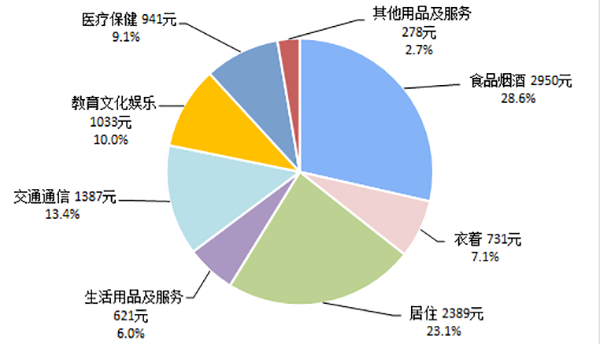
  Beijing, July 31 (Reporter Tang Ming) According to World Finance, the economic voice of the Central Radio and Television General Station, the data released by the National Bureau of Statistics showed that in the first half of this year, the per capita consumption expenditure of the national residents reached 10,330 yuan, and consumption is still an important driving force to lead the stable economic growth. With the release of economic data of provinces (autonomous regions and municipalities) in the first half of the year, a more detailed "consumption map" is presented to people: where do residents spend the most money? Where is the fastest growth in consumption?

  The per capita consumption expenditure is generally higher than last year.

  In the first half of this year, the ranking of per capita consumption expenditure of residents in various provinces (autonomous regions and municipalities) was basically the same as last year, and the amount of consumption expenditure generally increased compared with last year. The data shows that the top rankings of per capita consumption expenditure in the first half of this year were Shanghai, Beijing, Tianjin, Zhejiang and Guangdong, which were consistent with the first half of last year.

  Among them, Beijing’s per capita consumption expenditure exceeded 20,000 yuan, Hubei, Chongqing and Inner Mongolia exceeded 10,000 yuan. In the first half of this year, the per capita consumption expenditure exceeded 10,000 yuan, an increase of three compared with the same period last year.

  The southeast coastal market is huge, and the western region is growing rapidly.

  Looking at the "consumption map" in the first half of the year, the strong economic provinces in the southeast coast are generally stable and the consumer market is huge. Among the top 10 provinces (autonomous regions and municipalities) in the first half of the year, the southeast coastal provinces and municipalities accounted for half of the country, and the per capita consumption expenditures of Shanghai, Zhejiang, Guangdong, Jiangsu and Fujian all exceeded the national average, ranking in the forefront.

  Although the consumption market in the central and western regions is not as large as that in the southeast coast, the growth rate is generally faster. Among them, the total retail sales of social consumer goods in Sichuan Province in the first half of the year increased by 10.5% year-on-year, and the growth rate was 2.1 percentage points higher than the national average.

  Expanding consumption scenes in various places to stimulate consumption vitality

  In order to further stimulate the vitality of consumption, many regions have expanded the consumption scene. Recently, Beijing residents have fully felt the changes brought by the "night economy" to people’s lives. Guangdong has issued the Implementation Plan for Improving the System and Mechanism of Promoting Consumption in Guangdong Province, and put forward 29 specific measures in nine aspects in view of the outstanding problems that restrict consumption at present. Among them, in order to optimize the automobile consumption environment, measures such as gradually relaxing the car lottery and auction indicators in Guangzhou and Shenzhen and expanding the scale of quasi-purchase were put forward.

  Service-oriented, development-oriented, and experience-oriented consumption are featured.

  With the development of mobile Internet technology, in the "consumption map" in the first half of the year, service-oriented consumption, developmental consumption and experiential consumption have become the consumption characteristics of all localities. For example, in the first half of the year, Shanghai’s retail sales without stores reached 117.3 billion yuan, an increase of 20.4% over the same period last year; The contribution rate of service consumption in Beijing to the total consumption growth reached 70.4%, and the contribution rate of upgrading consumption such as communication to the total consumption growth reached 60%.

  Xing Ziqiang, chief economist of Morgan Stanley China, believes that in the future, 5G will inject new vitality into consumption. "The application of 5G is expected to help smart cities, the Internet of Things, the Internet of Vehicles and other applications to a big step, and finally make those more close to consumers. The vitality of tailor-made services, experiences, shopping and medical consumption will be further released, which may be the next stage."

Buying a house and a car when you are in love, what should I do after breaking up?

one

Illustration Wang Chen Jun

  Transfer money during love, do you need to return it after breaking up? Buying a wedding room and registering your girlfriend’s name is a gift or a joint house purchase? Buying a car before marriage is a bride price or a gift. Can I ask for a return after breaking up? Recently, Haidian court tried many such cases, and the judge explained them in detail and gave a prompt.

  Case:

  Forced by his girlfriend to write an iou? If "coercion" is not proved, it will be returned.

  Xiao Na said that during her love with Xiaolei, Xiaolei borrowed 600,000 yuan from her on the grounds of revolving business, and then repaid 30,000 yuan. In July 2015, Xiaolei issued a debit note to her, promising to repay it at maturity, but failed to fulfill the repayment promise after the expiration. She repeatedly urged for no results, so she sued Xiaolei for repaying the loan principal of 570,000 yuan and paying interest.

  During the trial, Xiao Na submitted the IOUs and transfer records to the court. The content of the loan shows: "Xiaolei borrowed 600,000 yuan from Xiaona today, and has already paid back 30,000 yuan, leaving 570,000 yuan to be paid off before October 2015. On July 30, 2015, the borrower Xiao Lei. " According to the personal account statement of Xiao Na Bank, Xiao Na transferred RMB 600,000 to Xiaolei from 2014 to 2015 by mobile phone.

  Xiaolei recognized the transfer record, but said that he and Xiao Na were originally in love, and they often transferred money to each other during their love. He did not borrow money from Xiaona. The two parties originally planned to hold a wedding in August 2015, but a few days before the wedding, Xiao Na and several people forced him to write this IOU.

  The court held that according to the evidence submitted by Xiao Na, it can be concluded that there is a private loan relationship between her and Xiaolei, and Xiaolei should fulfill the repayment obligation, but the failure to repay all the loans so far has constituted a breach of contract. Xiaolei claimed that the IOU was issued under the coercion of Xiao Na, but no evidence was provided, so the court refused to accept it. Finally, the court ordered Xiaolei to repay Xiao Na’s loan of 570,000 yuan and pay corresponding interest.

  The judge suggested that the lender should keep the payment voucher.

  Hu Meiqing of Haidian Court said that it is very common for lovers to transfer money to each other. After the relationship ends, it is not uncommon for one party to advocate "transferring money to borrow money" and sue. Because many lovers write IOUs to each other for emotional reasons, but no loans actually occur, it is more complicated to identify such loan relationships.

  Is it a loan relationship to transfer money during the relationship? The judge believes that the party who advocates the establishment of the loan relationship generally bears the burden of proof on whether the loan relationship is true and the actual delivery of the loan. Therefore, it is particularly important for lenders to keep relevant payment vouchers. Borrowing between lovers, it is best to leave traces by means of transfer, etc., and at the same time pay attention to keeping the bank’s running water and transaction records. If you need to pay a large amount of cash, you should keep the bank’s withdrawal records, and if necessary, you should ask the other party to issue an iou or sign a loan agreement.

  Case:

  Before marriage, the court awarded 50% of the property rights under the name of one registered person.

  Another pair of lovers, Zhou Yang and Li Ting, have been dating since they were in college, and they broke up in 2015. In October 2012, the two parties jointly invested to buy a house in Haidian District, Beijing. Because Zhou Yang was not qualified to buy a house at that time, they negotiated and signed a sales contract with the real estate company in the name of Li Ting. After that, Zhou Yang paid the down payment of 1,588,519 yuan, the purchase price of 160,000 yuan, and Li Ting paid the remaining house price of 440,000 yuan. The house was registered in the name of Li Ting. On June 30, 2016, after obtaining the qualification to buy a house, Zhou Yang contacted Li Ting to handle the house transfer, but Li Ting ignored it. Zhou Yang found out that she planned to sell the house through an intermediary company.

  In this regard, Zhou Yang believes that the joint purchase of a house by both parties and Li Ting’s unauthorized sale have seriously infringed on their legitimate rights and interests, so he sued his ex-girlfriend and demanded that the house be divided according to law, with himself and Li Ting accounting for 78.3% and 21.7% respectively.

  However, Li Ting said that the house was registered in her personal name and belonged to personal property, and Zhou Yang had no right to divide it; Moreover, the purchase price paid by Zhou Yang is a gift to her, and there is no common property between the two parties.

  During the trial, both of them said that they intended to buy a house as a wedding room, but later they broke up due to emotional reasons, and the house has been occupied by Li Ting. The court held that it was an act of jointly purchasing property with marriage intention to jointly invest and buy a house in the name of Li during their love. Now the two sides have failed to get married and end their love relationship, and the purpose of buying a house has been impossible to achieve. Although the property right is registered in the name of the woman, it should still be recognized as common property. In the end, the court ruled that the house was jointly owned by two people, with each party holding 50% of the property rights, and Li Ting assisted Zhou Yang in the registration of the property rights.

  The judge suggested that buying a house together during love is regarded as common property.

  It is more and more common to buy a house jointly before marriage. Hu Meiqing believes that houses, cars and furniture jointly invested by both parties during the period of love should be regarded as common property. At the termination of the joint ownership relationship, the division of the joint property shall be handled according to the agreement if there is an agreement, and if there is no agreement, the factors such as the contribution of the co-owners, the contribution to the joint property and the actual needs of the co-owners in production and life shall be considered. In order to avoid disputes in the future, we should be cautious in buying a house together during the period of love. We can sign a capital contribution agreement in advance to stipulate their respective shares, and at the same time, we should keep relevant evidence such as bank transfer records and payment vouchers.

  Case:

  Buying a car, registering in the name of the prospective mother-in-law, breaking up, and the court awarded the refund of the car.

  A couple decided to get married. Li Wen said that he spent 226,856.9 yuan to buy an SUV as a wedding gift at the request of his girlfriend Zhang Xia. Because they were not qualified to buy a car in Beijing, they registered the car in the name of Zhang Xia’s mother Wang. However, the two sides broke up soon due to personality and other reasons. Li Wen’s request for Zhang Xia to return the car purchase fee was rejected, so he sued Zhang Xia’s mother and daughter for returning the engagement price of more than 230,000 yuan.

  During the trial, Zhang Xia’s mother and daughter argued that there was no engagement between Li Wen and Zhang Xia, and the vehicle involved in the case that Li Wen invested and registered under Wang’s name was not an engagement bride price. Because of their long relationship, Li Wen mentioned breaking up many times. Before buying a car, Li Wen broke up with Zhang Xia again. This time, he proposed to buy a car for Zhang Xia to make up for his feelings. Moreover, when buying a car, the old car under Wang’s name is discounted to 8000 yuan, so the newly bought car also has Wang’s rights and interests, which should be divided before disposal. The used car has been depreciated and should not be returned at the new car price.

  The court held that the car purchase money should belong to Li Wen’s expenditure for the purpose of marriage and has the nature of bride price. Although Zhang Xia’s mother and daughter claimed that Li Wen’s contribution was a gift, they did not provide sufficient evidence and the court did not support it. In view of their failure to get married, Li Wen has the right to demand that the other party return the corresponding expenses incurred for marriage. Regarding the amount of money to be refunded, it should be judged according to Li Wen’s actual expenses for purchasing the car. Finally, the court ruled that Zhang Xia’s mother and daughter returned Li Wen’s car purchase price of 232,983.79 yuan.

  Judge’s tip: unmarried people ask for the support of the bride price court.

  Hu Meiqing said that the phenomenon of paying bride price before marriage is a custom, which is popular in many parts of China. If both parties fail to go through the marriage registration formalities, and one party requests to return the bride price, it shall be supported. If unmarried men and women have indeed lived together but are not registered to get married in the end, the court can determine whether to return and the amount of the bride price according to the time of their living together, the amount of the bride price and the local rural customs and habits. In addition, the actual payers and recipients of the bride price are not limited to men and women themselves. If the actual recipients of the bride price are the parents of the woman or other people, when the man sues for the return of the bride price, the woman and the actual recipients can be listed as co-defendants. (The parties in the text are all pseudonyms) (Reporter Lin Jing)

Beijing began to vaccinate against influenza in batches in mid-September! These people are free.

  The Beijing Municipal Health and Health Commission, the Municipal Education Commission and the Municipal People’s Social Security Bureau jointly released the work plan for influenza vaccination in Beijing in 2022. The influenza vaccination work in this city will be implemented in batches in mid-September, and the free vaccination work is initially scheduled to end at the end of November.

  Free influenza vaccination population is — —

  Older people over the age of 60 with the city’s resident ID card/social security card;

  All primary and secondary school students (including domestic and foreign students in primary schools, general middle schools, technical secondary schools, vocational high schools, technical colleges, reform schools and special education schools);

  Emergency support personnel for major activities identified by the health administrative departments of all districts (including frontline personnel for epidemic prevention and control in COVID-19).

  Routine immunization clinics in all districts are responsible for providing self-funded and free influenza vaccination services, and actively organizing qualified medical institutions and medical personnel within their respective jurisdictions to provide self-funded influenza vaccination services. In areas with large vaccination needs, at least one qualified secondary and above medical institution should be organized to provide vaccination services during this year’s influenza vaccination. Choose suitable places in each district to set up temporary inoculation points reasonably, and when necessary, open temporary inoculation points of COVID-19 vaccine to meet the population’s centralized inoculation demand. Each district should take various measures to further improve the vaccination service capacity in its jurisdiction, such as setting up district-level mobile vaccination teams, extending the vaccination time of vaccination clinics, setting up weekend clinics, and encouraging physical examination centers to set up vaccination clinics.

  In 2022, the city will further promote the influenza vaccine appointment vaccination system under the situation of epidemic prevention and control in COVID-19. Each district is responsible for organizing primary and secondary schools, secondary specialized schools, technical colleges, old-age care institutions, villages/neighborhood committees and other units under the guidance of the district CDC to make an appointment and docking with the vaccination clinics in the jurisdiction for free vaccination. Citizens who are willing to vaccinate can make an appointment at the vaccination clinic through various appointment methods such as internet, telephone and on-site appointment.

  The first batch of vaccination work is scheduled to start in mid-September, mainly for the elderly aged 60 and above in Beijing, and the vaccination publicity and mobilization of students in primary and secondary schools, secondary specialized schools and technical colleges will be started simultaneously.The second batch is scheduled to start in late September, mainly for students in primary and secondary schools, secondary specialized schools and technical colleges, and simultaneously start the self-funded vaccination of influenza vaccine in the city. The third batch is scheduled to start in early October, mainly for emergency support personnel of major events (including front-line personnel of epidemic prevention and control in COVID-19). If there is no special reason, the free vaccination of influenza vaccine in the city is initially scheduled to end at the end of November.

  All vaccination clinics should arrange the vaccination work of schools, old-age care institutions and other collective units in advance to avoid large-scale vaccination in concentrated periods. At the same time, do a good job in registering the demand for pneumococcal vaccination, arrange vaccination reasonably, and provide joint vaccination services for pneumococcal polysaccharide vaccine and influenza vaccine for the elderly.

  All vaccination clinics should strengthen vaccine management, standardize vaccination operations, strictly implement epidemic prevention and control measures such as daily ventilation and disinfection, temperature measurement, code test, negative nucleic acid test, and keeping a one-meter line at the vaccination site to ensure vaccination safety. At the same time, they should take various convenient service measures such as cold protection, rain protection and anti-skid, and do a good job in vaccination warm-hearted service and humanistic care for key groups such as the elderly and students, so as to further enhance the comfort and satisfaction of the citizens.

America again! North Korea will be exposed to more severe sanctions.

       CCTV News:The United Nations Security Council unanimously adopted a resolution on the DPRK on the 22nd, and decided to impose more severe sanctions on the DPRK.

one

       The new sanctions resolution was drafted by the United States, including requiring North Korea to reduce the annual import volume of refined oil from 2 million barrels to 500,000 barrels, the annual import volume of crude oil should not exceed the upper limit of 4 million barrels, and North Korea’s overseas workers should be repatriated within a limited period of time.

one

North Korea tests missiles (data map)

       This is the tenth time that the Security Council has adopted a resolution on sanctions against North Korea’s nuclear program since 2006.

       [Ministry of Foreign Affairs of China] I hope that all parties concerned will implement the resolutions related to the DPRK in a comprehensive and balanced manner.

       Answering a reporter’s question about China’s comment on this resolution, Hua Chunying, spokesman of South China’s Foreign Ministry, said: On December 23rd, the Security Council unanimously adopted resolution 2397 in response to the launch of an intercontinental ballistic missile by North Korea in November. The resolution moderately strengthens sanctions against the DPRK, while stressing that it should not have adverse humanitarian impact on the DPRK civilians, normal economic activities and cooperation, food aid and humanitarian assistance, or the activities of diplomatic missions in the DPRK, reaffirming the maintenance of peace and stability on the Korean Peninsula and Northeast Asia, calling for peaceful, diplomatic and political solutions to the problem, supporting the resumption of the six-party talks, and stressing that all parties concerned should take measures to reduce the tension on the peninsula. China hopes that all parties concerned can implement the Security Council resolutions related to the DPRK, including Resolution 2397, in a comprehensive and balanced manner, and promote the peaceful settlement of relevant issues on the peninsula.

one

       As a close neighbor of the Korean peninsula, China pays close attention to the development of the situation on the peninsula, and always adheres to the position of realizing the denuclearization of the peninsula, maintaining peace and stability on the peninsula, and solving problems through dialogue and consultation. This is our consistent position in dealing with the DPRK nuclear issue and related issues, including participating in the deliberations of the Security Council. At present, the situation on the peninsula is complex and sensitive. China calls on the countries concerned to exercise restraint and make active efforts to ease the tension on the peninsula and properly solve the peninsula problem. We also hope that all parties concerned will actively consider the "double suspension" initiative and the "two-track parallel" idea put forward by China, work with China to promote dialogue and consultation, and make efforts to promote the denuclearization of the peninsula and achieve peace and stability on the peninsula.

The car will not give way to each other, and the "road anger" man actually instructed the truck to hit the car.

  Guangzhou Daily News (all-media reporters Jessica Fong Ching correspondent Li Xiaoyuan and Zhou Bo) On March 23rd this year, a movie-like "car-chasing and intercepting play" was staged on Jinsha Road in Haizhu District, Guangzhou. In order to stop a car, two large trucks did not hesitate to chase the car for one kilometer, cross the line, turn around and even hit the other car’s head. It turned out that the driver of this car had beaten with another car driver, Zhou, because of the problem of not giving way to each other in the narrow road. When Zhou was angry, he called relatives driving big trucks to intercept each other. On the morning of July 30th, Guangzhou Haizhu District People’s Court held a public hearing on Zhou’s case of suspected trouble-making, and pronounced a sentence in court. Zhou was sentenced to seven months’ imprisonment.

  According to the prosecution’s allegations, at 22: 40 on March 23 this year, when the defendant Zhou drove a car out of Innovation Road via Xinmin Sixth Street in Haizhu District, he met Kuang Mouming driving a car from Innovation Road to Xinmin Sixth Street. Because of the narrow road, two cars cannot pass at the same time. Due to the problem of avoiding the car, the defendant Zhou had an argument with Kuang Mouming and his co-pilot Kuang Mouhua, and then the two sides beat each other.

  After a "scuffle", Kuang Mouming and Kuang Mouhua drove away first, and the defendant Zhou immediately left a voice message on his relatives’ WeChat group using WeChat, claiming that he was injured in Xinmin Sixth Street and asked his relatives to come over to help chase him by car. At the same time, he also called relatives to inform them to drive to the scene.

  Later, two large trucks called by the defendant Zhou arrived at the scene, and Zhou sat on one of the large trucks and commanded to catch up with the car for nearly one kilometer. When chasing after the Jinsha gas station near Jinsha Road in Haizhu District, Zhou’s big truck intercepted the small car driven by Kuang Mouming. When Kuang Mouming saw it, he turned around and fled. At this time, another big truck rushed from the opposite lane and crossed the line and crashed into the small car driven by Kuang Mouming, causing damage to the left front of the car and the left rear mirror.

  After Kuang Mouming was hit and stopped, Zhou’s big truck immediately stepped forward to intercept. Zhou and others got off the cab and wanted to rush to the vehicle driven by Kuang Mouming. When Kuang Mouming saw it, he immediately drove away from the scene and called the police for help. Subsequently, the defendant Zhou was arrested by the police. After identification, the injuries of Kuang Mouming and Kuang Mouhua were all minor injuries, and the loss price of the car driven by Kuang Mouming was RMB 8663.22.

  The prosecutor asked in court, "Do you know the consequences of chasing cars on the main road?" "Why didn’t you call the police immediately?" Zhou argued that the reason why he informed his relatives to chase and intercept Kuang Mouming’s driving vehicle was that Kuang Mouming and Kuang Mouhua beat him and fled. He didn’t remember their license plates, only recognized cars and people, "just wanted to intercept the other vehicle and call the police", but there was no alarm after the collision.

  After trial, Haizhu District People’s Court held that the defendant Zhou chased and intercepted others, and the circumstances were bad; Arbitrary destruction of public or private property, if the circumstances are serious, has constituted the crime of stirring up trouble. The defendant Zhou confessed his crime truthfully after arriving at the case and voluntarily pleaded guilty, which can be given a lighter punishment according to law. The defendant, Zhou, had an altercation with Kuang Mouming’s party because of the meeting, and then beat each other. After Kuang Mouming’s party left, he still called others to drive the truck to catch up with and intercept the vehicle driven by Kuang Mouming. His behavior of catching up and intercepting had a great impact on traffic order, and he was given a heavier punishment as appropriate. Considering that Kuang Mouming was at fault, and the defendant Zhou had actively compensated Kuang Mouming for his losses, he was given a lighter punishment as appropriate. In the end, the court ruled that the defendant Zhou constituted a crime of seeking trouble and sentenced him to seven months in prison.