The "new network red" in the shopping cart is the joy and worry of the road of e-commerce
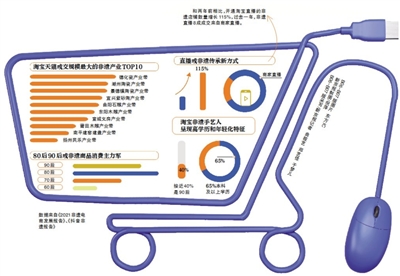
 
  There are 35,000 Tmall Taobao shops, 14 years of turnover of over 100 million intangible industrial belts, 140 million intangible inheritors with an annual income of over one million … With the rise of the national tide, intangible heritages catch up with the fast lane of the Internet, attracting more Z-generation inheritors and consumers, and creating explosions and online celebrity products. This year’s Double Eleven, non-legacy related products have become the "new network red" in young people’s shopping carts, and e-commerce platforms such as Tmall and Taobao have also launched various activities related to non-legacy in combination with the national tide.

  In 2021, the tenth anniversary of the promulgation of the Intangible Cultural Heritage Law, the state issued opinions on further strengthening the protection of intangible heritage, pointing out that it is necessary to promote intangible heritage and rejuvenate the times. Experts believe that the "non-legacy+e-commerce" model has directly narrowed the distance between non-legacy products and consumers, brought greater economic value space, and is also the most effective way to promote the inheritance of non-legacy protection.

  The first wave of double eleven sales doubled year-on-year, which became a new national tide.

  According to Tmall data, in the first wave of the Double Eleven sales, the sales of Rong Baozhai, Shanlian Lake Pen, Li Tinggui and other non-legacy shops doubled year-on-year, and the number and amount of consumers after 00 increased by more than 100% year-on-year. Among them, Rong Baozhai, which has two national-level intangible skills, sold more than the whole day of last year in the first hour of the Double Eleven. In addition, Dunhuang folk music, a time-honored brand, sold more than 3,000 guzheng, with a turnover exceeding 10 million; The ghost seal jointly signed by Xiling Printing House and Tomb Raider Notes, and the cross-border cooperation seal cutting set with Three-body are quite popular among young people.

  In recent years, with the popularity of the national tide among young people, the intangible cultural heritage, which inherits the core of China’s traditional culture, has also become popular on e-commerce platforms. Non-genetic inheritors and Chinese time-honored brands have opened stores and even sold goods live on platforms such as Taobao, Tmall and Tik Tok. According to the 2021 Report on the Development of Intangible E-commerce released by the Public Opinion Laboratory of China Academy of Social Sciences, Taobao Tmall has more than 35,000 intangible shops, with 3.8 million live broadcasts of intangible goods, and the consumption scale of intangible goods has reached billions. It can be said that the live broadcast heat and non-legacy heat in recent years are almost synchronous. According to the intangible cultural heritage data report released by Tik Tok, the intangible cultural heritage content in Tik Tok has experienced explosive growth in the past year. By June 2021, the number of videos related to national intangible cultural heritage projects had exceeded 140 million, with a coverage rate of 97.94%.

  Liu Zhiming, chief expert of Public Opinion Laboratory of China Academy of Social Sciences, said that intangible goods are becoming a trend, and intangible consumption has entered the stage from unpopular to popular, from niche consumption to mass consumption. He pointed out that on the one hand, thanks to the active promotion of the government, on the other hand, the national hot flashes have created a good environment, and the Internet platform has directly brought fire. "Through the e-commerce platform, non-genetic inheritors and merchants can directly link with consumers of 900 million orders, creating explosions and online celebrity products, and niche, fragmented and scattered intangible goods can reach consumers widely and accurately."

  Take the express train of e-commerce, and the annual income of non-genetic inheritors is one million.

  Recently, Wang Xiaolu has been a little busy. She and 12 craftsmen from the Intangible Cultural Heritage Studio have been working overtime to prepare silver silk goods for the Double Eleven. Wang Xiaolu is a "non-legacy second generation" born after 1985, and her mother is the designated representative inheritor of Chengdu Yinhuasi, a national non-legacy project. She began to try e-commerce in 2015. "But I don’t know how to get customers and drain, which is more difficult than running a physical store." Until last year, the physical store was affected by the epidemic, and she decided to start a second business online. Under the introduction of the shop assistant, she joined the platform of Taobao craftsmen. "I participated in many activities, and with the popularity, the sales of my works began to increase." At present, the number of "craftsmen" in the studio has also increased to 12, and the youngest master is a post-95 generation.

  Five or six years ago, the e-commerce platform began to pay attention to non-legacy and non-legacy craftsmen. It is understood that Taobao began to prepare for the "Taobao craftsman" business at the end of 2015. In order to solve the problem of poor management of craftsmen, online shopping festivals, offline exhibitions, markets, etc. were launched to help businesses improve their online operation capabilities and enhance their exposure in the consumer market. According to Jin Que, the head of Tmall’s national tide, many non-legacy shops were excavated by hundreds of "rural revitalization commissioners" who wandered around the country.

  Qiao Xue, the inheritor of Qiao’s handmade leather art, returned to Yinchuan from Beijing a few years ago to start a business. The company was on the verge of bankruptcy because of sales problems. She joined Tik Tok to launch the "non-legacy partner" program. In less than a year, she introduced the culture and production process of handmade leather art by shooting Tik Tok, which attracted the attention of more than 560,000 fans. "Last year, more than 200 live broadcasts were made, and the accumulated sales were nearly 3 million yuan. At most, the number of people online at the same time exceeded 10,000." It is understood that since 2019, Tik Tok has continuously launched the "non-legacy partner" program and the "see craftsmanship" program to support non-legacy craftsmen by strengthening traffic support, improving liquidity, creating an open platform for non-legacy and developing urban cooperation. The person in charge of e-commerce in Tik Tok told the Beijing News that since the launch of the plan, 10 inheritors have earned more than one million yuan a year.

  Today, Qiao Xue has 700,000 fans, and she has to broadcast live for at least 4 hours every day. At other times, she has to make editions, make bags and carve. "During the Double Eleven period, the atmosphere in the live broadcast room was very active, and we prepared new models and special activities."

  Innovation is the most important thing for the "non-legacy second generation" to do live broadcast and open online stores collectively.

  With the rise of the national tide, the post-80s and post-90s have become the main consumers of intangible goods on e-commerce platforms, but the average age of national non-genetic inheritors in China is 63 years old. The industry believes that the age gap, aesthetic and demand differences between producers and consumers are one of the difficulties encountered by intangible products in the e-commerce platform and even in the modern business environment, and it is also one of the biggest obstacles in the process of activating and protecting intangible products.

  More and more "non-legacy second generation" have seen the future opportunities of non-legacy technology through the e-commerce platform. "The industrialization of non-legacy needs to be further injected with the motivation of rejuvenation, including the rejuvenation of non-legacy store operators and craftsmen." Liu Zhiming believes that "compared with the previous generation, they know more about the market and consumer needs, know how to design and product innovation, and are familiar with marketing methods such as live broadcast, and can inject modern design and market elements into intangible improvement and innovation."

  For example, Meng Xiangjun, born in 1990s, is the manager and designer of the Taobao shop "VINE Weinei", and his mother Yin Huiju is the representative inheritor of Yangdu’s straw weaving skills. Three years ago, he returned to yinan county, Shandong Province, and took a group of grandmothers who could not forget straw weaving to create an original straw bag brand. "At present, a lot of energy will be put into product design and originality." Meng Xiangjun said that he also plans to launch a home series next year. In August this year, Wang Xiaolu made a hot search on the winning map of Malone in the Tokyo Olympic Games with silver flowers. She believes that although the silver flower silk is a tribute of the ancient court, in order to let more young people get in touch with it, some cheap ornaments are specially designed, combined with hot spots in life, such as giant pandas, Sanxingdui masks and terracotta warriors and horses.

  Introducing new designs, innovating on the basis of inheriting traditions and combining them with new business models are the most important things to be left behind and rejuvenated, and they are also the "new national tide" sought after by young people. It is understood that during the "Double Eleven" period, Tmall National Fashion invited 10 avant-garde artists and trend designers to redesign 10 kinds of non-legacy techniques to make them look like young people’s favorite. For example, the porcelain was made into a trendy hand-made, and Fengxiang New Year pictures launched a joint name across Ma Yinglong. The person in charge of e-commerce in Tik Tok said that this year, a number of activities combining intangible heritage with national tide were also done, and theme live broadcast rooms were also built for non-genetic inheritors and Xtep and Huaxizi domestic brands. "The printed T-shirts for shadow play were sold in 10 days. More than 10,000 pieces." Chris Tung, CMO of Alibaba Group, pointed out that young people like intangible cultural heritage, not only because of its long history and exquisite skills, but also because it is in tune with their new needs. "The protection and activation of intangible cultural heritage requires more new forces to participate."

  "Marking" inheritors’ shops to prevent the proliferation of intangible goods.

  When the legacy "thrives" with the fertile soil of e-commerce, it seems that there are also signs of flooding. A consumer complained that she searched for "non-legacy" on the e-commerce platform, and countless related shops or videos appeared. "Everyone says that they are non-genetic inheritors, and everyone says that their products are non-legacy and there is no way to identify them."

  However, the non-legacy merchants also encountered operational bottlenecks after initially obtaining traffic support and increasing sales. In an interview with the Beijing News reporter, many non-genetic inheritors or the second generation said that they are not professional in operation, publicity and video shooting, and as "craftsmen", they are more willing to put their time and energy into design and production. The distress of a non-legacy shop owner is that the competitiveness of handmade products is too weak in the e-commerce environment. "Other businesses copy our styles and produce them in batches mechanically, which is fast and cheap, and consumers can’t see the difference."

  Jinque told the Beijing News reporter that the intangible market has developed rapidly in recent years, and the e-commerce platform is also accelerating the standardized management of the intangible market. She said that in the future, the platform will sort out and identify non-legacy shops more carefully and strictly, and realize standardized management. "For example, marking non-genetic inheritors’ shops is just like identifying Chinese time-honored brands." In her view, in addition to providing support for non-legacy businesses such as drainage and resource inclination, e-commerce platforms can also take advantage of supply chain resources to help non-legacy processes create IP and create daily life use scenarios for some uncommon non-legacy businesses. "For example, cooperate with head brands, or formulate original protection plans for non-legacy craftsmen to enhance their brand value and competitiveness."

  Wei Xiang, a professor and researcher at China Academy of Social Sciences, believes that individual non-legacy businesses can rely on the power of the platform to walk online and offline. "The e-commerce platform is not only a sales platform, but also a good experience and display platform." He pointed out that "the future e-commerce platform can combine high technology, such as the popular meta-cosmic technology, to increase the experience of intangible goods." In addition, Wei Xiang suggested that the government should intervene in e-commerce as soon as possible in the process of marketization of intangible cultural heritage, including providing authorization, endorsement and promotion, which will help prevent the infringement and proliferation of intangible cultural heritage products.

  Double eleven non-legacy goods

  Miao batik jumping off the local wind

  Miao batik is a folk handicraft handed down from generation to generation, and was awarded the first batch of national intangible heritage in 2006. On Taobao platform, there are many shops that have been engaged in manual batik business for more than ten years. Apart from traditional batik hanging cloths and handkerchiefs, there are also batik dolls, T-shirts, sweaters and canvas bags. Batik, under the new situation of integrating contemporary design and aesthetics, has jumped out of the simple traditional customs and become a new trend in the fashion circle.

  Old Beijing male prostitute welcomes the Winter Olympics.

  As a unique feature of Beijing, today’s male prostitute keeps up with the trend. In Tmall, in addition to traditional clay figurines, male prostitute was also designed as illustrations, puzzles, refrigerator magnets and so on. In order to welcome the Beijing Winter Olympics, male prostitute’s modeling is also combined with ice and snow sports. In addition, hand-painted male prostitute, male prostitute, male prostitute and other "new schools" male prostitute are also loved by many consumers.

  Luzhou oil-paper umbrella won millions of praises.

  The production of water-dividing oil-paper umbrella in Luzhou, Sichuan Province began in the late Ming and early Qing Dynasties. It is a national intangible heritage and is known as "the living fossil of folk umbrella art in China".

  In the movie Embroidered Spring Knife, the role played by Yang Mi is very out of the loop. It is said that the prototype is from the hand of Yu Wanlun, the seventh generation inheritor of Fenshui Oil Paper Umbrella in Luzhou, Sichuan. At present, Yu Wanlun has 1.06 million fans on the vibrato platform, and the number of praises has reached 11.552 million.

  Shadow play turns into tide play.

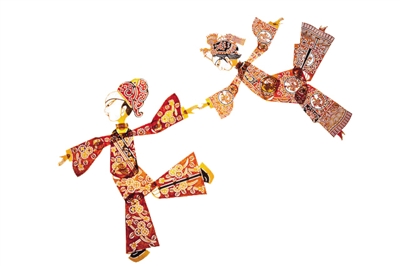
  Shadow play figures are usually handed down from generation to generation by folk artists, and the production process is extremely complicated. On Tmall, many merchants have launched shadow play suits that allow children to do DIY, which is very interesting. Tik Tok Wenchuang also cooperated with the non-legacy project "Jingxi Shadow Play". The designer fully integrated the shadow play skills with the trend play, and launched the gift box of "standing on the edge is more attractive to the skin". Users can watch the vivid 3D shadow play by scanning the pattern with their mobile phones.

  Tmall Taobao Double Eleven Shopping Cart "New Network Red"

  Time-honored Four Treasures of the Study, Folk Musical Instruments, Cross-border Intangible Heritage, Museum Cultural Creation

  Top Ten Most Popular Intangible Commodities in Tik Tok

  Air-dried beef, blue and white porcelain, silverware, bamboo flute, oiled paper umbrella, leather carving bag, bamboo basket, Tianzhu chopsticks, Wang Xingji fan, nuclear carving.

  ■ Industry Outlook

  14 non-legacy industries have an annual turnover of over 100 million.

  In the process of industrialization of non-legacy technology, the cluster model is undoubtedly more successful than individual shops that go it alone. The report shows that in the past year, on the Taobao Tmall platform, the annual turnover of 14 intangible industrial belts exceeded 100 million, including Dehua Porcelain, Jingdezhen Ceramics, Suzhou Nuclear Carving, Longquan Sword, Quyang Stone Carving, Lankao Folk Music and other industrial belts. It is understood that these industrial belts not only produce intangible products themselves, but also produce related derivatives, thus driving the development of surrounding industries. For example, Dehua Porcelain is the largest non-legacy industrial belt at present, accounting for 80% of the national tea set sales market, with 3 Taobao towns and 13 Taobao villages. Liu Zhiming said that promoting intangible cultural heritage consumption and promoting high-quality industrial development are the most effective ways to promote intangible cultural heritage protection and inheritance. "Industrialization protection will lead intangible heritage to the market to participate in competition, thus stimulating its vitality and expanding its living space with the help of the market, and e-commerce platform can just become an important booster for intangible heritage industrialization."

  At present, two kinds of intangible cultural heritage are relatively easy to form industrial belts. One kind is closely related to people’s livelihood, which is widely used in the daily life of thousands of households and can attract many craftsmen and enterprises to participate, such as ceramics, so it can form a great output value; The other type, although not widely used, has high value, such as stone carving and nuclear carving, which can also become a larger industrial belt through integration. In addition, some experts believe that some intangible elements can also be combined with fashion or daily consumer goods, such as Huaxi × Miao Impression Series, which is the combination of Miao Xiu and beauty cosmetics. Although it belongs to the beauty cosmetics industry, it has also played a positive role in promoting the inheritance and dissemination of intangible elements.

  The survey shows that at present, China’s intangible resources are mostly concentrated in rural areas in the central and western regions, but most of them can form intangible industrial belts in the eastern developed regions. Jinque said that the industrialization of intangible cultural heritage is related to the basic plate of regional economy, and the industrialization degree of the southeast coastal area is higher than that of the western region, and the formation of industrial clusters of intangible cultural heritage just needs a good industrialization foundation, especially manufacturing and handicrafts. Liu Zhiming believes that it is difficult to spontaneously form an industrial belt in the existing intangible products, and it is necessary for the government, enterprises, society and e-commerce platforms to work together, do a good job in top-level design, and integrate into a new industrial belt through joint efforts.

  ■ Expert opinion

  Beware of excessive dependence and turn it into a cultural fast food.

  ● Professor and researcher of Wei Xiang China Academy of Social Sciences.

  Selling and disseminating intangible culture and intangible products through e-commerce can increase the influence and commercial realization value of intangible culture through economies of scale in sales channels. However, it is necessary to be wary that over-reliance on e-commerce for intangible products will also have disadvantages, such as reducing experience and cultural connotation, and even bringing cultural fast food.

  In the process of commercialization, traditional cultural and artistic products usually encounter the balance between cultural connotation and profit. If we want to pursue cultural connotation, we need to take a niche market, but at the same time, we must gain commercial benefits, and we must increase the added value, including brand and connotation value. Only in the next stage will we consider injecting fashion and financial elements, which is also the trajectory of the development of traditional luxury goods in Europe. At present, the commercialization of intangible cultural heritage in China is still in the first stage. If we want to take "connotative" goods, we should pay attention to the division of labor economy, not the economies of scale, that is, whether we can open the niche market, rather than focusing on opening the scale market of ordinary consumers, as many intangible cultural heritage second generations do now. This will lead to the sales and connotation of intangible products, which will become two different ways, and it is likely that it will not work in the future.

  This requires young non-legacy e-commerce managers or the second generation to patiently communicate with non-legacy inheritors and old craftsmen and deeply understand the traditional cultural connotation of non-legacy crafts. Whether in e-commerce or physical stores, we should do a good job in the connotation research and development of intangible products, and transform century-old crafts and cultural traditions into new models, instead of rudely throwing away traditions and blindly catering to the tastes of young people or secular people. At this stage, we can’t expect non-legacy technology or non-legacy products to make money in a short period of time. We must preserve the value before we can realize the value-added premium. In such an impetuous era, we should push the non-legacy craft to the market, avoid its vulgarization, and modernize the cultural connotation of the non-legacy so that craftsmen in the new era can survive first.

  ■ The inheritor said

  Intangible products need to pay attention to contemporary life.

  ● Pang Yonghui is the inheritor of porcelain.

  Not adapting to the living habits, needs and consumption trends of young people is a common problem faced by non-legacy. Intangible products need to pay attention to contemporary life and understand what is the core demand for products in this era. For example, ceramics, on the one hand, serve people’s spiritual life, such as decoration, art collection, etc., on the other hand, they should also serve life, such as flowerpots, tea sets, tableware and so on.

  With the rapid development of contemporary social economy, our requirements for the quality of life are getting higher and higher. We need to start from these to change the intangible products and designs. So we cooperate with some contemporary designers to combine some fresh elements with porcelain, such as the hot elements like astronauts with porcelain. Therefore, I believe that intangible products need to reach out to young people through new designs, tell the heroic story of this era with our traditional memories, and bring this story into the life of every young person.

  In addition, the market is changing. Over the years, our sales cost has been high, mainly through offline stores. But now, with the establishment of this mode of online consumption, it has become a living habit. Intangible arts and crafts also need to change to the living habits of young people, which has become an inevitability of the future sales model.

  Finally, it is to influence others with contemporary intangible culture. For example, in addition to selling the quality, design and intangible value of Ding porcelain, we should also expand Ding porcelain culture and cooperate with other industries across borders to promote the spread of Ding porcelain while spreading culture.


Notice of Yueyang Municipal Finance Bureau on Carrying out Basic Evaluation of Internal Control in Administrative Institutions

Yue Caikuai [2016] No.2

County Finance Bureau, municipal units:

In order to further promote the implementation of the Internal Control Standard for Administrative Institutions (for Trial Implementation), and guide and promote all units to effectively carry out the construction and implementation of internal control, According to the Guiding Opinions on Comprehensively Promoting the Implementation of Internal Control Standards in Administrative Institutions (Cai Shui [2015] No.24), the Notice of the Ministry of Finance on Carrying out Basic Evaluation of Internal Control in Administrative Institutions (Cai Shui [2016] No.11) and the Notice of the Hunan Provincial Department of Finance on Carrying out Basic Evaluation of Internal Control in Administrative Institutions (Xiang Cai Hui [2016] No.16), the administrative and public institutions are hereby notified.

First, strengthen organizational leadership

In order to effectively strengthen the organization and leadership of the basic evaluation of internal control of administrative institutions in our city, and jointly promote the basic evaluation of internal control of administrative institutions, the Municipal Finance Bureau established the "Leading Group for the Basic Evaluation of Internal Control of Administrative Institutions", composed of the following personnel:

Group leader: Zou Sanyou, Party Secretary and Director of Finance Bureau.

Deputy leader: member of the party group and discipline inspection team leader of Pengjian Finance Bureau.

Member: Chief, Budget Section, Finance Bureau of Lichang City

Zhou Ji ‘en, Chief of Treasury Department of Finance Bureau.

Chief, Financial Supervision and Inspection Section, Yangyong Finance Bureau

Li Zhewen, Chief, Accounting Section, Finance Bureau

The leading group consists of "Office of Basic Evaluation of Internal Control of Administrative Institutions", and the office is set up with the Accounting Department of the Municipal Finance Bureau, which is specifically responsible for the pre-deployment, coordination, progress tracking, guidance and supervision, publicity and reporting, and information submission of the basic evaluation of internal control of administrative institutions. Comrade Li Zhewen, chief of the accounting department of the Municipal Finance Bureau, is also the director of the office, and Comrade Kuang Jianyi is the deputy director of the office.

All units at all levels should earnestly strengthen the organization and leadership of the basic evaluation of internal control in their own regions and units, make overall planning and implementation, ensure the comprehensive completion of the basic evaluation of internal control, and promote the overall improvement of the internal control level in their own regions and units through "promoting construction through evaluation".

Second, the work arrangement and requirements

All units at all levels shall, in accordance with the requirements of the notice, organize and mobilize according to the steps, supervise and urge the basic evaluation of internal control of their own units, and ensure that the basic evaluation of internal control is started before the end of September.

All units at all levels should attach great importance to it, strengthen the supervision, guidance and inspection of the basic evaluation of internal control in their own regions and units, ensure that the establishment and implementation of internal control in their own regions and units will be successfully completed by the end of 2016, and form a high-quality basic evaluation report on internal control, so as to improve the level and effect of internal control with the results of the evaluation report.

All units at all levels shall, before December 8, submit a summary report on the basic evaluation of internal control in their respective regions and units to the Accounting Department of the Municipal Finance Bureau. The contents of the summary report include the experiences and practices, achievements, existing problems, work suggestions and replicable and popularized work cases of the local area and the unit in carrying out the basic evaluation of internal control. For typical cases with high promotion value and reference significance, the Municipal Finance Bureau will report them to the Provincial Department of Finance, and bring them into the case base of internal control construction of administrative institutions in the province, and recommend them to the Ministry of Finance on the basis of merit, and organize relevant media to publicize and report them for the learning and exchange of administrative institutions.

Third, strengthen supervision and publicity

1. The basic evaluation report of internal control will be an important part of the final report of the department in 2016. All units directly under the municipal government shall, on the basis of the basic evaluation of internal control, conduct a comprehensive evaluation of the basic situation of internal control of the unit, and summarize and form a comprehensive report on the basic evaluation of internal control of the unit (see Annex 3 for the reference format), and report it to the Treasury Department of the Municipal Finance Bureau as an important part of the final report for 2016. Anyone who does not attach a basic evaluation report on internal control to the final report of 2016 will not be accepted.

When submitting the basic evaluation report of internal control, all units directly under the municipal government should include the basic evaluation report of internal control at the unit level and the comprehensive report of basic evaluation of internal control at the unit level (the main body of the report includes the unit level and subordinate units).

2. Strengthen supervision and inspection. In order to ensure that the basic evaluation of internal control in administrative institutions is carried out on time and the evaluation results are true and effective, the Municipal Finance Bureau will take the development of basic evaluation of internal control as an important reference for financial supervision and inspection and inspection of the implementation of the Accounting Law. Any unit that fails to provide the basic evaluation report of internal control in time as required, or that practices fraud in the evaluation process and the evaluation results are untrue, will be the key focus of the city’s financial supervision and inspection and the inspection of the implementation of accounting law. Once verified, the responsibilities of relevant units and personnel will be seriously investigated.

Financial departments at all levels should strengthen internal and external coordination and communication, establish a working mechanism, and jointly promote the basic evaluation of internal control.

3. Strengthen publicity and exchange of experience. The basic evaluation of internal control is an important measure to promote the establishment and implementation of internal control. Financial departments at all levels and units directly under the municipal government should increase the publicity and promotion of the basic evaluation of internal control and its achievements, make full use of media resources such as newspapers, television and the Internet, and carry out multi-level and multi-directional continuous publicity and reporting.

Attachment: 1. Scoring table of basic evaluation indicators for internal control of administrative institutions.

2. Instructions for filling in the scoring table of basic evaluation indicators for internal control of administrative institutions

3 basic evaluation report on internal control of administrative institutions (reference format)

Yueyang bureau of finance

September 13th, 2016


Annex 1

Basic evaluation index score table of internal control in administrative institutions

category

evaluating indicator

Evaluation points (score)

Evaluation score

unit

aspect

(60 points)

1. Start-up of internal control construction (14 points for this indicator)

1.1 Establish a leading group for internal control, and formulate and start relevant working mechanisms (4 points).

1.2 to carry out special training on internal control (3 points)

1.3 Conduct internal control risk assessment (3 points)

1.4 to carry out organizational and business process reengineering (4 points)

2 units responsible for the establishment and implementation of internal control responsibility (6 points for this indicator)

2.1 The main person in charge of the unit shall hold a meeting to discuss issues related to the establishment and implementation of internal control (2 points).

2.2 the main person in charge of the unit shall preside over the formulation of the internal control work plan and improve the working mechanism (2 points).

2.3 The main person in charge of the unit presides over the division of internal control work and staffing (2 points).

3 restrictions on the operation of power (8 points for this indicator)

3.1 the construction of power operation mechanism (4 points)

3.2 Supervision over the operation of power (4 points)

4. Completeness of internal control system (16 points for this indicator)

4.1 Establish a budget management system (2 points)

4.2 Establish revenue management system (2 points)

4.3 establish expenditure management system (2 points)

4.4 the establishment of government procurement management system (2 points)

4.5 Establish asset management system (2 points)

4.6 the establishment of construction project management system (2 points)

4.7 Establish contract management system (2 points)

4.8 the establishment of decision-making mechanism system (2 points)

5. Control of separation of incompatible posts and responsibilities (6 points for this indicator)

5.1 Effective design of incompatible posts and responsibilities (3 points)

5.2 incompatible posts and responsibilities are effectively separated and implemented (3 points)

6. Functional coverage of internal control management information system (10 points for this indicator)

6.1 Establish an internal control management information system with functions covering major business controls and processes (6 points)

6.2 The system sets up incompatible post accounts and reflects their authority (4 points)

business

aspect

(40 points)

7. Budget business management and control (7 points for this indicator)

7.1 The budget is internally decomposed and approved for release (3 points)

7.2 Budget execution variance rate (4 points)

8. Management and control of revenue and expenditure business (6 points for this indicator)

8.1 Revenue shall be managed under centralized management and bill control, so that all receivables shall be collected (2 points).

8.2 Expenditure items shall be managed under centralized management and classified control (2 points)

8.3 collective decision-making and regular reconciliation are carried out for debt matters (2 points)

9. Management and control of government procurement business (7 points for this indicator)

9.1 government procurement compliance (4 points)

9.2 Implement the government procurement policy (2 points)

9.3 Approval for changes in government procurement methods and procurement of imported products (1 point)

10 asset management control (6 points for this indicator)

10.1 Regular check, inventory and tracking management of assets (4 points)

10.2 Allocate, use and dispose of assets in strict accordance with legal procedures and authority (2 points)

11. Management and control of construction projects (8 points for this indicator)

11.1 Fulfill the examination and approval procedures for content change of construction projects (2 points)

11.2 Timely preparation of final accounts for completion and delivery of assets (2 points)

11.3 construction project over budget rate (4 points)

12. Contract management control (6 points for this indicator)

12.1 Strengthen contract conclusion and centralized management (3 points)

12.2 Strengthen the control of contract performance (3 points)

Total (100 points)

Evaluation total score


Annex 2

Scoring Table for Basic Evaluation Indicators of Internal Control in Administrative Institutions

Instructions for filling in the form

In order to guide the administrative institutions to carry out the basic evaluation of internal control smoothly, the operating rules of the indicators and evaluation points in the Scoring Table of Basic Evaluation Indicators of Internal Control of Administrative Institutions and the evaluation scoring method are described as follows for the reference of all units in carrying out the basic evaluation of internal control.

First, the evaluation index setting and score distribution

The basic evaluation of internal control in administrative institutions adopts the method of quantitative evaluation, and sets the unit-level evaluation index and the business-level evaluation index, which are 60 points and 40 points respectively, totaling 100 points. The evaluation indicators at the unit level are divided into 6 categories and 21 indicators, and the evaluation indicators at the business level are divided into 6 categories and 15 indicators.

Second, the evaluation operation rules

(a) unit level indicators (this indicator is 60 points)

1. Indicators of the start-up of internal control construction (14 points in total).

1.1 Establish an internal control leading group to formulate and start relevant working mechanisms. (score 4 points)

Detailed operating rules for evaluation: this unit should start the construction of internal control, set up an internal control leading group (1 point), with the main person in charge of the unit as the team leader (1 point), establish a joint internal control working mechanism and carry out work (1 point), and define the lead department (or post) of internal control (1 point).

Confirm by viewing meeting minutes or deployment documents.

1.2 Conduct special training on internal control. (score 3 points)

Operating rules for evaluation: this unit shall conduct special training on relevant national policies, the internal control system of the unit, the objectives and measures to be achieved by the internal control of this unit, and the responsibilities of various departments and their personnel in the implementation of internal control. Only for the training of national policies, this item is only 1 point; Only for the training of national policies and the system formulated by the unit, this item only gets 2 points.

Check the training notice, training materials, etc.

1.3 Conduct internal control risk assessment. (score 3 points)

Operating rules for evaluation: internal control risk assessment should be carried out based on the internal control objectives of the unit and combined with the business characteristics of the unit, and a mechanism for regular risk assessment should be established.

Confirm by viewing the risk assessment report.

1.4 Carry out organizational and business process reengineering. (score 4 points)

Detailed operating rules for evaluation: The organization and business processes should be combed and re-engineered according to the "three decisions" plan of the unit, and the flow chart should be prepared.

Through the comparison and confirmation of the increase or decrease or adjustment of functional departments or posts and the revision of relevant systems.

2. Indicators on the responsibility of the main person in charge of the unit for the establishment and implementation of internal control (6 points in total).

2.1 The main person in charge of the unit presided over a meeting to discuss issues related to the establishment and implementation of internal control. (score 2 points)

Operating rules for evaluation: the principal responsible person of the unit shall preside over a meeting to discuss the establishment and implementation of internal control. The main person in charge of the unit presided over the meeting, but only included internal control in one of the topics of the meeting for discussion, this item only scored 1 point. If the main person in charge of the unit presides over a special meeting on internal control to discuss the establishment and implementation of internal control, this item will get 2 points.

Confirm by viewing meeting minutes or deployment documents.

2.2 The main person in charge of the unit presided over the formulation of the internal control work plan and improved the working mechanism. (score 2 points)

Operating rules for evaluation: the main person in charge of the unit shall preside over the formulation, revision and approval of the internal control work plan of the unit (1 point), and be responsible for establishing and improving the internal control work mechanism (1 point).

Confirm by viewing the meeting minutes or relevant documents of the internal control work plan.

2.3 The main person in charge of the unit presides over the division of internal control work and staffing. (score 2 points)

Detailed operating rules for evaluation: The main person in charge of the unit shall conduct unified leadership and coordination with relevant departments and personnel involved in the establishment and implementation of internal control, preside over the division of work and staffing, and play a leading role and assume leadership responsibilities.

Confirm by viewing the meeting minutes or relevant documents of the internal control work plan.

3 indicators of the restriction on the operation of power (8 points in total).

3.1 The construction of power operation mechanism. (score 4 points)

Detailed rules for evaluation operation: The power structure of the unit should be sorted out, and a power operation mechanism with scientific decision-making, firm execution and strong supervision should be constructed to ensure that the decision-making power, execution power and supervision power are mutually restricted and coordinated.

Confirm by viewing the meeting minutes or relevant documents.

3.2 Supervision over the operation of power. (score 4 points)

Detailed operating rules for evaluation: This unit should establish a power operation supervision and evaluation mechanism linked with functional departments or posts such as auditing, discipline inspection and supervision, so as to regularly supervise the exercise of power such as decision-making power and execution power, find out problems in the power operation process in time, and correct and improve them.

Confirm by checking meeting minutes, power list and related systems.

4 indicators of the completeness of the internal control system (this indicator is 16 points in total).

4.1 Establish a budget management system. (score 2 points)

Operating rules for evaluation: the budget management system of this unit should cover four aspects: budget preparation and internal approval, breakdown and release, budget implementation, annual final accounts and performance evaluation. 0.5 points for each aspect covered. If an aspect contains two points, if only one of them is covered, it is still regarded as not covered in this aspect, the same below.

Confirmed by checking the budget management system, relevant reports and approval documents of the financial department that have been issued and implemented by the unit.

4.2 Establish revenue management system. (score 2 points)

Detailed operating rules for evaluation: the revenue (including non-tax revenue) management system of this unit should cover four aspects: price determination, bill management, revenue collection and revenue accounting. 0.5 points for each aspect covered.

Confirm by checking the income management system issued and implemented by this unit.

4.3 Establish expenditure management system. (score 2 points)

Detailed operating rules for evaluation: the expenditure management system of this unit should cover four aspects: budget and plan, determination of expenditure scope and standard, approval authority and approval process, and expenditure accounting. 0.5 points for each aspect covered.

Confirmed by viewing the expenditure management system issued and implemented by this unit.

4.4 Establish a government procurement management system. (score 2 points)

Operating rules for evaluation: the government procurement management system of this unit should cover four aspects: budget and plan, demand application and approval, process management and acceptance and warehousing. 0.5 points for each aspect covered.

Confirm by looking at the government procurement management system issued and implemented by this unit.

4.5 Establish an asset management system. (score 2 points)

Detailed operating rules for evaluation: the asset management system of this unit should cover four aspects: asset purchase, asset custody, asset use, asset accounting and disposal. 0.5 points for each aspect covered.

Confirmed by viewing the asset management system issued and implemented by this unit.

4.6 Establish a construction project management system. (score 2 points)

Operating rules for evaluation: the management system of the construction project of this unit shall cover the project establishment and examination, budgetary estimate, bidding, project change, capital control, acceptance and final accounts, etc. Out of 2 points, 0.5 points will be deducted for each aspect not covered, until the deduction is finished.

Confirmed by looking at the construction project management system issued and implemented by this unit.

4.7 Establish contract management system. (score 2 points)

Detailed operating rules for evaluation: the contract management system of this unit should cover four aspects: contract conclusion, contract performance, contract filing and contract dispute settlement. 0.5 points for each aspect covered.

Confirmed by viewing the contract management system that has been issued and implemented by this unit.

4.8 Establish a decision-making mechanism system. (score 2 points)

Detailed rules for evaluation operation: the decision-making mechanism system of this unit should at least cover two aspects: "triple and one big" collective decision-making and hierarchical authorization. 1 point for each aspect covered.

Confirm by looking at the decision-making mechanism system that has been issued and implemented by this unit.

5 incompatible posts and responsibilities separation control indicators (6 points in total).

5.1 The incompatible posts and responsibilities were effectively designed. (score 3 points)

Operating rules for evaluation: The incompatible positions and responsibilities of this unit include but are not limited to application and examination and approval, examination and approval and execution, execution and information recording, examination and approval and supervision, execution and supervision, etc. Out of 3 points, 1 point will be deducted for each incompatible position that has not been effectively designed until it is deducted.

Confirm by looking at the published post rules and regulations and post responsibility manual of this unit.

5.2 Incompatible posts and responsibilities are effectively separated and implemented. (score 3 points)

Operating rules for evaluation: In view of various economic activities of the unit, we should implement all kinds of incompatible posts and responsibilities designed to form a working mechanism of mutual restriction and supervision.

Confirm by randomly checking relevant documents by category. If the signatures of all the relevant documents in the spot check meet the requirements, the item will be scored, otherwise it will not be scored. Check the problems reflected by the internal and external inspections of the unit. If there are related problems, this item does not score.

6 internal control management information system function coverage index (this index is 10 points).

6.1 Establish an internal control management information system with functions covering major business controls and processes. (score 6 points)

Operating Rules for Evaluation: The functions of the internal control management information system (hereinafter referred to as system functions) should fully reflect the economic and business control processes stipulated by the system of the unit, and should at least include business matters such as budget management, revenue and expenditure management, government procurement management, asset management, construction project management and contract management. One point will be deducted for each of the six aspects of business that is not covered. If the business is not covered because the company itself does not exist, the business will not be deducted. If this unit has not established an internal control management information system, both points of 6.1 and 6.2 will be directly scored 0.

By looking at the system function specification and the actual operating system, the system function is compared with the requirements of the internal control system for confirmation.

6.2 The system sets up incompatible post accounts and reflects their authority. (score 4 points)

Operating Rules for Evaluation: Independent account names and passwords and clear operating authority levels shall be established in the system for incompatible positions and responsibilities of internal control of covered business processes. If there is no separate account or authority for each pair of incompatible positions, 1 point will be deducted until the deduction is finished.

By looking at the system function specification and the actual operating system, the user account setting of the system is compared with the requirements of the internal control system for confirmation.

(two) business indicators (this indicator is 40 points)

7 budget business management control indicators (7 points in total).

7.1 Internally decompose the budget and approve the release. (score 3 points)

Detailed operating rules for evaluation: The accounting department of this unit shall break down the budget indicators by department according to the budget approved by the finance department at the same level and the expenditure demand put forward by various business departments within the unit, and issue them to all business departments after approval by the budget management committee.

Confirm by viewing the budget approval document, department responsibilities, work plan and internal release document of budget approval.

7.2 Budget execution variance rate. (score 4 points)

Operating rules for evaluation: calculate the average value of the variance rate of the annual budget execution of this unit in recent three years. If the absolute value of the variance rate is higher than 5%, the reasons for the variance rate should be traced. If it is verified that the cause of the variance rate is related to internal control, score according to the variance rate result: if the absolute value of the variance rate is 5-10% (inclusive), score 2 points; 10-15% (inclusive), 1 point; If it exceeds 15%, score 0. If the absolute value of the variance rate is within 5% (inclusive) or the reason for the variance rate has nothing to do with internal control, score 4 points.

Calculation formula:

Confirmed by checking the unit budget quota and unit final accounts approved by the finance department at the same level.

8 revenue and expenditure business management control indicators (this indicator is 6 points).

8.1 Revenue shall be managed under centralized management and bill control, so that all receivables can be collected. (score 2 points)

Detailed operating rules for evaluation: the income (including non-tax income) of this unit shall be managed by the accounting department and accounted for; For contracts involving income, the accounting department shall regularly check whether the amount of income is consistent with the contract; Set up a bill manager according to the regulations and establish a bill ledger; Register the application, activation, write-off and destruction of all kinds of bills in a timely manner. If one of the above four aspects is not done, 0.5 points will be deducted.

By looking at the relevant system of the unit, check the records of the accounting department to check the contract and confirm the bill ledger.

8.2 Expenditure items shall be subject to centralized management and classified control. (score 2 points)

Detailed operating rules for evaluation: this unit shall specify the centralized management departments and responsibilities of various expenditure business matters, and conduct centralized management of expenditure business matters; Expenditure items should be classified and managed, and corresponding systems should be formulated, and different approval procedures and authority should be implemented for different categories of items; Clarify the requirements of external original bills to be submitted for all kinds of expenditure business matters, and clarify the requirements of internal approval forms and the key points of document review; Through the analysis and control of all kinds of expenditure business matters, we find out the abnormal situation of expenditure and its reasons, and take effective measures to solve it. If one of the above four aspects is not done, 0.5 points will be deducted.

Confirm by viewing the expenditure management system, internal approval documents and relevant expenditure vouchers.

8.3 Collective decision-making and regular reconciliation shall be carried out for debt matters. (score 2 points)

Evaluation operation rules: units that can borrow debts according to regulations should establish a debt management system; Carry out prior argumentation and collective decision-making; Regularly check the debt balance with creditors; The debt scale should be controlled within the prescribed scope. If one of the above four aspects is not done, 0.5 points will be deducted. Units that are prohibited from borrowing debts according to regulations, if there is borrowing behavior, get 0 point for this item.

Determine by looking at system documents, meeting minutes, statements, debt contracts, etc.

9 government procurement business management control indicators (7 points in total).

9.1 Government procurement compliance. (score 4 points)

Detailed operating rules for evaluation: the goods, services and projects purchased by this unit shall be strictly implemented in accordance with the provisions of the annual government centralized procurement catalogue and standards. For each item that should be adopted but not adopted or violates the annual centralized government procurement catalogue and standards, 1 point will be deducted until it is deducted.

Confirm by looking at the unit government procurement items in a certain period.

9.2 Implement the government procurement policy. (score 2 points)

Operating rules for evaluation: The government should strictly implement policies such as energy conservation and environmental protection and promoting the development of small and medium-sized enterprises when purchasing goods, services and projects. For each item that fails to implement the government procurement policy as required, 1 point will be deducted until the deduction is finished.

Confirm by looking at the unit government procurement items in a certain period.

9.3 Changes in government procurement methods and approval for purchasing imported products. (score 1 point)

Detailed operating rules for evaluation: the procurement of goods or services above the standard of public bidding by means of non-public bidding, as well as the government procurement of imported products, shall be submitted for approval in accordance with regulations. For each item that is not submitted for approval according to the regulations, 1 point will be deducted until the deduction is finished.

Confirm by looking at the unit government procurement items in a certain period.

10 asset management control indicators (this indicator is 6 points in total).

10.1 Check, count and track assets regularly. (score 4 points)

Detailed operating rules for evaluation: the monetary funds, inventory, fixed assets, intangible assets, creditor’s rights, foreign investment and other assets of the unit shall be checked and counted regularly to ensure that the accounts are consistent with the facts; Follow-up management of creditor’s rights and foreign investment projects. Deduct 1 point for each class of assets that are not regularly checked, counted or tracked, until the deduction is finished.

Confirmed by checking various asset ledgers, accounting books, inventory records, various investment decision-making approval documents and meeting minutes of this unit in the past year.

10.2 Allocate, use and dispose of assets in strict accordance with legal procedures and authority. (score 2 points)

Operating rules for evaluation: This unit shall go through the examination and approval procedures in strict accordance with the examination and approval authority when allocating, using and disposing of state-owned assets. Without approval, it shall not allocate assets, use assets for foreign investment, lease or lend them, or dispose of assets by itself.

Confirmed by checking the approval of asset allocation, foreign investment, lease and loan, free allocation (transfer), foreign donation, sale, transfer, replacement, scrapping and loss reporting, and loss verification of monetary assets.

11 indicators of construction project management and control (8 points in total).

11.1 Perform the examination and approval procedures for content change of construction projects. (score 2 points)

Detailed operating rules for evaluation: this unit shall organize the implementation of construction projects according to the approved preliminary design scheme. If it is really necessary to carry out project negotiation and design change, the centralized management department of construction projects and project supervision institutions shall conduct strict audit and perform corresponding examination and approval procedures in accordance with relevant regulations and system requirements. Major project changes should also refer to the relevant procedures and requirements of project decision-making and budget control to re-perform the examination and approval procedures. Every time there is an illegal change in a construction project, 1 point will be deducted until it is finished.

By looking at the changes that occurred during the construction of the completed construction projects of this unit in the past five years, it is confirmed.

11.2 Timely preparation of final accounts for completion and delivery of assets. (score 2 points)

Detailed operating rules for evaluation: this unit shall prepare the final financial accounts of the project in time after the completion of the construction project, and go through the formalities for the delivery and use of assets in time after the project is completed and accepted. Every time there is a construction project that fails to prepare the final accounts of completion acceptance in time, 1 point will be deducted; Every time there is a construction project that fails to handle the formalities for the delivery and use of assets in time, 1 point will be deducted until the end of deduction.

It is confirmed by reviewing the completion acceptance data and final accounts preparation audit data of the completed construction projects of this unit in the past five years.

11.3 The over-estimated rate of construction projects. (score 4 points)

Detailed operating rules for evaluation: calculate the over-estimated rate of completed construction projects in this unit in recent 5 years. If the over-estimated rate is higher than 5%, the reasons for the over-estimated rate should be traced. If it is verified that the reason for the over-estimated rate is related to internal control, it will be scored according to the situation of over-estimated rate: 2 points will be deducted for every construction project with over-estimated rate higher than 5% until the deduction is finished. If it has nothing to do with internal control, score 4 points.

Calculation formula:

(The investment in final accounts of construction projects shall be subject to the final financial accounts of the approved projects; During the construction period, if the preliminary design estimate is adjusted, it shall be calculated by the last approved adjustment estimate).

Confirmed by checking the investment estimate of the construction project and the approved final accounts report.

12 contract management control indicators (this indicator is 6 points in total).

12.1 Strengthen contract conclusion and centralized management. (score 3 points)

Operating rules for evaluation: this unit shall strictly review the contract text, and the centralized contract management department shall make unified classification and serial numbering. For the contract text with significant influence or complicated legal relationship, the business department, legal department, accounting department and other relevant departments should be organized to conduct joint audit. Every time there is a contract that is not in compliance with the regulations, 1 point will be deducted until the deduction is completed.

Confirm by checking relevant systems, randomly checking contract approval records, meeting minutes, etc.

12.2 Strengthen the control of contract performance. (score 3 points)

Operating rules for evaluation: this unit shall effectively monitor the performance of the contract, clarify the responsible person for contract implementation, inspect, analyze and accept the performance of the contract in a timely manner, and take timely measures if it is found that the contract cannot be performed on time; In case of the need to supplement, modify or terminate the contract, strict supervision and examination shall be conducted in accordance with the relevant provisions of the state. For each contract that fails to effectively monitor the performance of the contract, or fails to supervise and review the contract’s supplement, change and dissolution, 1 point will be deducted until the deduction is finished.

Confirm by checking the inspection records of contract performance, contract acceptance documents, supervision and review records of contract supplement, change or cancellation, etc.

Third, the evaluation scoring method

1. All evaluation indicators are applicable to the participating units, and the scores of the participating indicators are summarized, which is the evaluation score of the participating units, with a full score of 100 points.

2. If an indicator is not applicable because the participating units do not involve certain business, the evaluation score needs to be converted, and the conversion formula is as follows:
