Punch the Five Lies of Japanese Right-wing Denial of Nanjing Massacre
Xinhua News Agency, Beijing, December 12th Title: debunk the five lies of the Japanese right wing denying the Nanjing Massacre.
Xinhua news agency reporter
This year marks the 80th anniversary of the Nanjing Massacre. In the cold winter 80 years ago, after the Japanese invaders captured Nanjing, they committed adultery and committed all kinds of crimes, killing 300,000 soldiers and civilians in China, which was terrible and shocked the world.
History has long nailed this atrocity of Japanese militarism to the column of shame. But in Japan, there are always some forces trying to deny the Nanjing Massacre. Especially in recent years, with the intensification of the right deviation in Japanese politics and society, the words and deeds of denying the Nanjing Massacre are once again rampant, and the means are more diverse.
In 2015, during the review of the Nanjing Massacre Archives by the International Advisory Committee of UNESCO’s World Memory Project, the Japanese authorities blocked it by threatening to stop paying membership fees and other means.
In 2016, some high school textbooks approved by Japan’s Ministry of Education, Culture, Sports, Science and Technology avoided the number of victims of the Nanjing Massacre and only treated them vaguely with the expression "a large number".
At the beginning of this year, Japan’s APA Group was exposed to openly placing books and periodicals denying the Nanjing Massacre in its hotel chains. Recently, the media also exposed that Japan sent parliamentarians to lobby for obstructing the establishment of the "Nanjing Massacre Memorial Day" in Ontario, Canada.
Not only the Japanese authorities, but also the Japanese society kept the historical truth of the Nanjing Massacre a secret. Right-wing scholars and politicians spread specious "arguments" to support their fallacies, and some so-called opinion leaders and right-wing media helped to convince many Japanese people who did not know much about the history of aggression.
However, there are also a group of just people in Japan who have been committed to investigating and studying the historical truth of the Nanjing Massacre for a long time, and are resolutely fighting against the lies of the right-wing forces denying the Nanjing Massacre. Xinhua News Agency reporters recently visited a number of representative experts and historians on the Nanjing Massacre. With irrefutable facts and arguments, they debunked five major lies that Japanese right-wing forces tried their best to fabricate and spread.
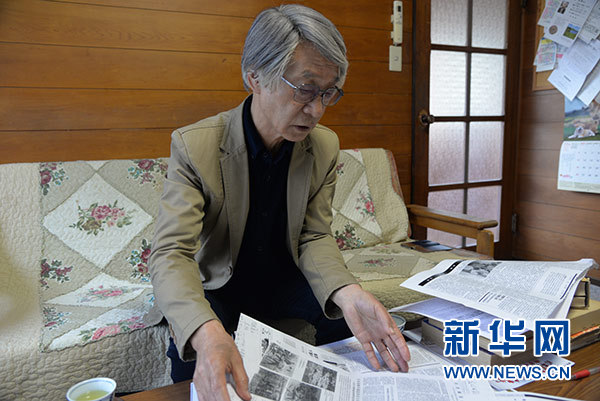
On November 25, 2017, Mori Zhengxiao, a historian of the Japanese invasion of China, was interviewed by Xinhua News Agency in Shizuoka, Japan, and refuted the argument that the right wing denied the Nanjing Massacre. Xinhua News Agency reporter Wang Kejia photo
Lie 1: The Nanjing Massacre was fabricated by the victorious country in the "Tokyo Trial" (the trial of the Far East International Military Tribunal) in retaliation for Japan, and the Indian judges who participated in the trial advocated acquitting the defendant.
Mori Zhengxiao, a historian of the Japanese war of aggression against China: In the Tokyo trial, 11 survivors of the Nanjing Massacre testified in court, and "third parties" from the "refugee zone" (international security zone) testified, such as American pastor Maggie, doctor Will, and professor Bates of Jinling University. In addition to the testimony of witnesses who appeared in court, there are also many sworn testimonies of witnesses, as well as materials from "refugee areas", court autopsy reports, burial records of charitable organizations, Jewish rabbis’ pleadings, etc. The evidence is sufficient.
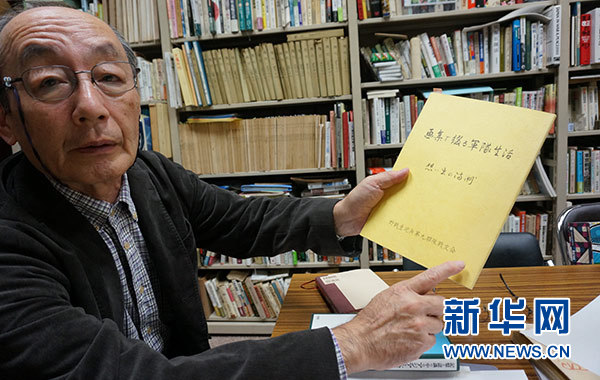
On November 27th, 2017, in Tokyo, hitotsubashi university history professor Yoshida Yu refuted all kinds of "Nanjing Massacre Denial Theory" in an interview with Xinhua News Agency. Xinhua News Agency reporter Yang Ting photo
Yoshida Yu, a professor of history in hitotsubashi university: Indian judge Parr advocated acquitting the defendant because he believed that victorious countries such as Britain and France were not qualified to judge defeated countries. But in fact, Parr also admitted that Japan had committed war crimes in the occupied territories. The Japanese right wing’s claim to Parr is taken out of context and deliberately simplified, with the aim of explaining that "Japan is not guilty".
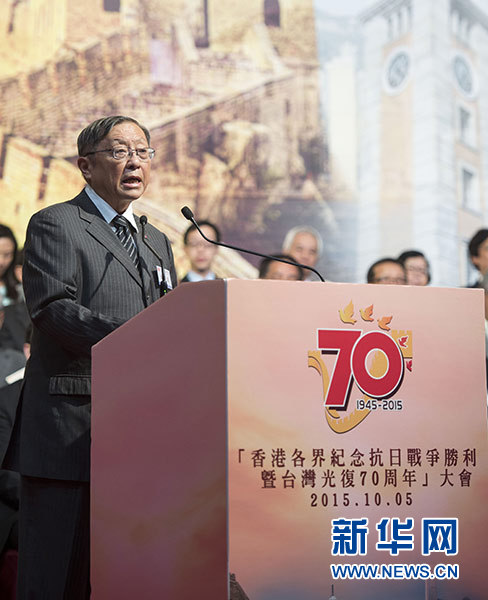
On October 5th, 2015, Xiang Longwan, the son of China, the prosecutor of Tokyo Trial, and honorary director of Tokyo Trial Research Center of Shanghai Jiaotong University, delivered a speech at the conference held in Hong Kong Convention and Exhibition Center to commemorate the 70th anniversary of War of Resistance against Japanese Aggression’s victory and Taiwan’s recovery. Xinhua News Agency reporter Lu Xiaoyu photo
Xiang Longwan, the son of China and honorary director of Tokyo Trial Research Center of Shanghai Jiaotong University, pointed out that the Tokyo trial emphasized witness and material evidence, the defendant also enjoyed full rights, and the prosecution and defense personnel were international. During the trial, there were a large number of witnesses about the Nanjing Massacre, among which the testimony of foreigners was particularly convincing.
Lie 2: No one knew about the Nanjing Massacre at that time, and public opinion in China and the world didn’t react at that time. It was all made up later.
Mori Zhengxiao: Foreign journalists in Nanjing at that time wrote a report immediately after witnessing Japanese atrocities. A few days after the massacre began, relevant reports appeared, such as The New York Times’s Chicago Daily News and other media. By January 1938, the world knew the existence of the Nanjing Massacre. Chinese is also aware of this situation. In February 1938, China’s representative in the League of Nations, Gu Weijun, made a speech in the League of Nations, referring to the Nanjing Massacre and calling on the whole world to pay attention to it. This proves that China has mastered the specific situation before this. The Japanese side did not know about the Nanjing Massacre until after the Tokyo trial. A large amount of information that can be found now proves that the Japanese Ministry of Foreign Affairs knew about the atrocities committed by the Japanese army in Nanjing through various channels at that time. Therefore, at that time, both China, Japan and the whole world knew about the Nanjing Massacre.

On September 18th, 2008, at the 4th International Symposium on Crimes of Unit 731 held in Harbin, Mori Zhengxiao (front left), a historian of the Japanese invasion of China, donated his precious materials on the investigation and interview of Unit 731 in the past 30 years to the representatives of Harbin Academy of Social Sciences. Xinhua News Agency reporter Xu Yijun photo
Shi Jingming, historian and honorary professor of Tokyo University: In fact, the Nanjing Massacre was reported by foreign media reporters who stayed in Nanjing at that time, which caused the international community to condemn Japan. The problem is that in Japan, because public opinion was strictly controlled, the Japanese media did not report the truth of the incident at all, so the Japanese people were completely ignorant of the brutality of the Japanese army at that time.
According to the latest historical data discovered by Hu Zhuoran, a scholar of Nanjing Massacre History and International Peace Research Institute, Knox, then US Navy Secretary, expressed the common indignation of the international anti-fascist camp in 1943, and juxtaposed it with the Nazi massacre of Jews. This proves that the Nanjing Massacre has become a serious atrocity of the Japanese army recognized at home and abroad after it happened.
Lie 3: At that time, the population of Nanjing was only 200,000, and the number of victims of the Nanjing Massacre could not be 300,000.
Yoshida Yu: According to the letter from the Nanjing Municipal Government to the Military Commission of the National Government on November 23, 1937, there were about 500,000 people in Nanjing Special City at that time. In addition, there are about 150 thousand troops guarding Nanjing. Therefore, it is definitely wrong to say that there are only 200,000 people in Nanjing.
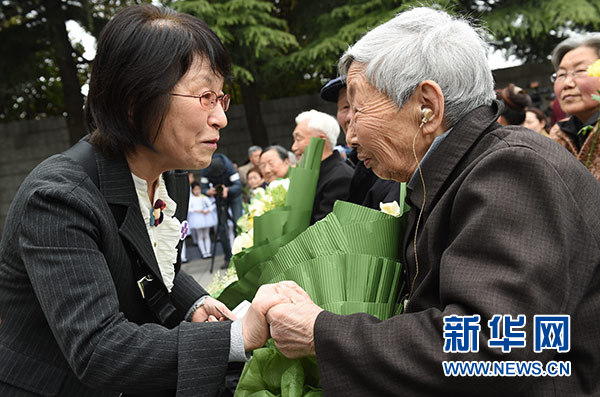
On April 4, 2016, Nanjing Massacre historian Matsuoka Ring (left) communicated with Nanjing Massacre survivor Yang Cuiying while attending a memorial service in Nanjing. Xinhua News Agency reporter Han Yuqing photo
Matsuoka Ring, a historian of the Nanjing Massacre and president of the Ming Heart Association of Japan: The so-called only 200,000 people actually refer to Nanjing’s "refugee zone" (international security zone). When the right-wingers talk about this, they don’t mention the "refugee zone" at all. In fact, the "refugee area" is only a small part of Nanjing and cannot represent the whole of Nanjing.
Mori Zhengxiao: The records of Chongshantang and Hongwanzi Society, which handled the bodies at that time, showed that only these two groups handled about 150,000 bodies. Considering that a large number of mass killings were carried out along the Yangtze River, many bodies were thrown into the river and it is impossible to count, and the final number of victims was nearly 300,000.
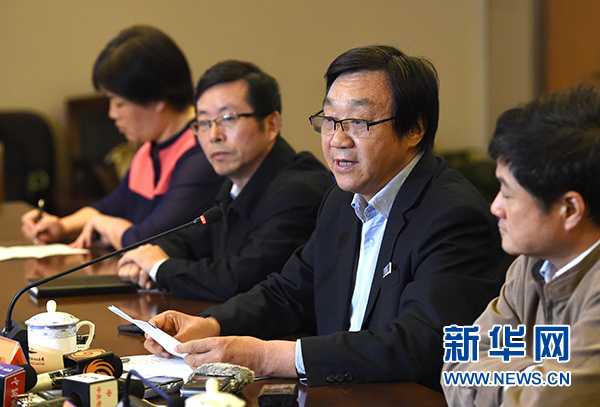
On October 10th, 2015, Zhu Chengshan (second from right), then director of the Memorial Hall for Victims of the Nanjing Massacre by Japanese Invaders, spoke at the Symposium on Nanjing Massacre Archives Successfully Selected into the World Memory Heritage List held in Beijing. Xinhua News Agency reporter Sun Shenshe
Zhu Chengshan, vice-president of the Historical Society of War of Resistance against Japanese Aggression, China, pointed out that the atrocities committed by 300,000 Japanese soldiers in Nanjing massacre were legal facts recognized by the Far East International Military Tribunal and the Nanjing Military Tribunal for Trial of Japanese War Criminals. According to various materials discovered later, the number of victims of the Holocaust must have exceeded 300,000, and "there will only be more, not less".
Lie 4: The "100-person beheading" killing contest was invented by the Japanese media at that time and cannot be an example of the Nanjing Massacre.
Yoshida Yu: The so-called "Hundred People Chop" competition was originally reported by the Tokyo Daily News (now the Daily News) and also reported by other media. The content is that two Japanese second lieutenants, Mukai Toshiak and Noda Takeshi, competed on their way to Nanjing to see who would slay Chinese first. The two men got the result of "106 to 105" in the battle of Purple Mountain, but they could not judge who killed more than 100 people first and started the "150-person beheading" competition. In the 1970s and 1980s, Asahi Shimbun reporter Katsuo Katsuichi described the Nanjing Massacre in his works, including the "Hundred People Chop" competition. Later, I sued the descendants of Ino and Noda for "Daily News", "Asahi Shimbun" and "Ben Duo wins one" to damage their ancestors’ reputation, and was finally defeated.
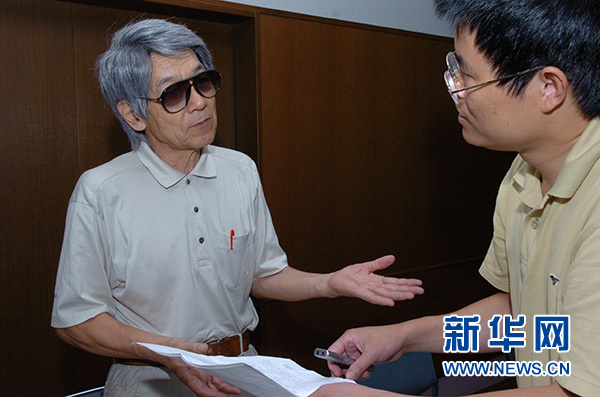
On August 23rd, 2005, the former reporter of Asahi Shimbun was interviewed by a reporter at the Tokyo Lawyers’ Club. Bento Katsuichi went to China for an interview. After returning home, he exposed the Japanese atrocities in China with a series of reports on his visit to China. Xinhua News Agency reporter Ma Ping photo
Mori Zhengxiao: Some people claim that the "Hundred People Chop" competition between Inoi and Noda is a kind of fighting behavior, and it has been exaggerated by the media, which is not true. Others say that Japanese knives will break if they can’t cut 100 people at all. Bendo wins more than one, and "Daily News" (in the above-mentioned lawsuit) argue that not all the killings took place in the battle, and many prisoners or farmers who were caught were beheaded when they could not resist, so it was not difficult to slay more than 100 people. The plaintiff’s defense lawyer is Tomomi Inada, the former defense minister, who also claimed that the Nanjing Massacre did not exist. But the court ruled that the plaintiff lost the case.
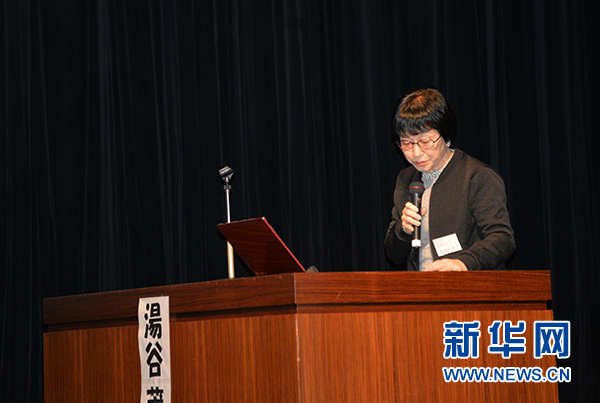
On November 26, 2017, Matsuoka Ring, a historian of the Nanjing Massacre, spoke at the commemoration of the 80th anniversary of the Nanjing Massacre in Osaka, Japan. Xinhua News Agency reporter Wang Kejia photo
Matsuoka Ring: Not only were there reports in the media at that time, but the two parties personally told their families after returning to China that they "killed more than 100 people in the battle". According to the information I got from visiting Japanese veterans who invaded China for many years, although the Japanese army also killed Japanese soldiers in battle, in more cases, the so-called "killing the enemy in battle" was actually a cruel atrocity of catching local farmers to "try their knives".
Zhu Chengshan pointed out that the sentence of "100 people beheaded" by the Nanjing Military Court for the trial of Japanese war criminals is legally serious, effective and just. The Japanese court ruled that the survivors of war criminals lost the case, which made the Japanese right wing’s attempt to reverse the case for the history of aggression unsuccessful.
Lie 5: China soldiers put on plain clothes and disguised themselves as civilians. They are guerrillas who fought against the Japanese army. It is not against international law for the Japanese army to kill them.
Yoshida Yu: In fact, the academic circles have long been conclusive about the statement of "plainclothes soldiers". At that time, the Japanese army only identified "plainclothes soldiers" by so-called characteristics such as "fierce eyes". However, at that time, the military discipline stipulated that if the enemy was suspected of pretending to be a civilian, it was necessary to go through the procedure of a military court to make a judgment.
Mori Zhengxiao: At that time, there were some soldiers who abandoned their military uniforms and changed into casual clothes, but their purpose was not to fight, but to escape the tyrannical treatment of the Japanese army. These people have lost their ability to resist and have been captured by the Japanese army. At that time, the Japanese army left no prisoners alive and would immediately execute them, most of whom were slaughtered by the Yangtze River. There are countless records and testimonies in this regard. At that time, Japan had acceded to The Hague Convention, which clearly stipulated that prisoners should be treated humanely. The Japanese army’s actions completely violated this convention.
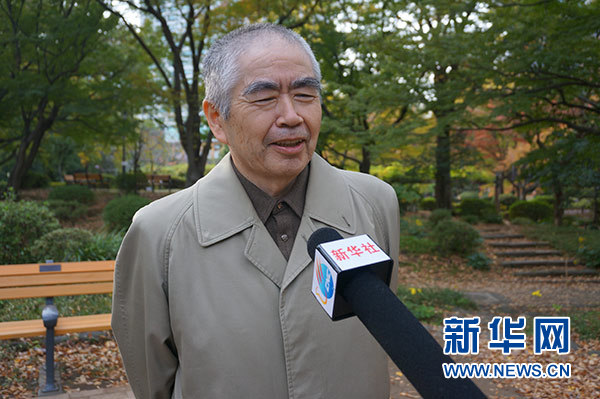
On November 20, 2017, Shi Jingming, a Japanese historian and honorary professor of Tokyo University, refuted all kinds of "Nanjing Massacre Denial Theory" in an interview with Xinhua News Agency in Tokyo. Xinhua News Agency reporter Deng Min photo
Shi Jingming: It is confirmed by historical data that the Japanese army broke into the international security zone managed by Europe and America at that time, and captured and killed many soldiers and civilians. In the urban area of Nanjing, the Japanese army also killed many soldiers and civilians indiscriminately. International law stipulates that prisoners and civilians cannot be killed. The Japanese side claimed that it killed plainclothes soldiers disguised as civilians, which was completely a sophistry to avoid responsibility.
Zhu Chengshan pointed out that according to The Hague Convention, China soldiers at that time should be regarded as prisoners as long as they laid down their weapons, regardless of whether they changed into civilian clothes. In particular, people carrying weapons are not allowed to enter the international security zone, so it is completely against international law for the Japanese to capture and kill the so-called "plainclothes soldiers" there. (Note holder: Liu Zan, Feng Wuyong; Participating reporters Wang Kejia, Yang Ting, Deng Min, Ma Zheng, Jiang Fang)