The 2019 annual report and the first quarterly report in 2020 of domestic home appliance enterprises are basically in line, and the downward pressure on the performance of most home appliance enterprises is obvious.
With the general decline in revenue, the income ranking of the big three household appliances has undergone subtle changes. Midea Group’s performance reached a new high. Haier Intelligence overtook Gree Electric to rank second. In terms of color TV, the boost of Huawei’s smart screen to the confidence of the color TV market was not reflected in the performance, and the revenues of Konka, Changhong, Skyworth and Hisense declined.
In contrast, the overall scale of household appliances has maintained growth due to the continuous emergence of new categories. Midea, Supor, Jiuyang, and Xiaoxiong Electric Appliances have shown good pressure resistance under the epidemic situation. In the kitchen appliance market, the growth rate of kitchen appliance companies such as Boss, Vantage and Wanhe slowed down, and the revenue of main products declined.
Under the price war, the air-conditioning business is both ice and fire.
In 2019, the performance of Midea Group, Gree Electric and Haier Zhijia, the three giants of home appliances, changed subtly. The growth rate of each revenue shows signs of slowing down, but the range is obviously different.
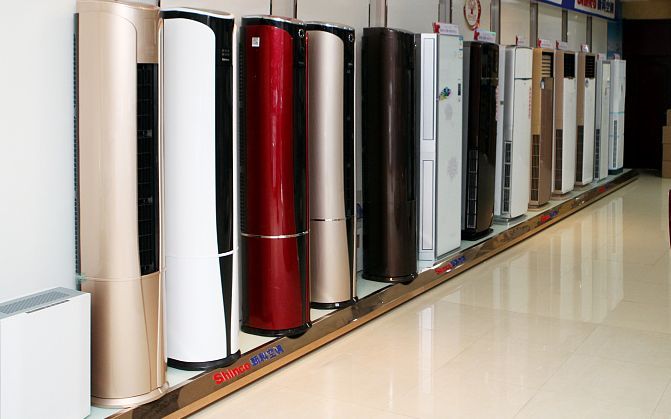
In 2019, the revenue gap between Gree Electric and Midea Group widened. Midea Group achieved revenue of 279.381 billion yuan last year, a year-on-year increase of 6.71%; In the same period, Gree Electric’s total operating income was 200.508 billion yuan, up only 0.24% year-on-year. Haier Zhijia achieved an operating income of 200.762 billion yuan last year, a year-on-year increase of 9.1%, and its revenue surpassed that of Gree Electric.
The above changes in performance are inseparable from the air-conditioning market situation in 2019. Last year, Gree reported Oaks, and the price war in the industry started again. The air-conditioning business of the three companies is two worlds apart.
In 2019, the proportion of Gree air-conditioning business revenue fell below 70%. During the reporting period, Gree’s air-conditioning business revenue was 138.665 billion yuan, a year-on-year decrease of 10.93%, accounting for 69.99% of the revenue. Compared with 78.58% in the same period last year.
Compared with Gree, Midea Group’s air-conditioning business performed relatively stably last year. In 2019, Midea Group’s HVAC revenue was 119.607 billion yuan, a year-on-year increase of 9.34%, accounting for 42.99% of revenue. Last year, the revenue difference between Midea Group and Gree air-conditioning business was 19.1 billion yuan, the smallest in the past eight years. On the other hand, Haier Zhijia, air conditioning has become the most obvious business with declining performance. In 2019, Haier’s air-conditioning product revenue was 29.128 billion yuan, down 8.32% year-on-year.
In the second echelon, Hisense’s air-conditioning business achieved a main business income of 16.369 billion yuan, a year-on-year increase of 9.92%; Changhong Meiling air-conditioning business realized operating income of about 5.909 billion yuan, down 12.81% year-on-year.
In terms of profit, Midea Group achieved a net profit of 24.211 billion yuan in 2019, a year-on-year increase of 19.68%. Midea Group’s net profit reached a new high, approaching Gree Electric. In the same period, Gree Electric’s net profit was 24.697 billion yuan, down 5.75% year-on-year; Haier Zhijia’s net profit was 8.206 billion yuan, a year-on-year increase of 9.7%.
The epidemic also affected the air-conditioning market in the first quarter. According to the data of Aowei Cloud, in the first quarter of this year, the scale of the air-conditioning industry was 14.92 billion yuan, down 58.1% year-on-year.
The quarterly report of the home appliance giant also confirmed the market downturn. In the first quarter, Midea Group’s revenue decreased by 22.86% and its net profit decreased by 21.51%. Haier Zhijia’s revenue decreased by 11.09% year-on-year, and its net profit decreased by 50.16% year-on-year; Gree Electric’s scare was even more obvious. In the first quarter, its revenue decreased by 49.70% and its net profit decreased by 72.53%.
Affected by the epidemic situation and the implementation of the new national standard for air-conditioning energy efficiency, the uncertainty of the air-conditioning market still exists. On the evening of April 29th, Dong Mingzhu told the Beijing News reporter, "Despite the resumption of production in April, the liquidity is still very small. We were affected in the first quarter, and it still has an impact in the second quarter so far."
Ultra HD and glory smart screen failed to boost the performance of color TV enterprises.
In 2019, the color TV retail market continued to be sluggish. According to the data of Aowei Cloud, the annual retail sales volume was 47.72 million units, down 2.0% year-on-year, and the retail sales volume was 134 billion yuan, down 11.2% year-on-year. The demand for color TVs declined for the first time in six years.

The market downturn is reflected in color TV enterprises, which is the decline in performance. . In 2019, Konka Group’s operating income was 55.119 billion yuan, a year-on-year increase of 19.49%; The net profit was 212 million yuan, a year-on-year decrease of 48.45%. Konka Group attributed the decline in performance to the loss of color TV business to a certain extent due to factors such as rising costs and intensified market competition. In 2019, Konka Group’s color TV business revenue was 8.766 billion yuan, accounting for 15.90%, down 11.39% year-on-year.
Sichuan Changhong also suffered a decline in performance due to the loss of color TV products. In 2019, Changhong’s operating income was 88.79 billion yuan, a year-on-year increase of 6.5%; The net profit was 330 million yuan, a year-on-year decrease of 49.4%. Among them, the TV business realized an operating income of 11.13 billion yuan, down 16.1% year-on-year.
Skyworth Group’s overall turnover last year was 37.277 billion yuan, down 4.4% year-on-year, and its net profit was 747 million yuan. The turnover of multimedia business including color TV business was 21.505 billion yuan, down 13.3% year-on-year.
Last year, Hisense’s video revenue was 34.105 billion yuan, down 2.91% year-on-year; The net profit was 556 million yuan, up 41.71% year-on-year. Hisense’s TV business revenue was 29.383 billion yuan, a year-on-year decrease of 3.54%.
From the perspective of TV business revenue volume, Hisense Video occupies the first place, Skyworth ranks second, and the proportion of TV business of Sichuan Changhong and Konka Group further decreases. Judging from the decline in revenue, Hisense TV has strong pressure resistance, with a decline of 3.54%, while the other three companies all fell by more than 10%.
In 2019, opportunities and challenges coexist in the color TV market. In the first half of the year, high definition became the hottest topic in the color TV industry. The Action Plan for the Development of Ultra HD Video Industry (2019-2022) mentions that in 2022, the overall scale of China’s ultra HD video industry will exceed 4 trillion yuan, the 4K industrial ecosystem will be basically perfect, and breakthroughs will be made in the R&D and industrialization of 8K key technology products, forming a group of internationally competitive enterprises. In the second half of the year, the Glory Smart Screen equipped with HarmonyOS system went on the market, which greatly boosted the color TV industry. Many color TV companies have launched smart new products, and socialization, intelligence and ultra-high definition have become the focus of competition among enterprises. However, from the annual reports of various color TV companies, the boost effect is limited.
The first quarterly report of color TV enterprises this year is hardly optimistic. Konka Group’s revenue fell by 27.53%, with a loss of 221 million yuan; Sichuan Changhong’s revenue fell by 18.65%, with a loss of 352 million yuan; Hisense’s video revenue decreased by 11.26% year-on-year, and its net profit was 51.37 million yuan, an increase of 91.79%.
Under the epidemic situation, small household appliances are resistant to pressure, and many enterprises enter the market.
Compared with the weakening of air-conditioning and color TV industries, small household appliances have performed well in pressure resistance. According to AVC data, in 2019, the sales of seven categories of small household appliances (cooker, magnet, pressure, bean, material, press and water) increased by 1.6% year-on-year, and the sales increased by 14.9% year-on-year.
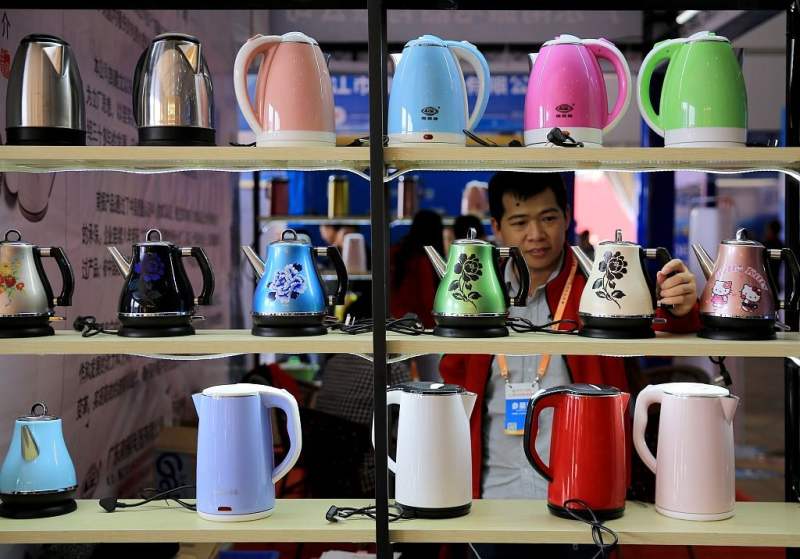
In 2019, Midea, Supor and Jiuyang still occupied the top three shares of small household appliances. Midea Group’s small household appliances business occupies a major position. In 2019, the company’s consumer appliances revenue including refrigerators, washing machines, kitchen appliances and other small household appliances business was 109.487 billion yuan, up 6.31% year-on-year, accounting for 39.35% of the revenue.
In 2019, Supor’s operating income was 19.853 billion yuan, a year-on-year increase of 11.22%, and its net profit was 1.920 billion yuan, a year-on-year increase of 14.97%. In the same period, Jiuyang’s operating income was 9.351 billion yuan, up 14.48% year on year, and its net profit was 824 million yuan, up 9.26% year on year.
As a newly listed company of small household appliances, Bear Electric has performed well. Xiaoxiong Electric’s operating income was 2.688 billion yuan, a year-on-year increase of 31.70%; The net profit was 268 million yuan, a year-on-year increase of 44.57%; The gross profit margin of most categories of small kitchen appliances is above 36%.
Under the epidemic situation, small household appliances have gone against the trend. Consumers are more and more at home, and cooking opportunities have increased. Interest in frying, frying and baking small household appliances with low current holdings has sprouted, and it has ushered in a "blowout" increase in a short period of time.
In the first quarter of 2020, thanks to the small household appliances business, Midea Group’s performance declined less than Gree and Haier. In the same period, Jiuyang’s revenue decreased by 5.37% and its net profit decreased by 9.91%. Supor’s revenue decreased by 30.29% and its net profit decreased by 40.44%. Xiaoxiong Electric grew against the trend in the first quarter, and its revenue increased by 17.32% year-on-year; Net profit increased by 83.66% year on year.
In the first quarter, many enterprises entered the small household appliances in succession. In March, Feike Electric announced that in order to realize the concentric multi-category strategy focusing on small household appliances and improve the product chain of small household appliances such as personal care appliances, household appliances and kitchen appliances, Feike Electric acquired a total of 15% equity of Pure Rice Technology.
In April, Fangtai Group released its first light kitchen brand "Mibo". This is the first time that Fangtai Group has entered the field of small kitchen appliances after many years of deep cultivation in the field of kitchen appliances.
On the evening of April 29th, Dong Mingzhu said in an interview with the Beijing News reporter, "The one who made small household appliances this year is doing very well. You may turn on the TV and find this little thing very interesting. You can buy one for two or three hundred yuan. If 100 million people buy it, there will be tens of billions of markets. Like our population of 1.4 billion, if we have an average of 100 yuan per person, there will be 140 billion yuan. "
The Beijing News reporter noted that the categories of household appliances in Gree Electric are also enriched. In 2019, Gree Electric continued to explore the business of kitchen appliances and small household appliances, and the revenue of household appliances was 5.576 billion yuan, accounting for 2.81% of the revenue, up 46.96% year-on-year.
The growth rate of kitchen appliance manufacturers has slowed down, and high gross profit is still there.
In 2019, the kitchen appliance market in China is still in the downward channel. According to the data of Aowei Cloud, the retail sales of range hoods in 2019 was 35.24 billion, down 7.5% year-on-year; The retail sales of gas stoves reached 20.02 billion, down 4.1% year-on-year.
At present, Midea, Gree and Haier all have layouts in kitchen appliances. Haier Zhijia’s kitchen appliance revenue in 2019 was 29.509 billion yuan, an increase of 18.27%. According to the data provided by the unlisted Fangtai Group, the sales revenue reached 10.8 billion yuan in 2019, which was basically the same for the whole year on the basis of the large negative growth in the first half of the year.
The growth rate of boss’s electrical appliance revenue slowed down, and Vantage and Wanhe Electric reduced their income one after another. In 2019, Boss Electric’s operating income was 7.761 billion yuan, a year-on-year increase of 4.52%, and its net profit was 1.59 billion yuan, a year-on-year increase of 7.89%; Vantage’s operating income was 5.748 billion yuan, down 5.69% year on year, and its net profit was 748 million yuan, up 10.46% year on year. Vanward Electric’s total operating income was 6.22 billion yuan, down 10.04% year on year, and its net profit was 598 million yuan, up 22.33% year on year.
Although the growth rate of performance has slowed down or declined, the high gross profit of kitchen appliances is still there. Boss Electric’s main product range hood gross profit margin was 58.47%, up 2.30% year-on-year; The gross profit margin of gas stoves was 56.01%, up 1.57% year-on-year. Vantage range hood gross profit margin was 51.14%, up 3.10% year-on-year; The gross profit margin of stoves was 52.80%, up 3.03% year-on-year; The gross profit margin of water heaters was 45.88%, a slight increase of 0.36% year-on-year.
The gross profit margin of domestic hot water products of Wanhe Electric was 41.07%, up 4.37% year-on-year; The gross profit margin of kitchen electrical products was 22.94%, up 5.50% year-on-year.
In 2019, integrated stoves, water purifiers, dishwashers, and steaming and baking machines became the focus of the expansion of various kitchen appliances companies. Di Chin Smart Kitchen Appliances, which is responsible for the integrated stove business, has a revenue of 230 million yuan and a net profit of 49.86 million yuan; The water purifier revenue was 77.53 million yuan. Vantage steaming and baking machine revenue was 102 million yuan, and the operating income of water purifier was 86.46 million yuan. Wanhe Electric’s sales of water purifiers are 65.3047 million yuan, and the sales of integrated stoves are 27.3745 million yuan.
In the context of the overall slowdown in performance growth, kitchen appliances companies are still keen on advertising. Boss’s advertising expenses for electrical appliances were 458 million yuan, compared with 598 million yuan in the same period of last year. Vantage spent 320 million yuan on advertising, compared with 319 million yuan in the same period of last year. Advertising expenses were 80.03 million yuan, compared with 88.41 million yuan in the same period of last year.
During the epidemic, kitchen appliances were greatly affected, online sales were bleak, and offline sales tended to stagnate. The performance of kitchen appliances companies in the first quarter of 2020 declined significantly. Boss Electric’s revenue in the first quarter was 1.266 billion yuan, down 23.77% year-on-year, and its net profit was 245 million yuan, down 23.35% year-on-year. Vantage’s revenue was 691 million yuan, down 48.07% year on year, and its net profit was 46.35 million yuan, down 65.01% year on year. Wanhe Electric’s revenue was 1.43 billion yuan, down 29.29% year on year, and its net profit was 128 million yuan, down 27.93% year on year.
Beijing News reporter Chen Weicheng Editor Zhao Ze proofreads Liu Baoqing.