Striving for a new journey, making contributions to a new era, great changes, green, clear, accessible and rich —— The Nirvana of Wujiang River

  Xinhua News Agency, Guiyang, May 13th Title: Green, clear, accessible and rich — — "Nirvana" of Wujiang River

  Xinhua News Agency reporters Li Qianyu and Zheng Minghong

  Puke Village, Hezhang County, Bijie City, Guizhou Province, is located in the upper reaches of the Wujiang River, with an altitude of more than 2,300 meters, surrounded by mountains and a lush forest of 10,000 mu.

  At the end of April, Bijie Forestry Bureau issued a forestry carbon ticket for puffin village. "With this forestry carbon ticket, the air purified by the 10,000-mu forest in our village will become a circulating asset in the future, and the people will have another way to increase their income." Wen Junfu, secretary of the Party branch of Haique Village, said.

  More than 30 years ago, due to the harsh ecological environment in karst mountainous areas, the local area fell into the dilemma of "more reclamation and more reclamation", and the forest coverage rate was less than 5%. Since 1987, puffin village has planted trees on a large scale, and the former "Heshangpo" has now become a forest of 10,000 mu, with a forest coverage rate of 77%.

  The cargo ship carrying phosphorus ore set off from Luowang River Wharf in Kaiyang Port Area of Guiyang City and sailed downstream along Wujiang Channel (photo taken on November 16, 2021). Xinhua News Agency reporter Tao Liang photo

  Forestry carbon ticket is the certificate of the income right of forest carbon emission reduction, the "identity card" of forest carbon sequestration increment as asset transaction, and can be used as loan pledge to participate in carbon ticket storage, transaction and financing.

  This forestry carbon ticket in Haique Village covers an area of 7,346.5 mu of forest land, and the carbon emission reduction monitored from 2016 to 2020 is 34,627.7 tons. According to the average unit price of 30 yuan/ton, which is relatively low in recent years, this carbon ticket is expected to realize carbon trading value of about 1.04 million yuan.
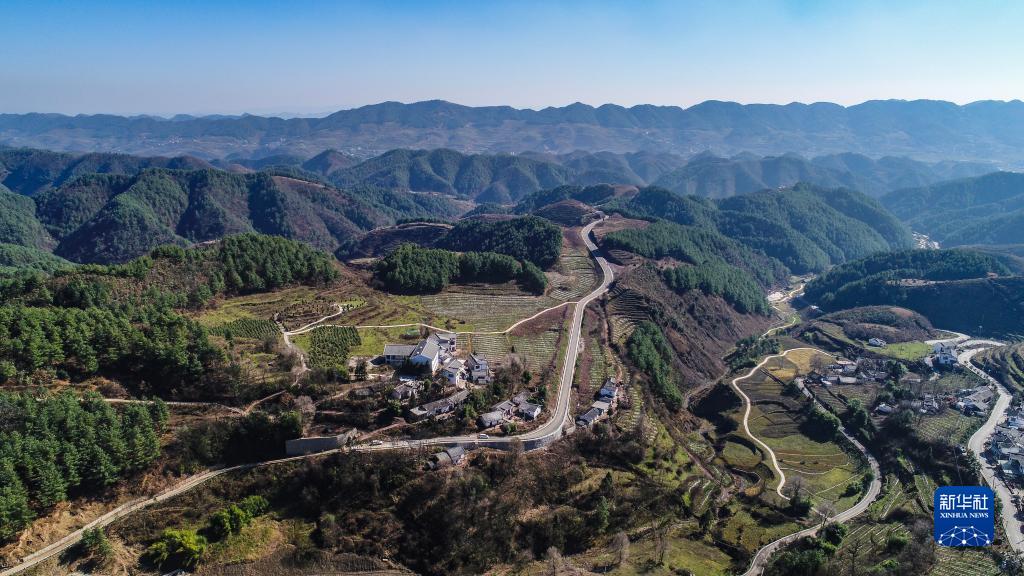
  Features of Puke Village in Hezhen Township, Hezhang County, Bijie City, Guizhou Province (photo taken on November 28, 2018, photo of drone). Xinhua News Agency reporter Tao Liang photo

  The ecological management of puffin village is a microcosm of ecological restoration in Wujiang River Basin.

  Wujiang River is the mother river of Guizhou and the largest tributary of the south bank of the upper reaches of the Yangtze River. Wujiang river basin bears more than half of the population and economic aggregate of Guizhou province. A few years ago, due to ecological fragility and outstanding environmental protection problems, Wujiang once sounded an ecological alarm. Since the 18th National Congress of the Communist Party of China, Guizhou has grasped the construction of ecological civilization with unprecedented efforts, promoted the ecological restoration of the Wujiang River Basin, and the Wujiang River ushered in nirvana rebirth.

  Wujiang river basin has a phosphorus chemical production base rich in phosphate rock resources. It is difficult to control phosphorus in Wujiang River.

  "The river suddenly turned white, and my hands were still greasy." People in wujiang town, Bozhou District, Zunyi City once told reporters that when the pollution was serious, the whole river surface of wujiang town River was dyed "rice soup color" by sewage.

  Through investigation, it was found that the pollution originated from a karst spring named No.34 Spring Eye in wujiang town. The total phosphorus and fluoride in the vicinity of the spring eye exceeded the standard by hundreds of times, and all the sections in Zunyi downstream of the spring eye were inferior to Grade 5. The source of pollution is phosphogypsum produced by Guizhou Phosphate Group, which is 16 kilometers away from the spring. Phosphorus-containing sewage produced by phosphogypsum leaks underground and flows into Wujiang River from No.34 spring through the underground water system.

  As the first batch of national ecological civilization experimental zones, Guizhou has overcome difficulties by means of "iron fist pollution control", and the pollution control of No.34 spring is listed as the "No.1 Project" for environmental pollution control in Guizhou Province. Wang Mei, environmental protection director of the Safety and Environmental Protection Department of Guizhou Phosphating Group, said that in order to solve the pollution problem, the enterprise built the third-phase sewage treatment facility at the outlet of the spring, and the whole system was turned on during the flood season, which can realize the collection, treatment and standard discharge of 15,000 cubic meters/hour of spring water, and the enterprise invested 1.1 billion yuan in environmental protection treatment.
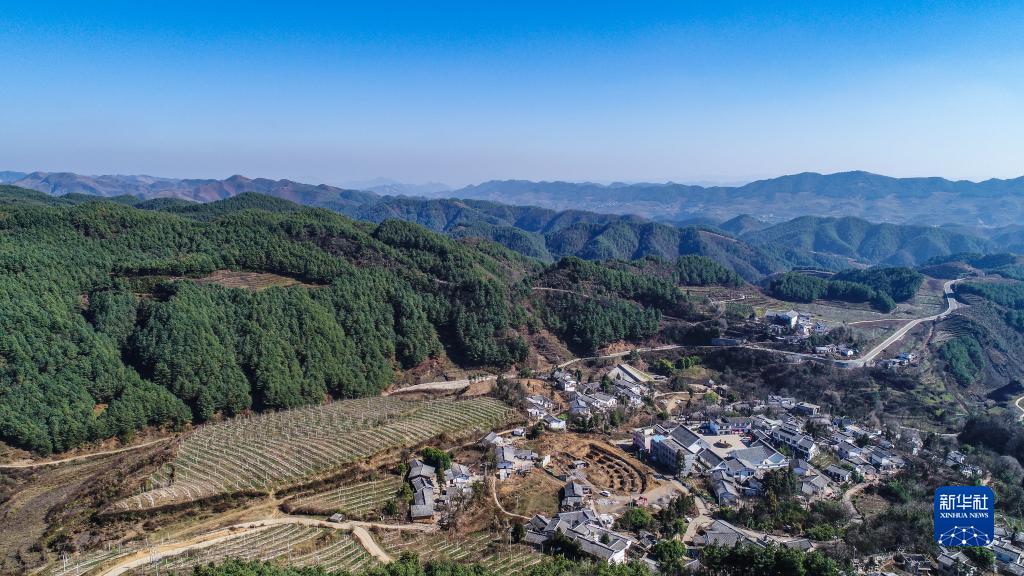
  Features of Puke Village in Hezhen Township, Hezhang County, Bijie City, Guizhou Province (photo taken on November 28, 2018, photo of drone). Xinhua News Agency reporter Tao Liang photo

  In order to solve the problem of excessive total phosphorus in Wujiang River, Guizhou adheres to the management idea of "treating both the symptoms and root causes, giving priority to the source and covering the bottom at the end", highlights rigid measures in the regulation of "three phosphorus" in phosphate rock, phosphorus chemical industry and phosphogypsum storage, and fundamentally solves the phosphorus pollution problem in Wujiang River by implementing a package of pollution prevention measures. According to the data released by the Department of Ecology and Environment of Guizhou Province, in 2021, the water quality of the main stream of Wujiang River reached Class II standard, and the overall water quality of the basin was "excellent", and the excellent rate of 45 state-controlled water quality monitoring sections reached 100%.

  The gratifying changes don’t stop there.

  Wujiang River has been the main shipping route of Guizhou Unicom since ancient times. After 2003, due to the construction of several cascade hydropower stations and the lack of synchronous navigation facilities, the waterway of Wujiang River was blocked. In order to build a "golden waterway", Guizhou has incorporated the construction of Wujiang waterway into the overall deployment of traffic construction.

  The navigation project of Goupitan Hydropower Station, which was put into trial operation in June 2021, is regarded as the key to Guizhou’s Tongjiang River reaching the sea. The head difference of Goupitan navigation is 199 meters, and it is operated by a three-stage vertical ship lift. All ships have to take the "water elevator" when passing through the Wujiang Goupitan Hydropower Station, showing the wonder of "water hanging in the air and ships traveling in the sky".

  In recent years, the large ship lifts of Goupitan, Silin and Shatuo power stations have been put into operation one after another, and the Wujiang waterway has been fully connected. In November, 2021, the Kaiyang Port Area of Guiyang Port made its maiden voyage to the Yangtze River, and 14 cargo ships carried 6,800 tons of phosphate rock, departing from Kaiyang Port Area of Guiyang Port and heading for Fuling, Chongqing. This marks the large-scale resumption of the "Golden Waterway" of Wujiang River, and the 500-ton ship can reach the Yangtze River directly.
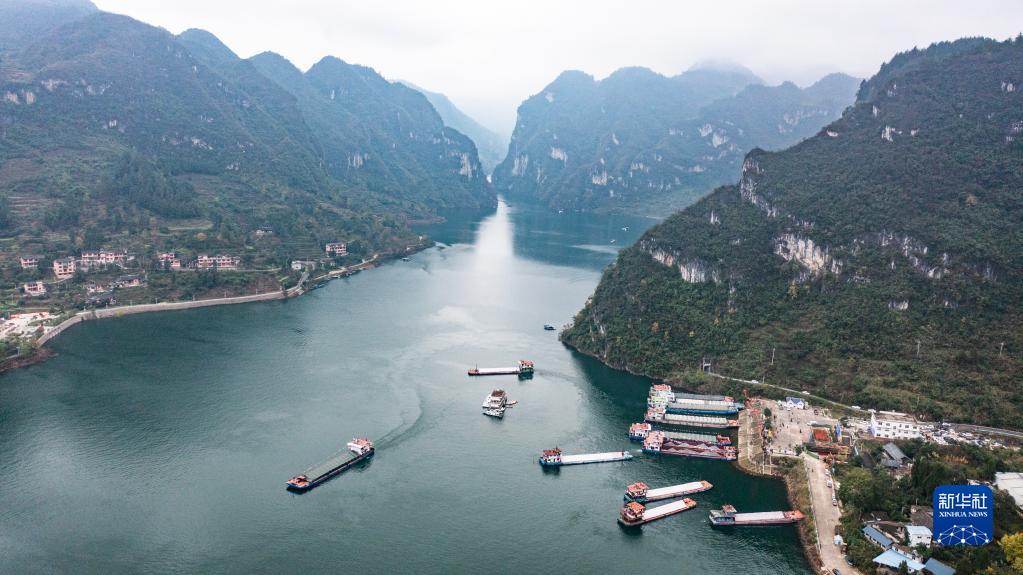
  The cargo ship carrying phosphorus ore departs from Luowang River Wharf in Kaiyang Port Area of Guiyang City (photo taken on November 16, 2021, photo of drone). Xinhua News Agency reporter Tao Liang photo

  "We have signed contracts for 200,000 tons of cement transportation and 300,000 tons of ore transportation, and the freight demand is large." Shen Bo, head of Zunyi yuqing county Pilot Shipping Co., Ltd., said that the company bought five 500-ton cargo ships last year and plans to build 10 new ships to meet the demand for transportation capacity.

  Sinan County in the lower reaches of Wujiang River, Guizhou Sinan Shipyard, which has been depressed for many years, is recovering, and it is a busy scene. Zhang Zhenqiang, the head of the shipyard, told the reporter that after the resumption of navigation in Wujiang last year, the shipyard received a batch of "big orders" for the manufacture of passenger ships and 500-ton cargo ships from Wujiang Shipping Company, and everyone’s confidence doubled and their enthusiasm was full.

  "The comprehensive recovery of Guizhou’s water transport will be promising." Han Jianbo, deputy director of the Guizhou Provincial Department of Transportation, said that the opening of the "Golden Waterway" in Wujiang not only opened up a new channel for "Guizhou goods coming out of the mountain", but also promoted the development of the shipbuilding industry, which will also promote the prosperity of the industry and provide new employment opportunities for the coastal people.

  The 500-ton standard ship sailed through the middle channel of the navigation project of Goupitan Hydropower Station in Zunyi City to the second-stage carrier (photo taken on June 22, 2021, photo of drone). Xinhua News Agency reporter Tao Liang photo
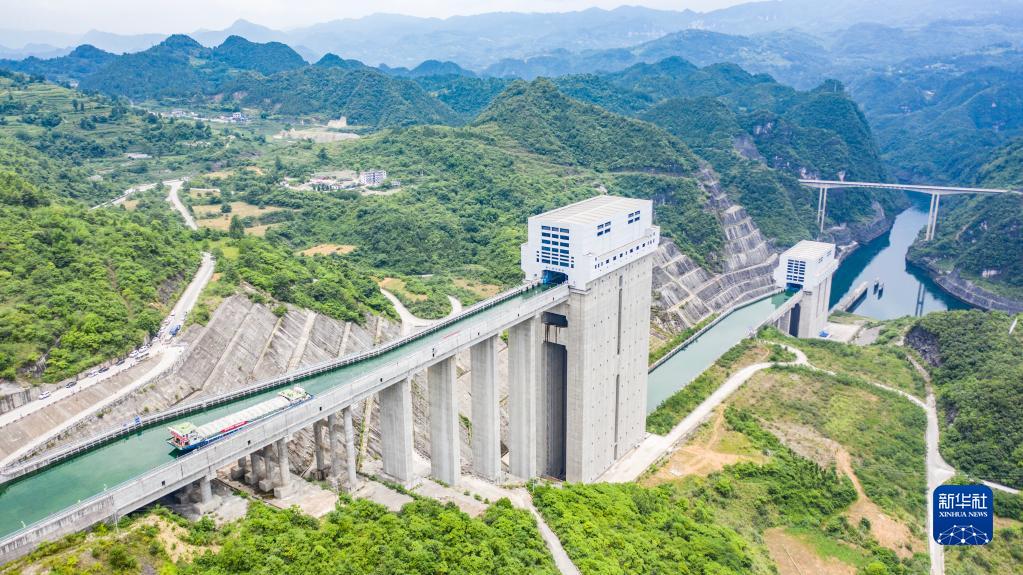
  The 500-ton standard ship sailed to the upstream first-class carrier through the middle channel of the navigation project of Goupitan Hydropower Station in Zunyi City (photo taken on June 22, 2021, photo of drone). Xinhua News Agency reporter Tao Liang photo

  The cargo ship carrying phosphorus ore sailed downstream along the Wujiang waterway and passed by the river flash ferry pier in Shiqian county (photo taken on November 18, 2021, photo of drone). Xinhua News Agency reporter Tao Liang photo

  The cargo ship carrying phosphorus ore sailed downstream along the Wujiang waterway and passed by the river flash ferry pier in Shiqian county (photo taken on November 18, 2021, photo of drone). Xinhua News Agency reporter Tao Liang photo
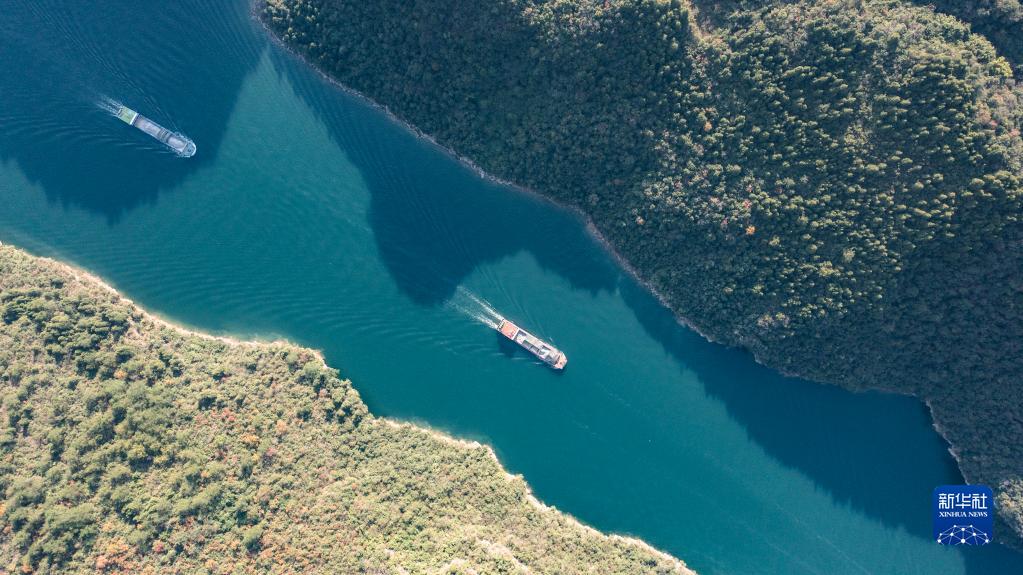
  The cargo ship carrying phosphorus ore sailed downstream along the Wujiang waterway (photo taken on November 18, 2021, photo of drone). Xinhua News Agency reporter Tao Liang photo
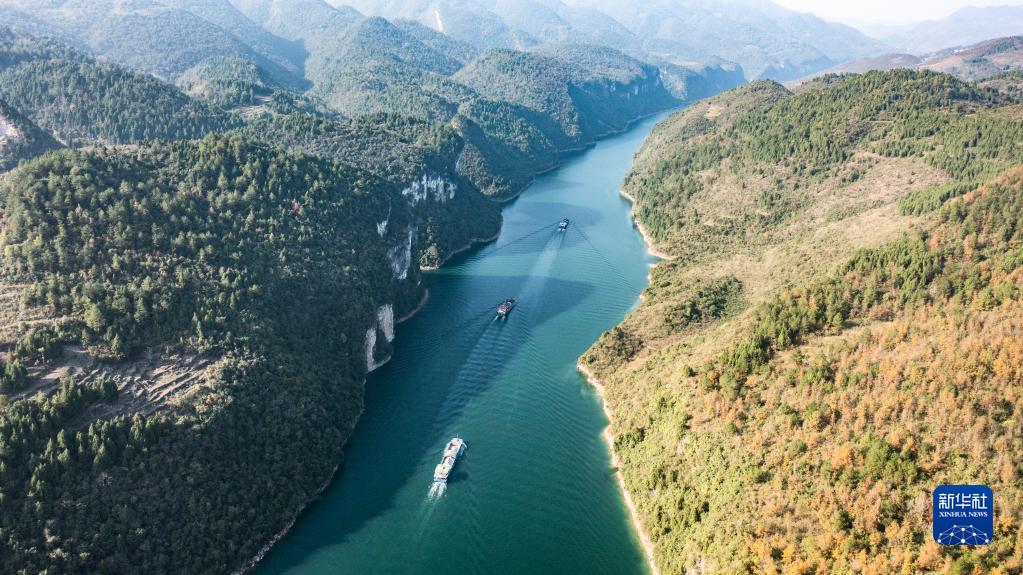
  The cargo ship carrying phosphorus ore sailed downstream along the Wujiang waterway (photo taken on November 18, 2021, photo of drone). Xinhua News Agency reporter Tao Liang photo

Economic talk: policy combination boxing continues to strengthen China’s foreign trade, improve quality and show toughness.

  People’s Daily Online, Beijing, July 17 (Reporter Li Qiaochu) Recently, data released by the customs showed that in the first half of this year, the total import and export value of China’s goods trade was 20.1 trillion yuan, up 2.1% year-on-year, and the scale exceeded 20 trillion yuan for the first time in the same period of history.

  "This breakthrough was made in the context of the complicated and severe external environment and the slowdown of global trade and investment, as well as in epidemic prevention materials and ‘ Home economy ’ Pre-production ‘ One-time pulling factor ’ It is not easy to get it in the case of fading. " On July 13th, Lv Daliang, spokesman of the General Administration of Customs and director of the Statistics and Analysis Department, said at the press conference of the State Council Office that the World Trade Organization predicted that the global trade volume of goods would increase by 1.7% this year, which was significantly lower than the average of 2.6% in the past 12 years. Trade slowdown is a common challenge faced by all economies, and the difficulties are more global. Compared with the surrounding economies with published data, China’s foreign trade still shows strong resilience, and its competitive advantage is stable and consolidated.

  This year marks the 10th anniversary of the Belt and Road Initiative and the full entry into force of the Regional Comprehensive Economic Partnership Agreement (RCEP). The great development potential released by China’s further opening up is highly anticipated.

  Wei Song, a professor and doctoral supervisor at the School of International Studies of Beijing Foreign Studies University, said in an interview with People’s Daily that the national trade and RCEP along the "Belt and Road" came into full effect and continued to help China’s foreign trade stabilize its scale, optimize its structure and expand its market, as shown in the following aspects:

  First, the scale of foreign trade continued to expand. In the past 10 years, the proportion of China’s imports and exports to countries along the Belt and Road has increased from 25% in 2013 to 32.9% in 2022 in China. Meanwhile, in the past 10 years, the trade between China and ASEAN has grown at an average annual rate of 9.9%, which is faster than the overall average annual growth rate of China’s foreign trade by 4.3 percentage points, and ASEAN has jumped from the third largest trading partner of China to the largest trading partner. After the entry into force of RCEP, many favorable policies, such as tariff reduction and exemption, cumulative rules of origin, have been implemented, and the economic and trade exchanges between China and ASEAN have become closer.

  Second, the foreign trade structure has been continuously optimized. In 2022, China exported 4.44 trillion yuan of intermediate products to countries along the "Belt and Road", an increase of 23.9%, accounting for 56.3% of China’s total exports to countries along the route in the same period. Among them, the exports of textiles, electronic components, basic organic chemicals and auto parts increased by 14.5%, 21.1%, 31.3% and 24.6% respectively. In the same period, the total value of imported energy products and agricultural products was 2.46 trillion yuan and 370.41 billion yuan respectively, with growth rates of 58.8% and 13.4% respectively. In 2022, China’s import and export of intermediate products to other RCEP member countries was 8.7 trillion yuan, up by 8.5%, accounting for 67.2% of the total value in the same period. China’s export of mechanical and electrical products and labor-intensive products to other RCEP member countries increased by 13.2% and 20.7% respectively. China’s import structure from RCEP countries was mainly based on simple technology and intermediate technology-intensive manufactured products, and gradually upgraded to intermediate technology and high technology-intensive manufactured products. This aspect reflects that China’s position in the global manufacturing industry chain is constantly moving towards the middle and high end; On the other hand, it also shows the continuous strengthening of the overall scale and strength of China’s manufacturing industry.

  The third is to promote market connectivity, accelerate the restructuring of the industrial chain, and promote the construction of a new development pattern. In the past ten years, with the joint efforts of all parties, the interconnection structure of "six corridors, six roads, many countries and many ports" has basically taken shape, and a large number of cooperation projects have taken root. China has signed more than 200 cooperation documents with 140 countries and 32 international organizations to jointly build the "Belt and Road". The total trade volume of goods with countries along the route has reached 10.4 trillion US dollars, and the non-financial direct investment in countries along the route has exceeded 130 billion US dollars, promoting the development strategy with countries and regions. At the same time, with the full entry into force of RCEP, ASEAN, as China’s largest trading partner, will bring greater convenience to the flow of factors, market connectivity and industrial integration between China and ASEAN, and help to accelerate the construction of a new "double-cycle" development pattern. Driven by RCEP, China and ASEAN will help to build a more innovative, higher added value and safer and more reliable industrial chain supply chain, and then become an important part of China’s international circular system.

  According to customs data, in the first half of this year, the import and export of China’s Pilot Free Trade Zone and Hainan Free Trade Port increased by 8.6% and 26.4% respectively, and the role of open platform played an obvious role. On the basis of institutional opening, what supporting roles do the Pilot Free Trade Zone and Hainan Free Trade Port play in stabilizing China’s foreign trade?

  Wei Song said that the Pilot Free Trade Zone and Hainan Free Trade Port are important measures for China to optimize the business environment and create a high level of opening up, which has a huge supporting role in stabilizing foreign trade:

  First, it is conducive to the continuous promotion of trade and investment liberalization and facilitation. China’s free trade pilot zones are determined to forge ahead and explore boldly, and have achieved remarkable results. In the past ten years, China’s Pilot Free Trade Zone has expanded from 1 to 21, forming a pilot pattern covering east, west, north and south, and replicating and popularizing 278 institutional innovations throughout the country.

  Second, it is conducive to the international economic and trade rules of elevation standards and steadily expand institutional opening. High-level openness is embodied in institutional openness such as rules, regulations, management and standards. It is the goal of the Pilot Free Trade Zone to adapt to the new situation, grasp the new characteristics, and strive to promote the institutional opening of rules, regulations, management and standards. Over the past five years since the establishment of Hainan Free Trade Port, more than 120 institutional innovations have been launched. Driven by a series of trade facilitation measures, China’s customs clearance efficiency has been continuously improved. The overall customs clearance time for imported goods has been reduced from about 4 days in 2017 to less than one and a half days now; The overall customs clearance time for export goods has been reduced from about 12 hours in 2017 to about 1.2 hours now. At the same time, China’s total tariff level is 7.4%, which is lower than the WTO commitment of 9.8%.

  In the first half of this year, China’s "new three kinds" exports continued to increase. The total exports of electric manned vehicles, lithium batteries and solar cells increased by 61.6%, driving the overall export growth by 1.8 percentage points. In this context, how to further cultivate and consolidate industrial advantages and continuously gather new kinetic energy of foreign trade?

  Wei Song said: First, we should vigorously promote the structural adjustment of foreign trade and promote the coordinated development of various foreign trade business entities. Encourage leading enterprises in the industry to extend the industrial chain and improve the level of international operation. Accelerate the formation of a number of large enterprises with transnational operation capabilities that allocate factor resources and lay out market networks on a global scale. Encourage the development of innovative, entrepreneurial and labor-intensive small and medium-sized enterprises, and support enterprises to take the road of "specialization and innovation" and coordinated development with large enterprises.

  The second is to accelerate the promotion of international competitiveness of foreign trade. Accelerate the use of modern technology to transform traditional industries, improve the quality, grade and technical content of labor-intensive products, and push traditional industries to the middle and high end. Efforts should be made to build a technological innovation system with enterprises as the main body, market as the guidance and Industry-University-Research trade as the combination. Increase investment in scientific and technological innovation and support the original innovation of enterprises. Encourage enterprises to introduce advanced technology by means of import, overseas mergers and acquisitions, international bidding, recruiting talents and attracting talents, and promote digestion, absorption and innovation. Support domestic enterprises to set up overseas R&D centers through self-construction, joint venture and cooperation. Encourage multinational corporations and overseas scientific research institutions to set up R&D institutions in China. Strengthen the comprehensive competitive advantages of equipment manufacturing industries such as electric power, rail transit, communication equipment, ships, construction machinery, aerospace and large-scale complete sets of equipment exports, and strive to expand the export of investment commodities. Further improve the international competitiveness of strategic emerging industries such as energy conservation and environmental protection, next-generation information technology and new energy. Expand the import of advanced technology and equipment, key parts and components, and promote the adjustment, optimization and upgrading of industrial structure.