The North China Air Traffic Control Bureau guarantees the Capital Airport to complete the HUD RVR90-meter takeoff verification test flight and Class ⅢA operation test flight.
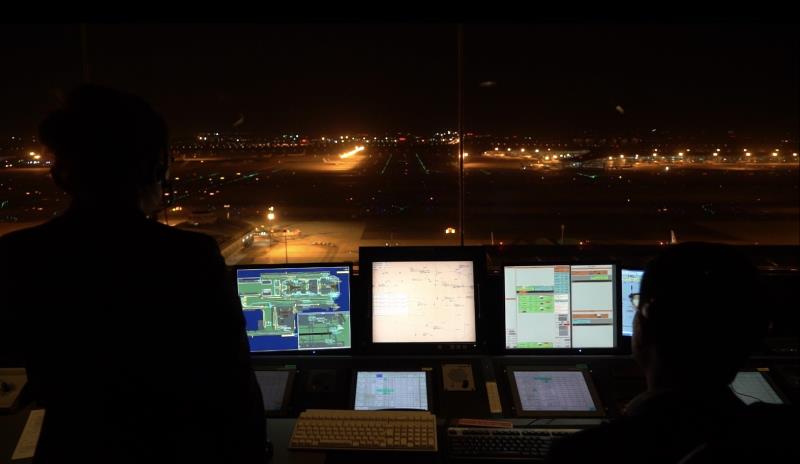
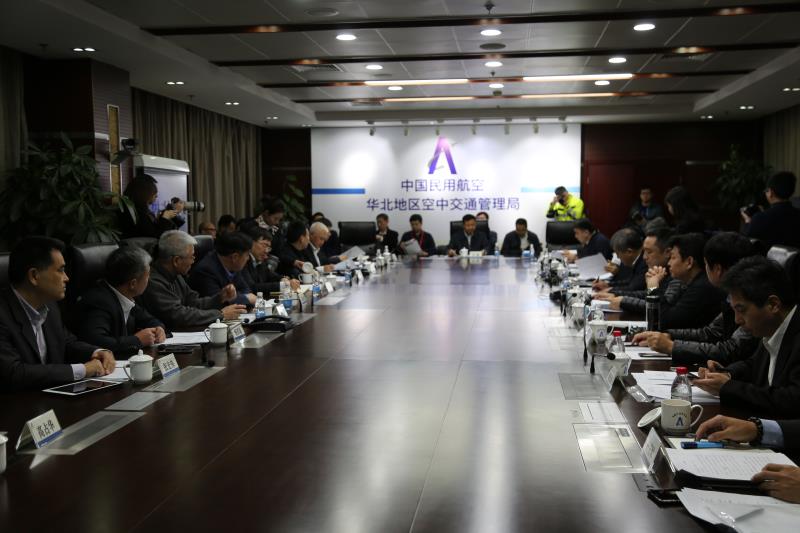
CCTV News:On the evening of December 4th, North China Air Traffic Control Bureau ensured that China Civil Aviation successfully completed the first verification test flight of runway visual range (RVR) 90m low visibility take-off based on head-up display (HUD) at the Capital Airport, and at the same time conducted a Class ⅢA approach landing verification flight. This is another big leap after the HUD RVR150 project was launched last year. Taking off at 90m through RVR can solve the problem of 80% of flights departing from the capital airport in low visibility, further improve the flight normality and enhance the passenger travel experience. Li Jian, deputy director of CAAC, participated in the verification flight test.
At 20:52, Shandong Airlines flight SC9005 applied for clearance, launched at 20:57, took off from runway 01 at 21:12, and landed smoothly on runway 01 at 21:29. This flight test verified the take-off procedure and ground taxiing guidance procedure using HUD technology on runway 01 under the condition of low visibility of RVR 90 meters at Capital Airport.
At 20:45, Air China flight CA089 applied for clearance, launched at 20:48, took off from runway 36R at 21:00, and landed smoothly from runway 36R at 21:22 according to Class ⅢA standards. Through the flight test, the flight procedures, ground navigation equipment and ground taxiing guidance of the 36R runway standard in Capital Airport were actually tested. This is the second airport in China with Class ⅢA standard operation after Shanghai Pudong Airport.
HUD (Head-up Display) is one of the four new navigation technologies promoted by CAAC. HUD is an airborne optical display system, which can project the flight information of aircraft onto the mirror in front of the pilot’s field of vision, and display enough information and guidance in this area. These information and guidance are superimposed on each other, so that the pilot can not only see the external scene but also take into account the instrument parameters when maintaining the head-up state, so that the aircraft can be manually operated according to the acceptable performance and reliability level when carrying out this kind of operation only by referring to these information and guidance. HUD can enhance the pilot’s situational awareness, improve flight quality and operational ability under low visibility conditions. Li Jian said, "Take-off and landing are the two most important stages to ensure flight safety. It takes 2-3 seconds for the pilot to change from instrument to external vision before approaching and landing. Although this time is short, it is very important to decide the landing and go-around of the aircraft. Head-up display, without looking down, can see all the main instrument data projected on the display screen while seeing the runway, which greatly reduces the complexity of pilot operation. It can be said that HUD has good safety value at the critical stage of aircraft take-off and landing. "
In order to further improve the flight regularity, in recent years, CAAC has actively promoted new navigation technologies represented by HUD and strengthened scientific and technological support. Up to now, China Civil Aviation has 1,133 transport aircraft equipped with HUD equipment, accounting for 1/3 of the total fleet. According to the Roadmap for the Application and Development of Head-up Display issued by the Civil Aviation Administration, the installed capacity of transport aircraft will reach 50% by 2020. It is expected that with the increase of installed capacity year by year, HUD will make more and more contribution to the flight normality. This is undoubtedly an "artifact" to deal with low visibility weather for a super-large busy airport like Capital Airport, and it is of practical significance to improve flight safety and normality.
Instrument Landing System, ILS) is commonly known as blind landing system. Because ILS can guide the aircraft to approach and land in low weather standards or in weather where the pilot can’t see any visual reference, it is called blind landing, that is, the pilot can control the flight landing when the airport runway can’t be seen clearly by the naked eye. According to the precision of blind descent, blind descent provides different approach and landing standards for aircraft, so blind descent can be divided into I, II and III standards.
According to the relevant person in charge of Fei Biao Department of Civil Aviation Administration, at present, the Capital Airport only has Class II operation capability, that is to say, if the weather visibility is less than 300 meters from RVR, the incoming aircraft without HUD will have to turn back for standby. This time, after the capital airport realizes Class IIIA operation, the landing standard will be further lowered from RVR 300 meters to RVR 175 meters, which will effectively reduce the impact of low visibility weather such as fog and haze on passengers’ travel, which is a big benefit for passengers and airlines.
HUD technology and class ⅢA operation using blind descent system provide technical means for flight operation in low visibility conditions. After the 90-meter take-off of HUD RVR90 and Class IIIA operation, the low visibility guarantee capability of the Capital Airport will reach a new level, greatly narrowing the gap with the advanced foreign level. After the successful operation of the Capital Airport in low visibility, it can play a good demonstration role in the whole country, which is conducive to the overall improvement of the low visibility operation capacity of China civil aviation.
In order to do a good job in this flight test, the North China Air Traffic Control Bureau formulated an air traffic control support plan and an emergency response plan in advance according to the verification flight test work plan, and carried out training, desktop deduction and emergency drills in advance to make all preparations. The North China Air Traffic Control Bureau will issue relevant navigation notices in advance to remind the flight test of the impact on the flight operation of the Capital Airport. On October 29th and November 20th, the flight calibration of Runway 01 and Runway 36R was completed respectively. (Lv Simin, Bing Wang, Jiang Xi)