The sugar in cherries is higher than that in cola. Do you dare to show off 2 Jin after reading it?
Original chestnut pie chestnut pie ChestnutMates
Seeing that the Spring Festival is approaching, how is everyone preparing for the New Year’s goods?
I heard that cherries are the standard for Chinese New Year! Not only does it look festive, but it tastes great.
However, many people still don’t know what nutrients it has and what to pay attention to when eating. Let’s talk about it today.

Two "nutrition rumors" of cherries
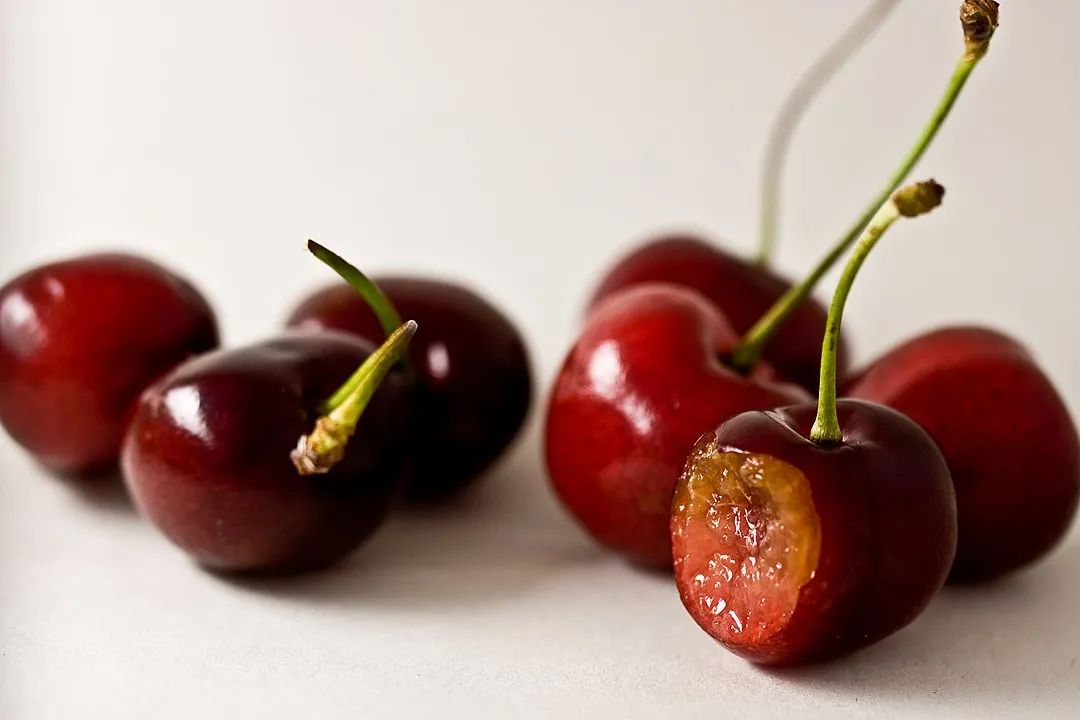
Cherry is really a good fruit: it has high value, good taste, no effort to eat and no dirty hands, and it is also very nutritious.
According to legend, cherries have two "benefits":
1. iron supplement and blood supplement?
The red color of cherries is the result of the continuous accumulation of anthocyanins, a polyphenol compound, and is not an "iron" element combined with hemoglobin in the blood.
The iron content of cherries is not high, which is almost the same as that of apples and pears.
2. vitamin c explodes, whitening full marks?
According to the data of American food ingredient bank, the vitamin C content of cherries is 7 mg/100 g..
This amount is low in fruits, similar to apples and pears. Not as good as oranges (28mg/100g) and other citrus fruits, nor as cheap vegetables as Chinese cabbage (31mg/100g) and radish (16mg/100g).
▲By Benson Kua-wikimedia.org

Four nutritional highlights of cherries
Cherry has no advantage in supplementing iron and vitamin C, but in fact, it still has many remarkable points-
1. Rich in fiber
As a kind of fruit with skin to eat, cherries have advantages in supplementing fiber.
According to the data in the American Food Composition Table, the fiber content of cherries is 2.1g/100g, which is more than that of peeled fruits such as oranges (0.4g/100g), pears (0.9g/100g) and bananas (1.4g/100g).
2. low 2.GI
Every 100g of cherries contains about 13g of sugar, of which about 5g is fructose. Fructose has a high sweetness, but its GI (glycemic index) is far lower than that of glucose.
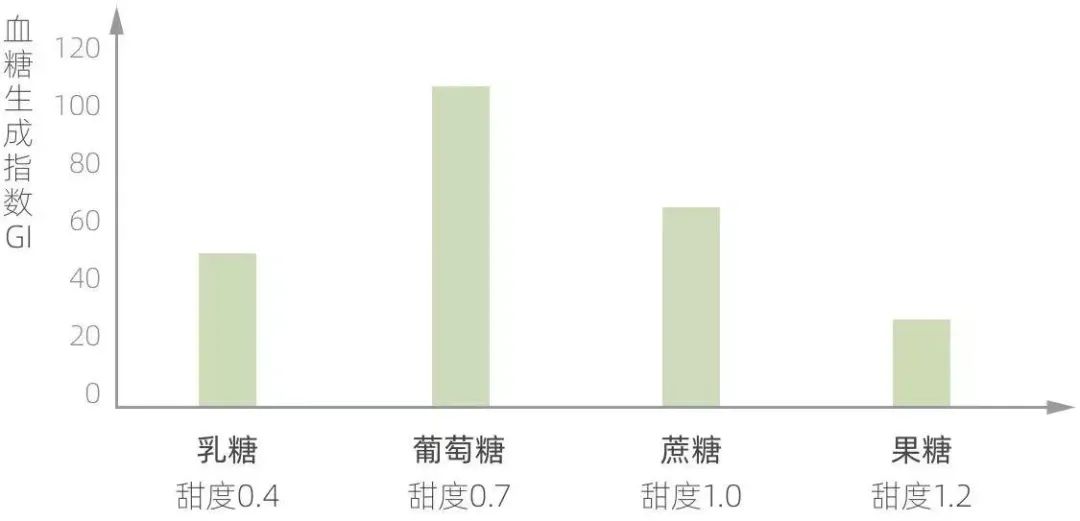
In addition, cherries are rich in fiber, and dietary fiber has a certain effect of delaying the rise of blood sugar, so the blood sugar response of cherries is actually relatively low. Studies have shown that the GI value of cherries is only 22[1].
3. High potassium and low sodium
Many fruits are characterized by "high potassium and low sodium", and cherries are no exception, containing about 222mg of potassium per 100g g. High potassium and low sodium are helpful for the prevention and treatment of hypertension.
Compared with the high-potassium fruit that is often cited as an example, cherries are inferior, but their calories are much lower than bananas. Therefore, looking at the potassium content per unit calorie, cherries are even better.
4. Rich in antioxidant substances
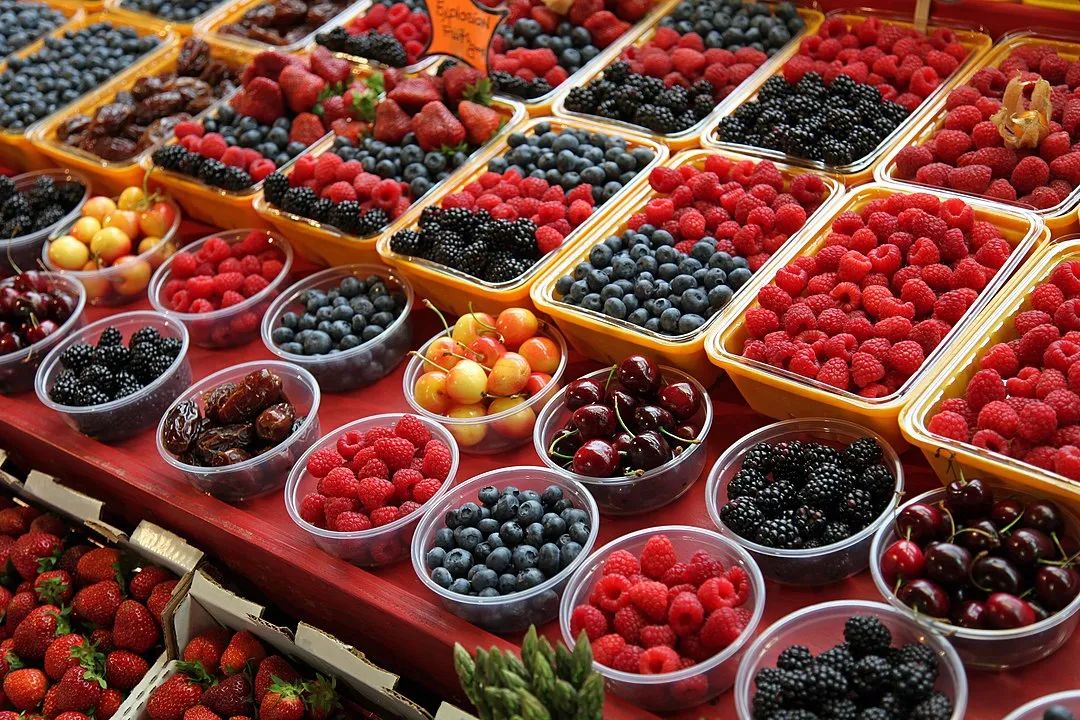
The color of cherries comes from anthocyanins, a natural pigment with good antioxidant effect. Besides improving eyesight, anthocyanins may play a preventive role in type 2 diabetes, cardiovascular diseases and inflammatory diseases.
However, this ingredient is not unique to expensive cherries. Plums, purple cabbage, red beans, purple potatoes and many other cheap dark foods are found.
▲ Usually, the darker the color, the higher the anthocyanin content, by Marc-Lautenbacher.wikimedia.org.
In addition to these phenolic antioxidant components, cherries also contain an antioxidant component. Many foods contain this substance, and cherries are one of the higher contents in fruits.
According to a study, the melatonin content of Hongdeng and Rainier cherries is between 10 and 20 ng/g [2].
This amount is far from that of a melatonin (generally 3mg, 1 mg = 1,000,000 ng) swallowed by people when they are jet lagged. However, some small-scale placebo-controlled trials show that eating cherries can improve sleep and relieve anxiety and stress [3].
Other studies have shown that the intake of cherries is related to a lower risk of gout attack [4,5].
So it seems that cherries are still a kind of fruit suitable for chronic patients. Although it is sweet, it has a low blood sugar response and is rich in antioxidant components and dietary fiber.

What should I pay attention to when eating cherries?
Q: What happens when you eat two Jin of cherries in one breath?
A: It may be rare.
Cherry is rich in fiber, and there are more fructose and sorbitol (Rosaceae fruits are rich in sorbitol, which we introduced earlier). These two kinds of sugar have laxative effect when eaten too much.
Therefore, for people with bad stomachs, such as patients with irritable bowel syndrome (IBS), cherries are not the fruits that you can eat freely.
The FDOMAP app developed by Monash University in Australia suggests that it is safer for IBS patients to eat 3 capsules (25g) at a time, and 150g(20 capsules) is too much, so it is necessary to avoid eating so many capsules at a time.
2 kg of cherries, there must be more than 100, and people with good stomachs may not be able to stand it.
Anthocyanins that are not absorbed will be excreted through feces, and the color of feces may change a little.
In addition, eating without restraint will also make you fat. The cola we usually drink contains about 10% sugar, and the sugar content of cherries is much higher than that of cola. Generally, we regard the fruit with sugar content above 12% as "high-sugar fruit", and cherries are properly high-sugar fruits.
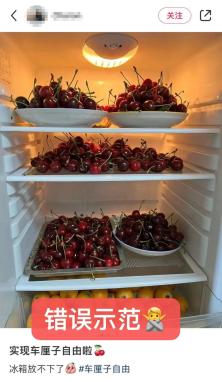
Many people on the Internet say that they "dazzle 2 pounds of cherries a day", and the removal of the core from 2 pounds of cherries is about 900g, which translates into more calories than a McDonald’s Big Mac.
Dietary guidelines for China residents recommend eating 200~350g of fruit every day, which is about 25~40 cherries.

Which is better, "cherries" or "cherries"?
There are many arguments about the difference between the two:

These are actually inaccurate.
Cherry is a transliteration of English "cherries", so "cherries" means cherries.
But the cherries represented by cherries and the traditional cherries in China are not the same kind of cherries.
Cherry, now the basic default is "European sweet cherry". Cherry abroad mainly includes European sweet cherry and European sour cherry. Sour cherry is generally used to make jam and is not eaten raw. They belong to different species and are different species from the traditional cherries in China. .
However, the species "European sweet cherry" was introduced to Shandong for planting by foreign missionaries long ago. Today, Shandong big cherry is also famous.
Cherry ripens in greenhouse in China from March to April, and in open air from May to July. After the end of domestic production, American cherries mature in August-September, followed by Canadian cherries in early autumn; In late November, Chilean cherries ripened, and from December to February, Chilean cherries went on the market.
All the year round, perfect connection.
In fact, there is only "cherry" in the classified information table of customs import and export commodities, and there is no "cherry" at all. Just choose the one you like (m ǐ i), enjoy (de) and eat (qǐ). After all, there is not much difference in nutrition between these cherries.
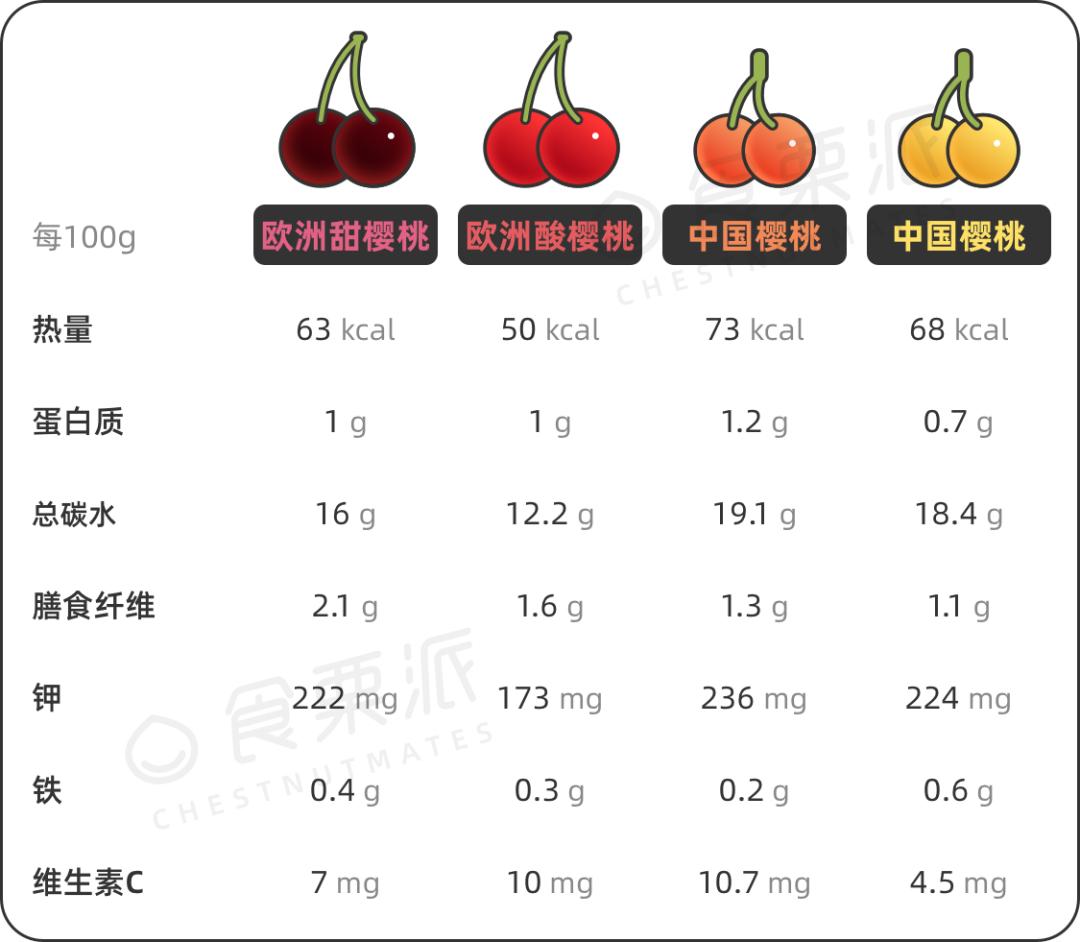
▲ The data of European sweet cherry and European sour cherry come from American food ingredient database, and the data of two China cherries come from Taiwan, China food ingredient database.
Whether cherries or cherries, they are very fragile and can’t be preserved. After a long time, the face value and taste will decrease, and the taste will become weaker and lighter, and browning will occur.
If you can’t eat a big box, you can clean it, dry it and freeze it.
You can eat it in three to five days, and you should also pay attention to proper preservation: first pick out the bad fruit, and the rest don’t need to be washed. Washing it is not conducive to preservation, just wash it before eating; Don’t leave the refrigerator open, water will easily run off.

Today interaction
Do you have cherries in your new year’s goods list?
reference data
[1]McCune, Letitia M et al. “Cherries and health: a review.” Critical reviews in food science and nutrition vol. 51,1 (2011): 1-12. doi:10.1080/10408390903001719
[2]Meng, Xiao et al. “Dietary Sources and Bioactivities of Melatonin.” Nutrients vol. 9,4 367. 7 Apr. 2017, doi:10.3390/nu9040367
[3]Garrido, María et al. “The consumption of a Jerte Valley cherry product in humans enhances mood, and increases 5-hydroxyindoleacetic acid but reduces cortisol levels in urine.” Experimental gerontology vol. 47,8 (2012): 573-80. doi:10.1016/j.exger.2012.05.003
[4]Jacob, Robert A et al. “Consumption of cherries lowers plasma urate in healthy women.” The Journal of nutrition vol. 133,6 (2003): 1826-9. doi:10.1093/jn/133.6.1826
[5]Zhang, Yuqing et al. “Cherry consumption and decreased risk of recurrent gout attacks.” Arthritis and rheumatism vol. 64,12 (2012): 4004-11. doi:10.1002/art.34677
[6]https://fdc.nal.usda.gov/fdc-app.html#/food-details/171719/nutrients
[7]https://fdc.nal.usda.gov/fdc-app.html#/food-details/173954/nutrients
Edit | Hawthorn
Design | grapefruit
❝
The above information is only popular science and should not be regarded as medical advice.
Can not replace the doctor’s individualized judgment on a specific patient.
❞
Original title: "Cherry sugar is higher than coke! Do you dare to show off 2 pounds after reading it? 》
Read the original text